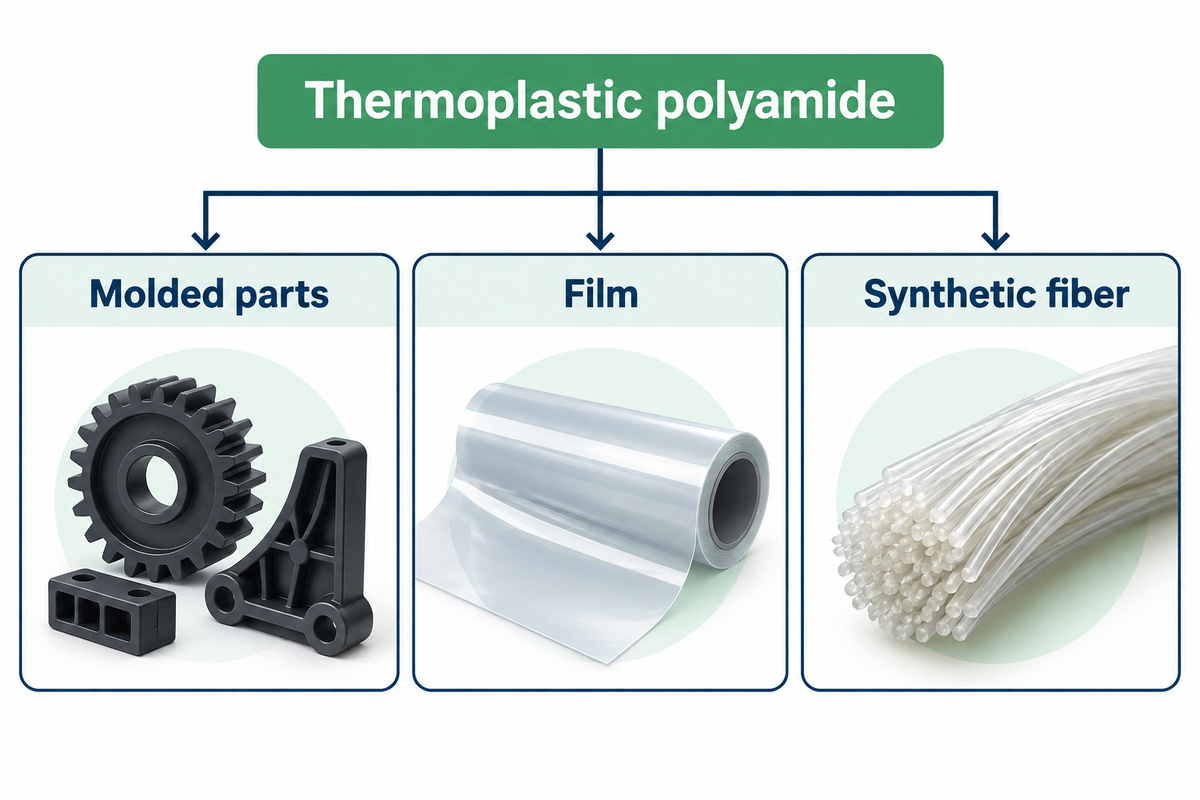
Nylon is a family of thermoplastic polyamides used in molded parts, film and synthetic fiber. The same polymer family can become a gear, a stocking or a packaging layer. The right choice of nylon depends on its grade and degree of moisture, as water can affect its stiffness and dimensions after it leaves the factory.
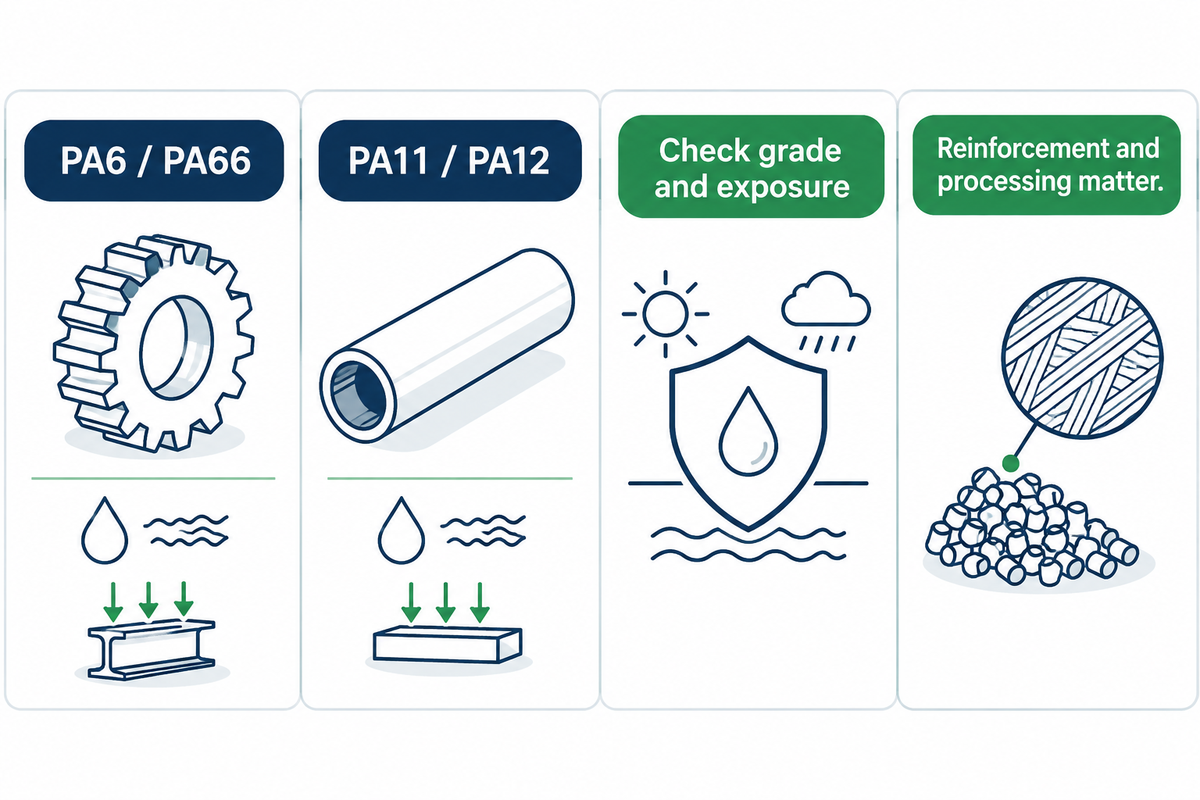
Nylon is a thermoplastic polyamide, not a single material grade. PA6, PA66, PA11 and PA12 suit different forms and exposures. Match the grade, moisture state and manufacturing route before comparing strength or fit.
Key points
A part can become tougher after taking up water while losing stiffness.
Dry pellets, dry molded parts and humidity-conditioned parts describe different stages.
A nylon fabric and a solid nylon part need different performance tests.
Melting temperature is different from an allowable service temperature under load.
Quick reference
Material family: polyamide thermoplastics. Common forms: resin, stock shapes, molded parts, film and fiber. Main specification fields: exact grade, reinforcement, process, temperature, moisture exposure and load duration.
What is nylon, and is it a plastic or a fabric?
Nylon is a thermoplastic polyamide used as both solid plastic and fabric; these forms share a polymer family but behave differently because of their finished structures. A solid molding takes load through its cross-section while a woven fabric takes load through the yarns and their arrangement. Thus, product form belongs beside the name of a material when strength or flexibility of the material is described.
Like other synthetic materials, nylon consists of repeating chemical units joined into a long chain. Amide groups on nylon molecules form hydrogen bonds between the chains of the synthetic polymer. Interaction of water with these groups helps explain the behavior of a dry test specimen and a humid service part.
Is nylon a kind of fabric?
Yes. Finer nylon fibers can be spun into yarn, woven or knitted into a synthetic fabric. Nylon fabric gets much of its stretch and tear behavior along with surface feel from fineness of filament, construction of yarn and weave and finishing. Coating of the fabric may stop liquid passage through the fabric, even while the polymer of the fabric absorbs moisture.
What is the difference between nylon and polyamide?
Nylon is a type of polyamide, so the terms aren’t conflicting material choices. Polyamide is the broader chemical family. A purchase description like “polyamide sheet” still needs the specific PA designation, grade and additives to identify the intended plastic.
PA6 and PA66 are two main types of nylon for engineering and textiles, while PA11 and PA12 offer options for flexibility and moisture-sensitive applications. Reinforcement, crystallinity and processing still determine which grade meets a particular load, impact or dimensional requirement.
Nylon 6 starts with caprolactam. Nylon 66 uses two monomers, each containing six carbon atoms. PA11 and PA12 have fewer amide groups relative to their hydrocarbon segments. Complete grade and exposure must be attached for comparison.
Common types of nylon and the first question to settle
Type
Useful starting point
Selection question
PA6
Moldings, cast stock, fiber and film
Will the part be compared dry or after humidity exposure?
PA66
Engineering moldings, extruded stock and fiber
Does the selected grade meet heat and load requirements in service?
PA11
Specialty flexible and engineering applications
Are renewable feedstock, flexibility and chemical exposure part of the brief?
PA12
Tubing, specialty moldings and additive manufacturing
Which process and moisture-conditioned properties describe the finished part?
Arkema’s Rilsan PA11 information identifies the feedstock as renewable castor oil for PA11. Plant oils describe the source of the chemistry; the finished polymer still requires its own end-of-life route.
A useful counterexample comes from Bahrami and colleagues’ 2021 hot-pressed PA11/PA12 experiment. The two materials reached approximately the same final uptake within each exposure: about 1.5% in water and 0.8% in humid air. The latter exposure was 23°C and 50% relative humidity. The percentages, of course, describe different environments, not one percentage being assigned to each polymer.
Example: A buyer could replace an unfilled PA6 bracket with a glass-filled PA66 grade to reduce deflection. Having the same drawing doesn’t mean the same shrinkage, flow orientation, or behavior during assembly. The first sample order should retain the mounting points of the bracket and the loading direction. Then, the buyer should compare the finished assembly after it’s exposed to the intended condition. A family name upgrade doesn’t answer the question regarding the fit.
Nylon properties: read the grade and the test conditions
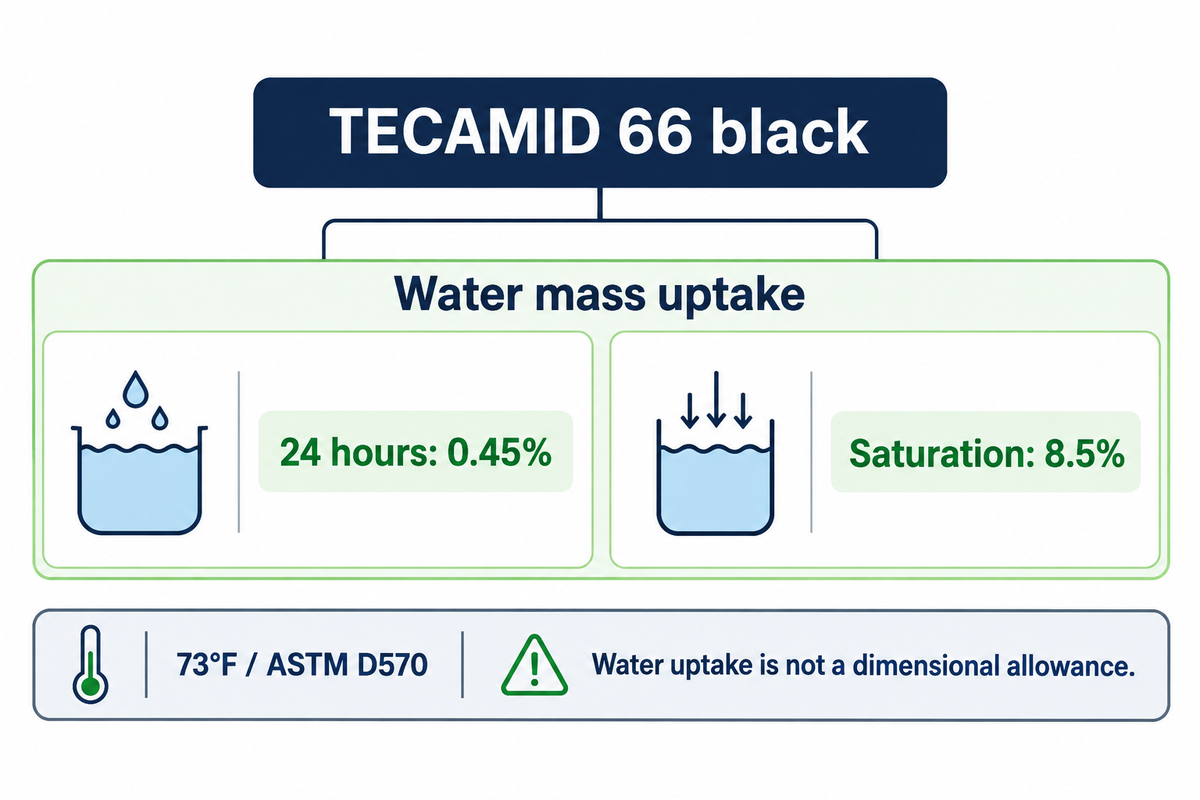
Ensinger lists 0.45% water absorption after 24 hours and 8.5% at saturation for TECAMID 66 black at 73°F under ASTM D570. Both figures belong to the same stock-shape product. One describes an exposure to water for a specified duration, and the other describes the end state of saturation. Neither value is a linear swelling allowance.
One PA66 stock-shape example, with the labels retained
Property
Manufacturer-listed value
Condition or meaning
Density
1.14 g/cm³
Named stock-shape grade
Water absorption
0.45%
24 hours, 73°F, ASTM D570
Moisture absorption
8.5%
Saturation, 73°F, ASTM D570
Melting temperature
491°F
Phase transition, not a load rating
Service temperature
185°F
Manufacturer’s long-term label
Service temperature
300°F
Manufacturer’s short-term label
Deflection temperature
194°F
264 psi, ASTM D648
Deflection temperature
450°F
66 psi, ASTM D648
Tensile strength at yield
12,000 psi
73°F, ASTM D638; moisture state not specified in this row
Heat resistance behavior under load is different from the melting behavior. The heat deflection result changes sharply with the load applied. A hot, clamped component therefore needs load-and-time performance, not just a high melting temperature. The same distinction applies to “high tensile strength”: a yield stress says something different from stiffness or resistance to repeated impacts.
Dry and conditioned data are paired explicitly in the BASF Ultramid B3S PA6 datasheet hosted by Albis. Its ISO 527 tensile modulus is 3500 MPa dry and 1200 MPa conditioned; tensile stress at yield is 90 MPa dry and 45 MPa conditioned.
ASTM D570-22 and ISO 62:2008 discuss water absorption test and controlled immersion and humid air test, respectively. Thickness and exposure period are part of the comparison. Separation of test quantities across material families is dealt with in the more general plastic property comparison guide on the website.
What moisture changes in a nylon part
The absorption of moisture by nylon can decrease the level of nylon’s stiffness while increasing the level of deformability prior to fracture. Also, the change in dimension with respect to the position and direction can occur in the part. A usable specification, therefore, defines the condition at inspection and the condition under which the assembled product operates.
“The observed swelling behavior is dependent on the melt flow direction of the injection molding process.”
What happens if nylon gets wet?
Nylon can absorb water and become larger and more flexible: one nylon resin datasheet cited above lists a tensile modulus of 3500 MPa dry and 1200 MPa conditioned. The rate and the level of uptake change with the grade of Nylon and the temperature. The method of exposure can also differ. A splash, months in humid air and continuous immersion create different conditions; none should be substituted for another in a close-fitting assembly.
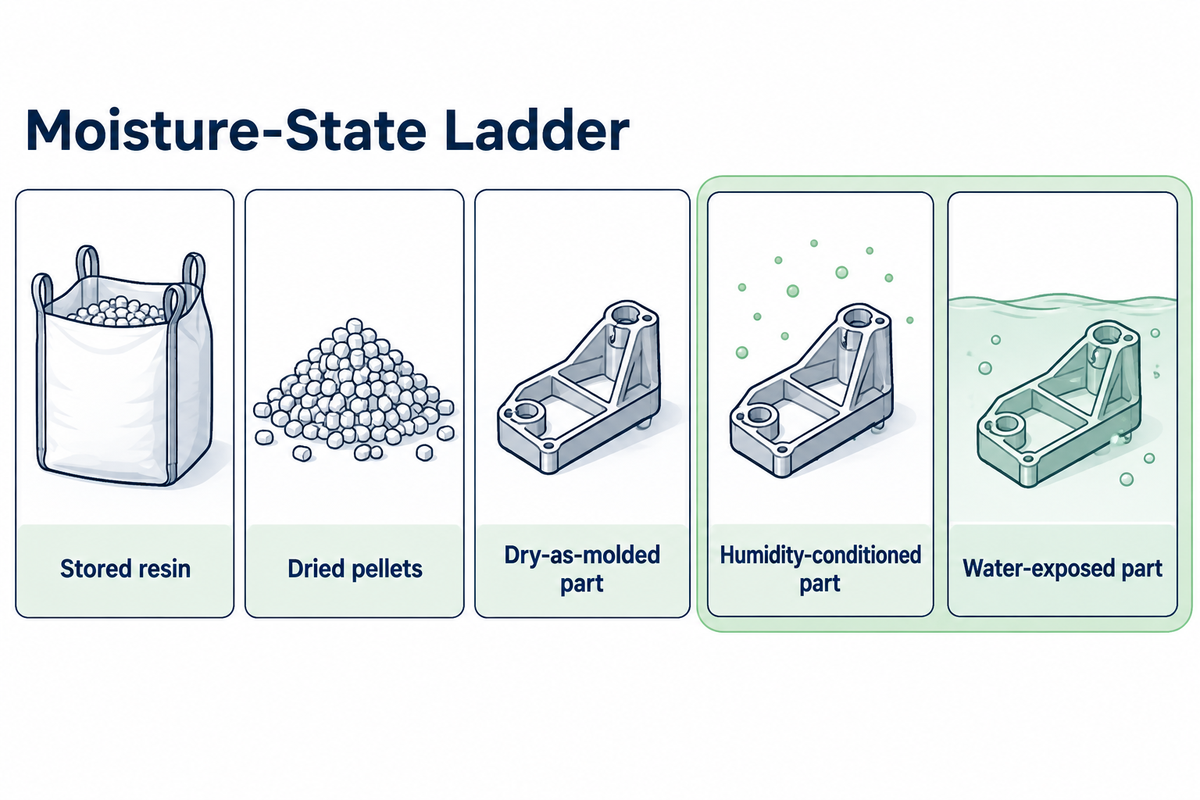
It is a specification aid for recording the state of the material through manufacture and use. It helps keep various conditions of nylon separate.
Moisture-State Ladder
Stage
Purpose
Record with the sample
Stored resin
Control moisture before processing
Grade, packaging and storage history
Dried pellets
Meet the grade’s processing requirement
Measured moisture and supplier drying instruction
Dry-as-molded part
Describe initial mechanical and dimensional state
Elapsed time, temperature and handling
Humidity-conditioned part
Represent a defined atmospheric exposure
Temperature, relative humidity, thickness and duration
Water-exposed part
Represent immersion or liquid contact
Water temperature, exposure time and measurement method
Drying pellets before the melting process controls moisture during processing. Conditioning a finished part can change the moisture level. Confusing these two processes by simply stating “dry nylon” is incorrect. Following a grade-specific processing instruction given by the nylon supplier protects against the need to define a universal oven temperature or drying time.
Sambale and colleagues’ 2021 PA6 study mapped moisture gradients across specimens using computed tomography and modeling. Bulk mass gain is an average: the outside and core can contain different water concentrations during uptake. Wall thickness and time for redistribution therefore matter even when two samples have the same measured overall moisture.
Assumed inputs: A dry specimen weighs 100 g and follows the two uptake labels in the TECAMID 66 black example. At 0.45% mass gain, added water is 100 × 0.0045 = 0.45 g. At 8.5%, it’s 100 × 0.085 = 8.5 g. These calculations determine the mass of water at the two endpoints; they don’t determine the change in dimensions (i.e. length, diameter, etc.).
Consider a nylon bushing that’s free to turn during a factory inspection and subsequently binds after storage in a humid environment. Separate the checks: measure after the machining heat has dissipated, then examine the bore and outside dimensions and running clearance after the agreed exposure. Record the constraint, load and dimensions of the housing, and the free part. A free bushing can swell differently from one pressed into a metal housing. For sustained loads, include the duration of the test; plastic creep under load is another source of movement.
There’s also a trap in treating water as a cure for every brittle part. In Michael Sepe’s 2007 failure analysis, aggressive conditioning brought parts to 3.2% moisture and temporarily concealed molding degradation. Field failures returned after moisture fell to 1.5–1.6%. That historical case points to a specific diagnostic step: investigate processing damage when apparently successful conditioning stops working.
How nylon becomes molded parts, stock shapes, film and fiber
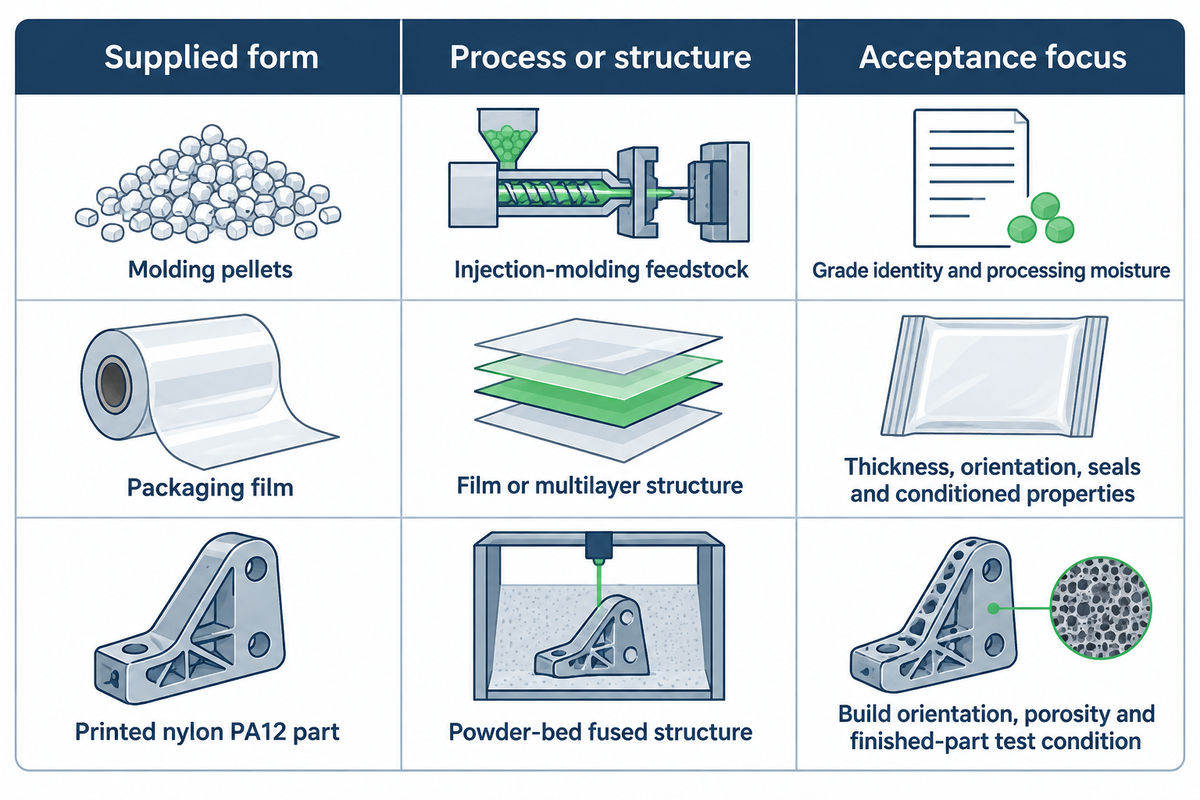
The manufacturing processes used to produce nylon parts, film, and fiber create structures with various orientations and surfaces. Each of the following processes, injection molding, extrusion, casting, fiber spinning, and powder-bed printing, leaves a part with a unique material history. Test data should follow the supplied form, because a resin designation alone does not identify the finished product’s load path or defects.
Nylon form and process matrix
Supplied form
Process or structure
Useful acceptance focus
Molding pellets
Injection-molding feedstock
Grade identity and processing moisture
Molded bracket
Flow-oriented molded part
Weld lines, mounting direction and conditioned fit
Extruded rod
Machining stock
Stock dimensions and machining allowance
Cast blank
Cast nylon stock shape
Grade, residual stress and finishing sequence
Nylon sheets
Plate or sheet stock
Flatness, thickness and moisture history
Packaging film
Film or multilayer structure
Thickness, orientation, seals and conditioned properties
Textile yarn
Drawn filament bundle
Yarn construction and tensile method
Woven cloth
Interlaced yarns, possibly coated
Tear behavior, coating and liquid passage
Printed nylon PA12 part
Powder-bed fused structure
Build orientation, porosity and finished-part test condition
Machinists discussing nylon and acetal on Practical Machinist describe sharp tools, cutting deflection and temperature as practical concerns. Those observations are useful troubleshooting prompts. Cooling a newly machined surface before measurement separates a short thermal effect from slower moisture movement.
Film needs yet another test plan. Polyamide may occupy one layer while a sealant and moisture barrier occupy others. Such arrangements are described in a multilayer structure in the US20100015423A1 packaging patent application. Performance belongs to the entire structure and the seals. Our plastic-film conditioning and testing guide discusses the effects of environment and how the sample is handled.
Nylon and polyester: how the alternatives differ
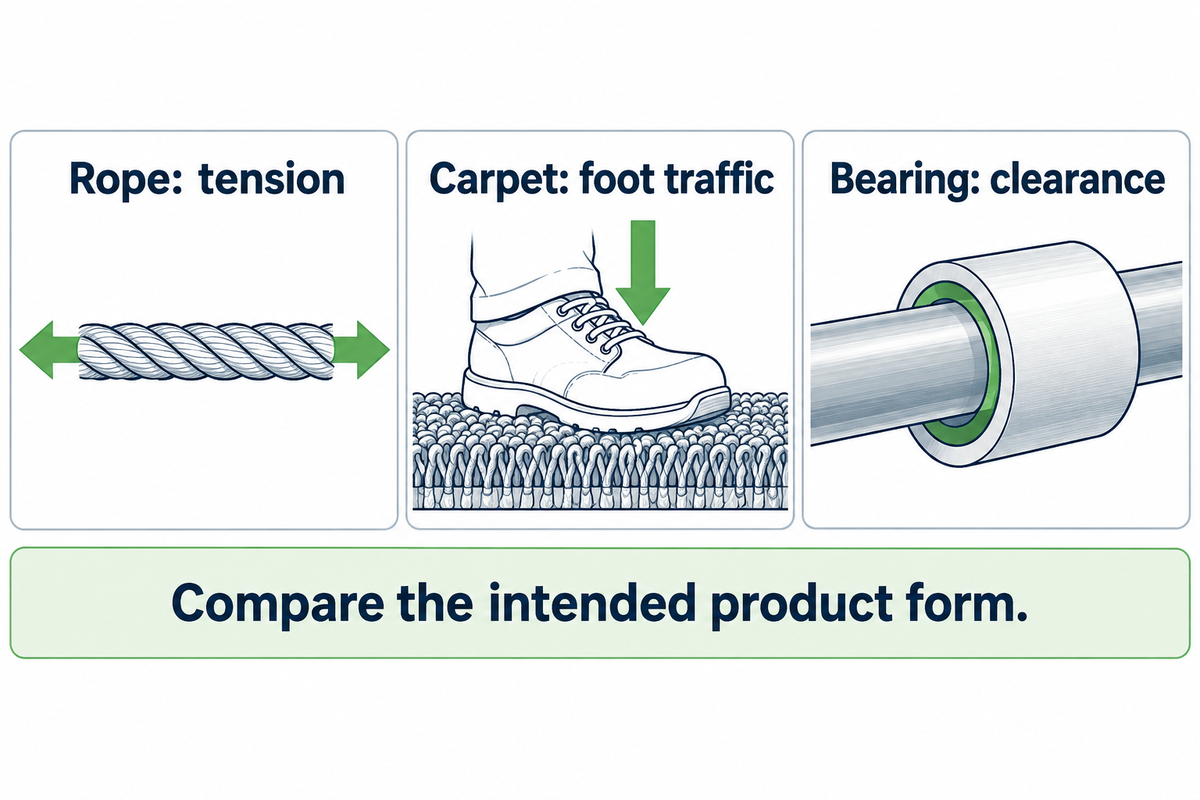
Polyester and nylon are two different polymer families that are available as fibers and as solid engineering materials. In a textile, yarn and finishing influence strength and elasticity. In a machined component, environmental exposure and friction pairs and dimensional stability are important. Compare candidates in the intended product form instead of assigning either family a universal durability advantage.
A claim that nylon is more durable than polyester needs a defined failure mode. A rope breaking in tension, a carpet wearing under foot traffic and a sliding bearing losing clearance test different behavior. Abrasion resistance, impact resistance and tensile strength can’t be used interchangeably.
When service conditions are wet and a high degree of precision is required, acetal or engineering polyester could be reasonable choices. WS Hampshire’s dry-versus-conditioned explanation identifies dimensional stability as a reason to consider those alternatives. Use the actual grades under the same exposure and loading conditions. Other factors, such as relative friction, chemical compatibility and manufacturing behavior, also change with substitution.
In a different discussion, when the product is a lightweight film or packaging, polypropylene can also enter the conversation. The trade-offs are discussed in the polypropylene properties guide; a family comparison is a starting list for trials, not a finished specification.
Where nylon works, and where a different material helps
Typical nylon applications include sliding components, engineering housings, tubing, textiles and packaging film. Wear resistance and toughness can make nylon a useful material of choice, but geometry and environment decide the benefits. Close clearances need a control of moisture; sustained loads require a time-based check for deformation.
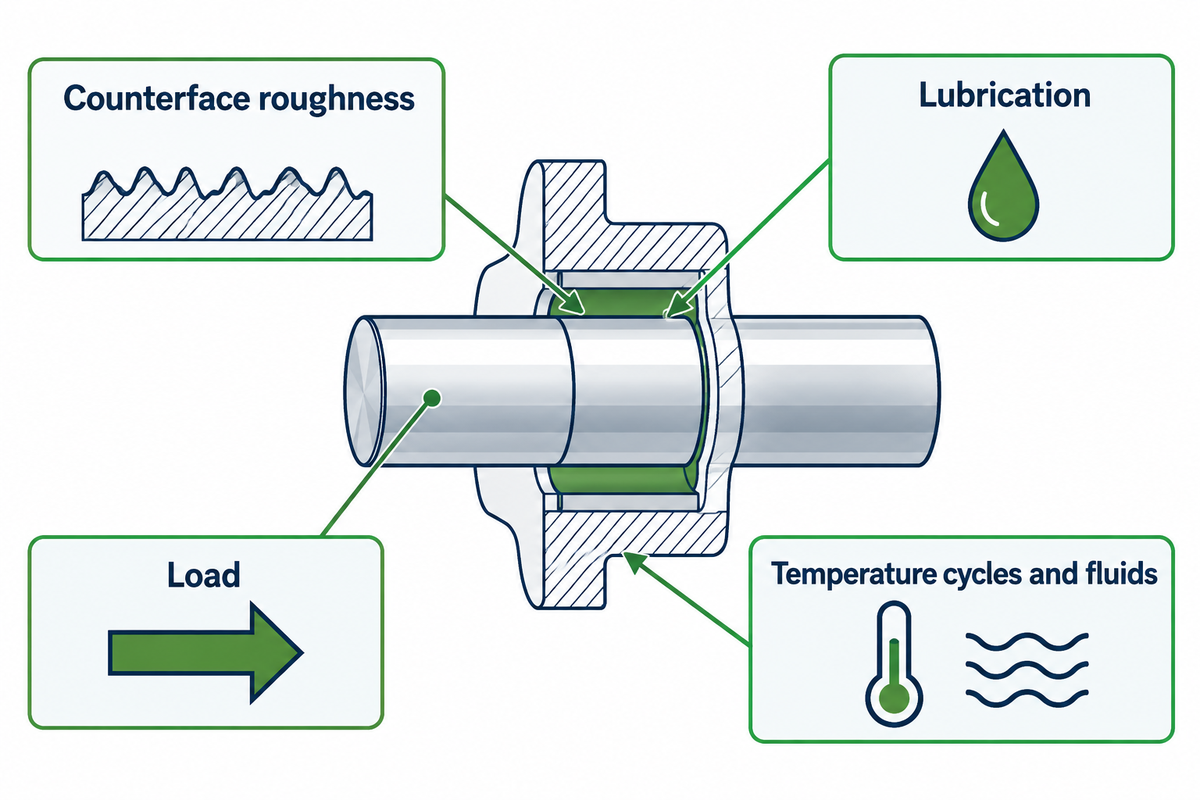
A gear or guide benefits from low-friction behavior only in the actual contact system. The TECAMID 66 black slide-and-wear applications provide one stock-shape example. Wear is influenced by roughness of the counterface, lubrication and load. A standard nylon grade can’t be selected from abrasion resistance alone, and a filled grade may affect the surface running against it.
Automotive components add temperature cycles and fluid exposure to the brief. Tubing introduces bending and pressure. In the textile industry, fibers used for rope or fishing nets need the correct yarn-level tests; the behavior of a molded plaque cannot be transferred to a knot or woven construction.
For a packaging trial, consider two suppliers offering “nylon film”. One offers a laminate with PA layer, the other, a different, multilayer coextrusion. A useful comparison starts with full layer structure, total thickness and sealant. The same conditioning atmosphere, specimen direction and seal test then make the samples comparable. Ordering just by the word nylon leaves the buyer without information to interpret a barrier or puncture test.
Buying nylon: resin producers, stock shapes and part cost
An accepted nylon quotation is comparable when the grade, product form and finishing scope are the same. Resin producers, stock-shape suppliers and finished-part manufacturers offer different levels of the value chain. The final cost of a component includes yield, machining, conditioning and inspection; therefore, a lower raw-material cost may result in an accepted component costing more.
BASF supplies Ultramid. Evonik identifies VESTAMID L as PA12; other VESTAMID families use other chemistries. Arkema owns Rilsan PA11. A brand name identifies the producer’s product family, not every distributor or processor offering nylon products.
Nylatech’s stock-shape guide distinguishes sheets, rods, tubes and custom blanks. A near-net blank can change scrap and machining time. Deburring and inspection deserve line items if a part has many small features.
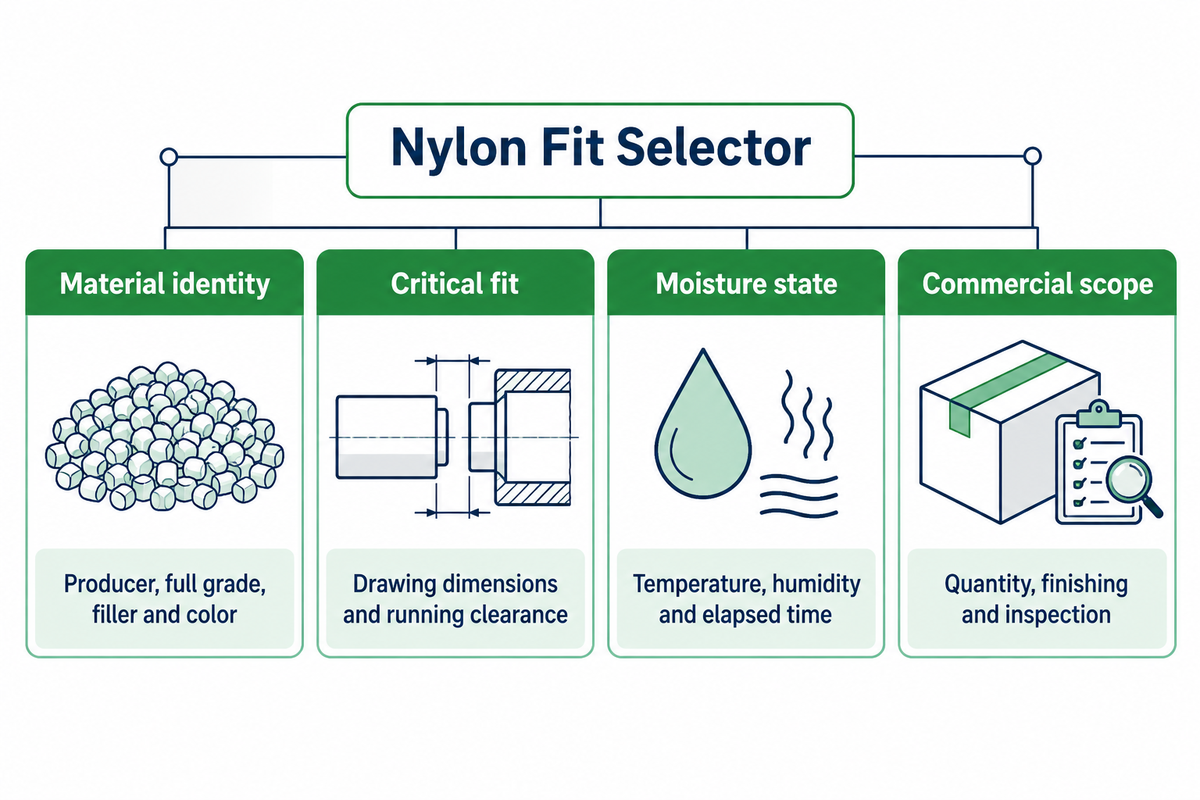
The first column of the Nylon Fit Selector transforms an application to a purchase record. Fill in the first column prior to comparison of offers; use the result column to remember what the samples did.
Nylon Fit Selector: fields for a comparable order
Specification field
What to put in the request
Trial result to retain
Material identity
Producer, full grade, filler and color
Supplied grade and lot
Product form
Molded, cast, extruded, printed or film
Actual manufacturing route
Critical fit
Drawing dimensions and running clearance
Free and assembled measurements
Moisture state
Atmosphere or liquid exposure
Temperature, humidity and elapsed time
Wall thickness
Thinnest and thickest critical sections
Conditioning schedule by section
Operating load
Load direction and duration
Deflection and permanent movement
Contact system
Counterface, speed and lubrication
Wear and clearance change
Thermal exposure
Continuous and peak temperatures
Fit during the relevant cycle
Commercial scope
Quantity, finishing and inspection
Cost per accepted part
The scope of finishing and the grade of materials used belong on the same quotation. For an initial comparison, ask suppliers to break down charges for material, tooling or setup, machining, conditioning and inspection. Confirm the delivery and acceptance conditions of dimensions. Keep any proposed grade change visible on the next quotation, and don’t allow “equivalent nylon” to be substituted.
What is changing in recycled and bio-based nylon?
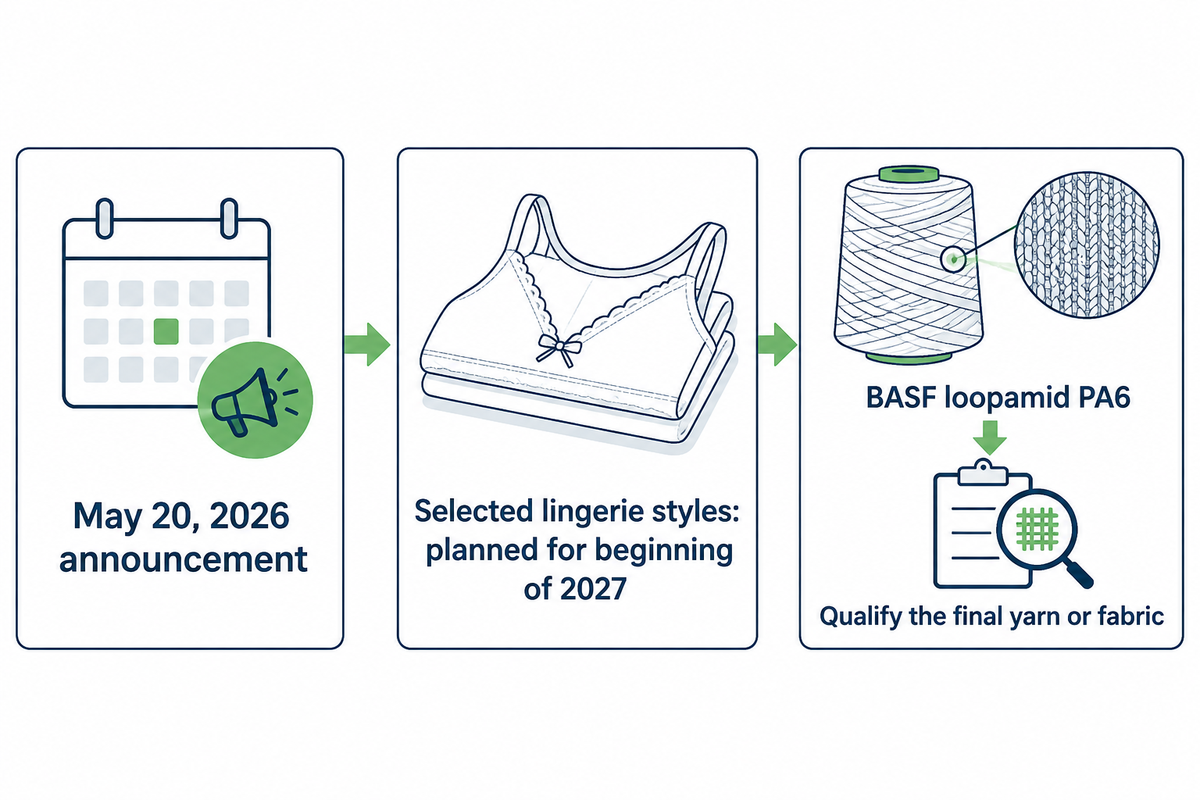
Recycled nylon developments include BASF’s loopamid PA6 made from textile waste, while purchasing must distinguish a recycling route, an announced partnership and a delivered grade. A dated product plan can identify a future sourcing option, but purchasing still runs on actual availability and performance. Bio-based nylons answer a feedstock question that remains separate from collection and recycling.
In its May 20, 2026 announcement with Lindex, BASF describes loopamid PA6 made from textile waste. Selected lingerie styles using it were planned for the beginning of 2027. The announcement is relevant to the fashion industry because it connects nylon waste to a specified application and a rollout date, rather than just a general recycling ambition.
For a project with the stated time frame, distinguish a development sample from production supply. New nylon fibers may require qualification in the final yarn or fabric construction. A successful feedstock trial still leaves dyeing, finishing and the final product’s mechanical behavior to resolve.
Discarded fishing nets and fabric scraps also raise sorting questions regarding identification, coatings, and mixed materials, which can complicate recycling. A request to move towards more sustainable practices becomes actionable when it specifies recycled content, traceability and the recovery system intended for the finished article. “Sustainable fashion” by itself won’t describe the requirements related to the field of purchase.
The environmental impact of nylon includes nylon production, processing, and end-of-life management. Replacing traditional nylon with a renewable-feedstock grade addresses one part of that chain. A reusable nylon item may face a different recovery problem from a multilayer package whose materials must first be separated. Keep the material composition with the product record to enable an accurate collection decision.
For packaging materials, bring the intended structure, thickness and exposure conditions to a discussion of packaging structure and exposure with UD Packaging. This will help provide a basis for comparison and evaluate alternatives.
Frequently asked questions
Is nylon expensive?
PA6 nylon resin averaged 3.06 €/kg in Central Europe in October 2026 on the PlasticPortal.eu price index; the cost of a nylon part then changes with grade, form and processing scope.
A resin pellet quotation and a machined-part quotation price different products. Fillers, color, minimum order, stock allowance and finishing change the accepted-part cost. Compare the same quantity and delivery condition, with inspection included. If one offer includes conditioning and another doesn’t, separate that charge before judging the difference. A generic price per kilogram will miss most of those distinctions.
Is nylon waterproof?
No. Solid nylon can absorb water, while a fabric needs its own liquid-barrier construction.
Absorption into the polymer differs from liquid passing through holes in a weave or through a seam. A coated nylon textile may resist rain while still requiring seam sealing and its own water-resistance test. For a molded part, specify immersion or humid-air exposure instead. For packaging, assess the complete multilayer structure and seals rather than assuming that a PA layer supplies every required barrier.
Does nylon stretch?
Yes. Nylon can deform under load, and textile construction adds further stretch.
Elastic recovery, elongation at break and creep describe different responses. A knitted nylon garment can extend through yarn movement as well as polymer deformation. A rigid component may move slowly under a sustained force even when its first loading looks acceptable. Select a test that matches the application and retain the moisture condition, load duration and direction with the result.
Who invented nylon?
Wallace Carothers and his DuPont research team developed nylon 66.
PA6 followed a different chemical route: the American Chemical Society credits Paul Schlack’s 1938 caprolactam polymerization work. The distinction matters because nylon describes a family, not a single synthesis route. Historical uses such as women’s stockings and toothbrush bristles explain its early consumer association.
Can nylon be recycled?
Yes, when the product and the available recycling route are compatible.
Mechanical and chemical recycling address different feedstocks and contamination problems. A clean, identified factory scrap stream differs from a post-consumer textile blend or multilayer package. Collection access matters as much as the polymer’s technical recyclability. BASF’s loopamid announcement describes a textile-to-textile PA6 recycling route; not every nylon-containing product is acceptable in a household recycling bin. Keep grade and structure records, then match the waste stream to the receiving facility’s requirements. Recycled content also needs a defined basis and traceability; it’s separate from a claim that the finished article will be collected after use.
Can nylon be dyed?
Yes. Nylon textiles can be dyed with a process suited to the fiber and finish.
Color uniformity changes with yarn, moisture history and treatment. A molded or printed component needs its own color and dimensional requirements rather than a textile dyeing recipe. Check the finished item after the proposed treatment.
UD Packaging is an integrated industry and trade enterprise focused on sustainable industrial packaging materials. Based in Jiangyin, Wuxi, Jiangsu Province, we develop and supply packaging solutions for customers who need dependable performance, practical sourcing, and clear technical guidance.
Our core range includes PET strapping, industrial stretch film, strapping seals, and manual, semi-automatic, and fully automatic strapping equipment. We use this blog to explain material properties, test logic, and packaging decisions in terms that procurement, operations, and quality teams can use.
OUR EXPERIENCE
More than a decade in plastic packaging materials, with PET strapping production and customer support across industrial applications.
OUR EXPERTISE
Material selection, tensile-property interpretation, packaging protection, and coordinated supply for medium and heavy-duty goods.