Plastics Knowledge: Material Properties and Film Testing
This plastics knowledge base is published by UD Packaging and covers how polymers are grouped, how plastic films are tested and which edition of each test standard a report should name.
UD Packaging makes PET strapping and industrial stretch film and does not sell contract testing; these guides explain the methods so you can read a report from any laboratory.
UD Packaging, the Jiangyin Producer Behind This Plastics Knowledge Base
UD Packaging makes PET strapping and industrial stretch film at its manufacturing base in Jiangyin, Wuxi, Jiangsu Province, China. We are an integrated industry-and-trade enterprise in plastic packaging materials.
Get a PET Strapping or Stretch Film Quote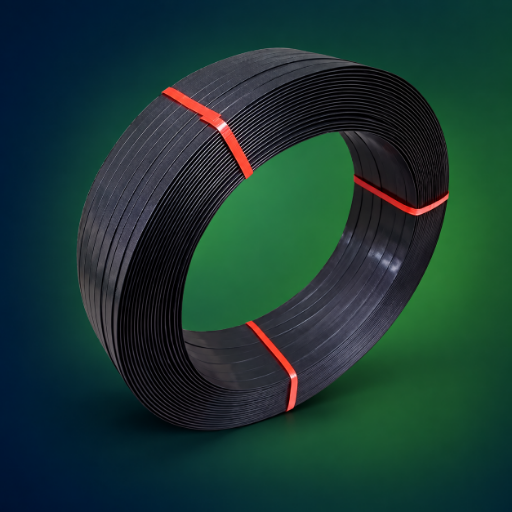
PET Strapping
Our automated production lines for PET strapping, which we developed and introduced ourselves, cover the chain from PET granulation to finished strapping. See PET strapping specifications and supply terms.
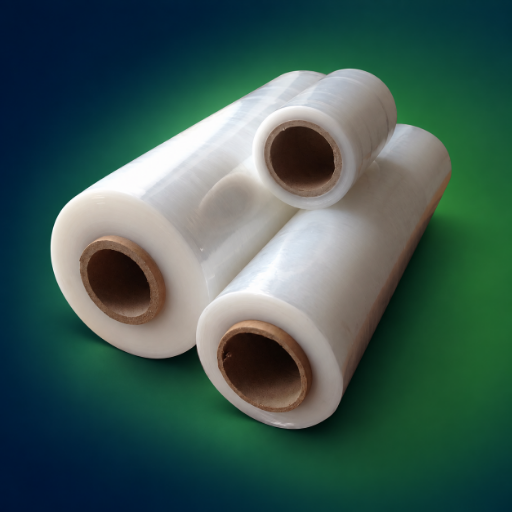
Industrial Stretch Film
We also make industrial stretch film for palletised goods. See industrial stretch film constructions and terms.
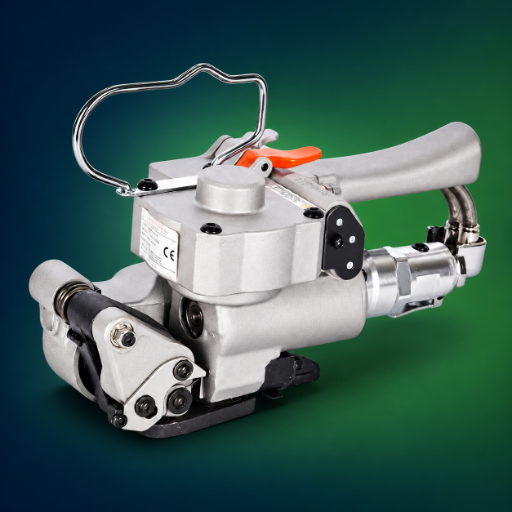
Seals and Strapping Machines
We supply strapping seals (buckles) and manual, semi-automatic and fully automatic strapping machines.
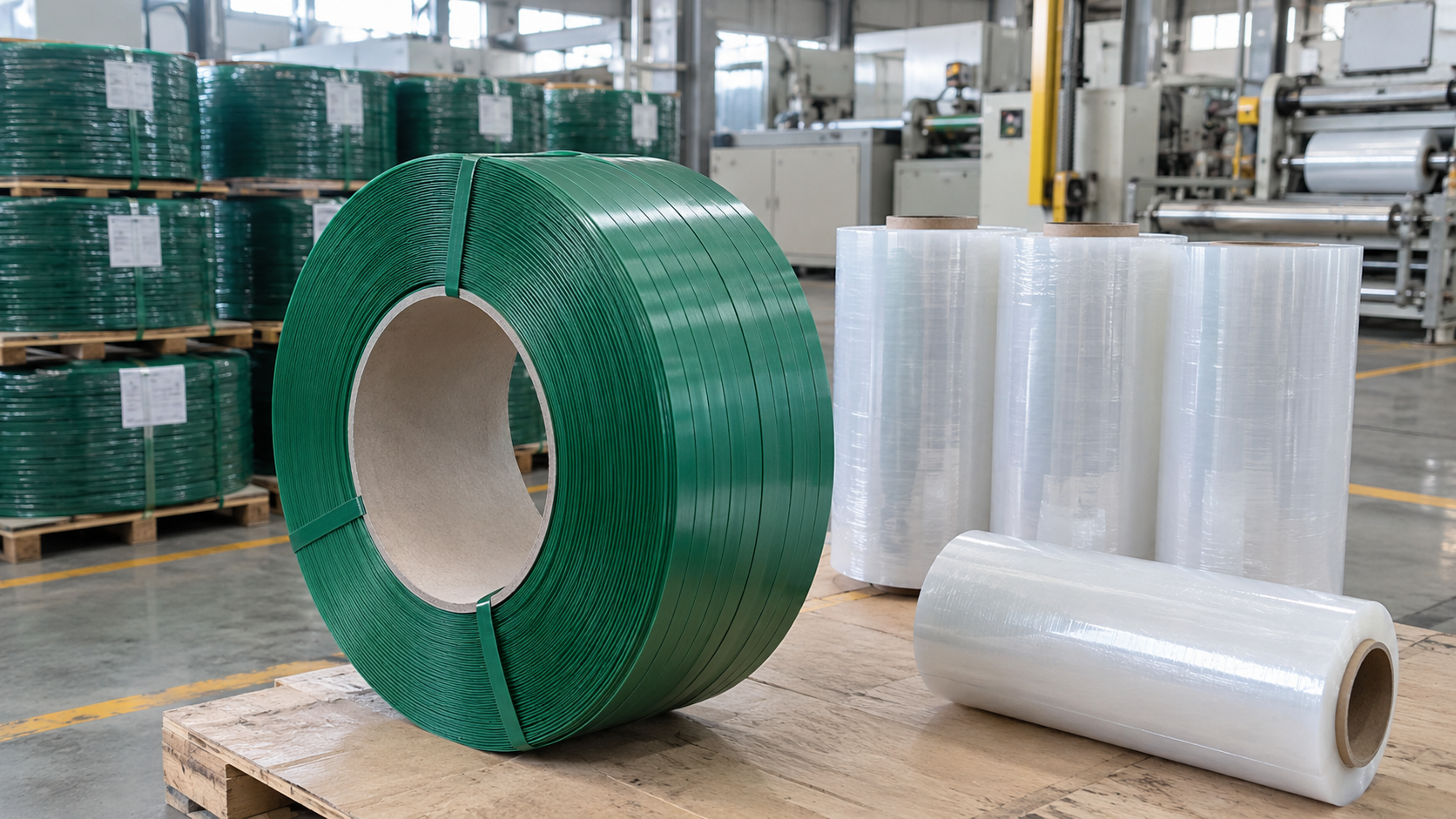
Plastic Materials Guide
Polymer families, the factors that affect resin datasheet values and the checks required to compare two grades.
- plastic material properties and the test behind each one
- How the major resin families are distinguished
- Test Data Comparability Checker
Plastic Test Methods: Film Specimens and Report Fields
Film specimens, test methods, and the report fields that decide whether two film outcomes can be compared.
- plastic film testing setup and results for tensile work
- Film Method Selection Router
- Report Field Completeness Check
Plastic Basics: Thermoplastics, Thermosets, Additives and Resin Codes
Two datasheets for the same polymer can diverge because additives, processing history and test conditions can all shift values. Every plastic is a polymer compounded with additives such as plasticisers, stabilisers, fillers and colourants, and the properties of plastics are due to both resin and the recipe.
| Property | Thermoplastics | Thermosets |
|---|---|---|
| Response to heat | Soften when heated and harden again on cooling | Cure once through chemical crosslinking and do not melt again |
| Structure | Linear or branched polymer chains | Crosslinked three-dimensional network |
| Reprocessing | Can be remelted and reshaped by extrusion or injection molding | Cannot be remelted and reshaped once cured |
| Examples | PE, polypropylene (PP), PVC, polystyrene (PS), PET, nylon (PA), polycarbonate (PC) | Cured epoxy, phenolic and unsaturated polyester resins |
| Where you meet them | PET in strapping and bottles, PE in stretch film, polycarbonate and ABS in automotive parts and electronics housings | Laminates, adhesives and circuit boards |
Resin codes group plastic material types into seven classes for identification. According to ASTM D7611/D7611M-26, resin identification codes are only used to identify plastic resin and are not recycle codes. A resin code provides no information about whether a local program will recycle the item, or if the package was designed for single-use or reuse.
| Code | Resin | Where you see it |
|---|---|---|
| 1 | PET (polyethylene terephthalate) | Bottles, trays, PET strapping |
| 2 | HDPE (high-density polyethylene) | Bottles, crates, drums |
| 3 | PVC (polyvinyl chloride) | Pipe, profiles, blister packs |
| 4 | LDPE (low-density polyethylene) | Films and bags, including LLDPE stretch film |
| 5 | PP (polypropylene) | Caps, containers, woven sacks |
| 6 | PS (polystyrene) | Cups, foam trays |
| 7 | Other resins | Polycarbonate, nylon and multi-material articles |
Each of the seven codes is covered in more depth in the guide to the seven types of plastic.
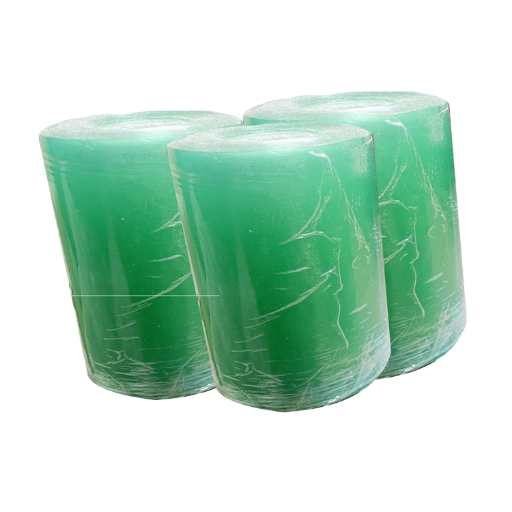
Density is the quickest identity check on an unknown sample, as measuring the density of a sample involves determining how much liquid the sample displaces, in water or in liquids other than water. As ASTM D792-20 states, the density of a sample may be dependent on factors like the degree of crystallinity, the thermal history, porosity, and compositional make-up. Hence, it is reasonable to ask a supplier about density gaps between samples.
The plastic materials guide covers density, tensile, and thermal properties grade by grade. Our blog sets out the density-first route for identifying an unknown plastic in full, including where heat response and resin codes fit in.
Plastics in the Environment: Waste, Microplastics and Reuse
Globally, Geyer, Jambeck and Law estimated that about 8,300 million tonnes of virgin plastic were produced by 2015, and of the approximately 6,300 million tonnes of plastic waste that had been produced by that time, about 9% had been recycled, 12% had been incinerated, and about 79% had accumulated in landfills or the natural environment (Science Advances, 2017).
In the United States, according to the EPA, plastic products are primarily made from virgin fossil fuel feedstocks, and some recycling systems accept only certain resin types (EPA).
According to the EPA, microplastics are plastic particles from 5 mm down to 1 nm, and secondary microplastics break down from larger items such as food wrapping, tires, and synthetic textiles (EPA).
Cumulative plastic production and plastic pollution data are estimates tied to years and to the given locale, so treat these data accordingly. Local collection rules rather than the resin code dictate what a program will accept.
Tensile, Tear, Puncture, Friction and Barrier: Matching the Standard to the Film Result
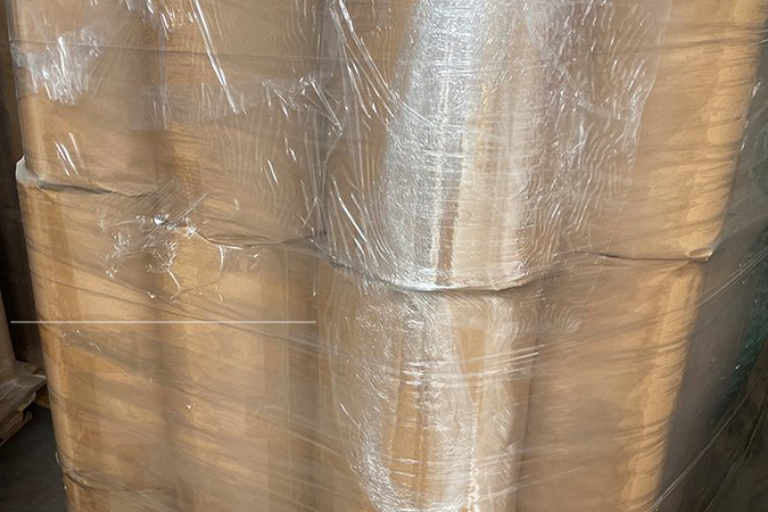
A film result can only be compared to another result if the methods, film thickness, film direction, and test speed are the same, because ASTM D882-26 indicates that the tensile properties of a given specimen can vary due to the thickness of the specimen, its preparation prior to testing, the speed of testing, the type of test grips, and the method of measuring the specimen extension. The film testing methods described below answer different types of queries, and the limiting scope in each row states which of the methods is applicable to your sample.
Question you need answered
Method and main standard
Scope limit
Read more
Plastic tensile strength, elongation and modulus of film
ASTM D882-26; ISO 527-3:2018
Film and thin sheeting under 1.0 mm; ISO 527-3 is not normally suitable for cellular materials or textile-fibre-reinforced plastics
Tensile properties of thicker sheet and moulded bars
ASTM D638-22
Any thickness up to 14 mm; film under 1.0 mm goes to ASTM D882
Tear propagation
ASTM D1922-23 (Elmendorf pendulum), equivalent to ISO 6383-2
Film and nonrigid sheeting; compare only at the same thickness
Puncture test for plastic film
ISO 7765-2:2025 (instrumented, free-falling dart)
Film and sheeting; the 2022 edition is withdrawn
Static and kinetic friction
ASTM D1894-24; ISO 8295:1995
The two methods are not equivalent
Water vapour transmission
ASTM F1249-25 (modulated infrared sensor); ISO 15106-2:2003
ASTM F1249: sheets and films up to 3 mm
Oxygen and gas transmission
ISO 15105-2:2025 (equal-pressure method)
Film and sheeting; the 2003 edition is withdrawn
Four Results That Do Not Line Up the Way Buyers Expect
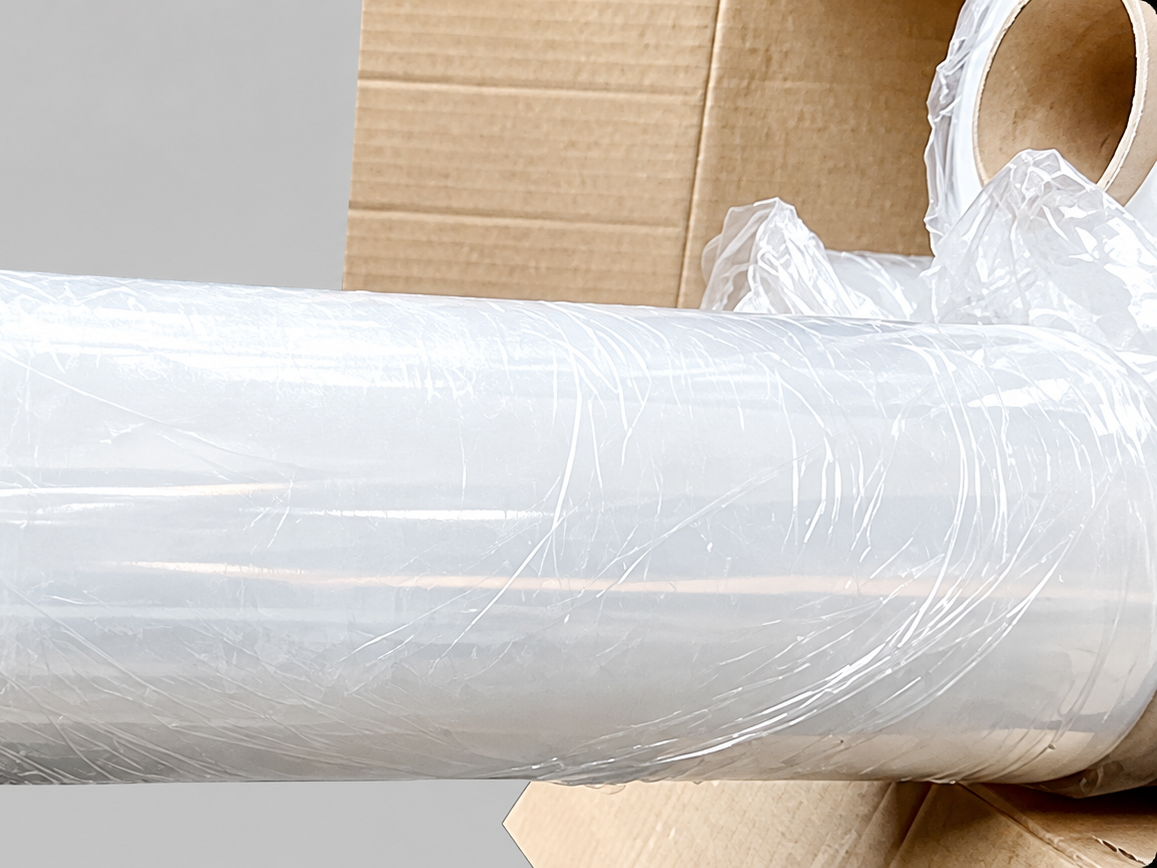
It is not always the case that a thicker film is a better barrier: ASTM F1249-25 Note 1 states that the inverse relationship between water vapor transmission rate and thickness may not always apply.
Though it may seem intuitively correct that a heavier gauge film would tear less, ASTM D1922-23 states that there is no direct, linear relationship between tearing force and specimen thickness, and some films reproduce within 5% of the mean while others do no better than 50%.
Friction values carry a date: slip additives bloom over time, and ASTM D1894-24 warns that comparing films produced at different times is sometimes meaningless.
The common assumption that an ASTM and an ISO friction value can be lined up fails here, since ASTM D1894-24 states that it is not equivalent to ISO 8295 and that results cannot be compared directly.
UD Standard Edition Tracker: Current Editions of Plastics and Film Test Standards
A report that names a withdrawn edition, or no edition at all, cannot be matched to your specification line by line. The risk is real in both directions: ISO 527-3:1995 has been withdrawn and replaced by ISO 527-3:2018, while China's GB/T 1040.3-2006 is an identical adoption of that 1995 text and stays current until its 2026 edition takes effect. Every row below was checked against the publisher's own record.
| Standard | Status | Scope in one line | What to check on your report |
|---|---|---|---|
| ASTM D882-26 | Current, updated 2026-04-29 | Tensile properties of thin sheeting and film under 1.0 mm | Edition year, specimen width, grip separation and test speed |
| ISO 527-3:2018 | Confirmed 2024 | Tensile test conditions for films and sheets under 1 mm | Specimen type and test speed; not for cellular or textile-reinforced plastics |
| ASTM D638-22 | Current, updated 2022-07-21 | Dumbbell specimens up to 14 mm thick | Specimen type and thickness; film under 1.0 mm belongs under ASTM D882 |
| GB/T 1040.1-2025 | Current, in force 2025-10-01 | General principles for tensile testing of plastics | Replaces the 2018 edition; check which edition the report names |
| GB/T 1040.3-2006 | Current until 2026-12-01 | Tensile test conditions for films and sheets under 1 mm | Identical adoption of ISO 527-3:1995; a report dated before December 2026 follows that text only if it names the 2006 edition |
| GB/T 1040.3-2026 | Published 2026-05-25, effective 2026-12-01 | Same subject, new edition | Whether the report names the 2006 or the 2026 edition |
| ASTM D1922-23 | Current, updated 2023-05-15 | Elmendorf pendulum tear for film and nonrigid sheeting | Direction (MD or TD) and thickness beside each tear value |
| ISO 6383-2:1983 | Confirmed | Elmendorf tear, equivalent to ASTM D1922 | Specimen direction and count |
| ISO 7765-2:2025 | Current; 2022 edition withdrawn | Instrumented puncture with a free-falling dart | Whether the 2022 or the 2025 edition was used |
| ASTM D1894-24 | Current, updated 2024-12-16 | Static and kinetic coefficients of friction of film and sheeting | Film age at test and the surface pair |
| ISO 8295:1995 | Confirmed 2026 | Coefficients of friction, primarily for quality control | Results not directly comparable with ASTM D1894 |
| ASTM F1249-25 | Current, updated 2025-11-10 | Water vapour transmission rate by modulated infrared sensor, up to 3 mm | Test temperature, humidity and specimen thickness |
| ISO 15106-2:2003 | Confirmed | Water vapour transmission rate by infrared detection sensor | Test temperature and humidity |
| ISO 15105-2:2025 | Current; 2003 edition withdrawn | Gas transmission rate by the equal-pressure method | Test gas and edition |
| ASTM D792-20 | Current, updated 2020-07-29 | Density and specific gravity by displacement | Method A (water) or B; not equivalent to ISO 1183-1 Method A |
| ASTM D648-18 | Current, updated 2018-04-23 | Deflection temperature under flexural load, 3 mm and thicker | Stress level used; results are not compared with ISO 75 |
| ASTM D7611/D7611M-26 | Current, updated 2026-07-24 | Resin identification codes on manufactured articles | No known ISO equivalent |
| GB/T 22344-2018 | Current, in force 2018-10-01 | Polyester strapping for packaging, the Chinese product standard; replaces the 2008 edition | Product requirements sit here, test conditions in GB/T 1040 |
| ASTM D3950-23 | Current, updated 2023-10-17 | Nonmetallic strapping and joining methods | Strap values and joint values reported separately |
Supply, Quotation and Lead Times for PET Strapping and Stretch Film
Price follows the product line, the specification and the quantity, and every figure comes back in a written quotation. The two product lines run on different terms, so the table maintains the separation.
| Term | Stretch film | PET strapping |
|---|---|---|
| Quotation | For stretch film we return a written quotation within 24 hours on business days once the film construction and quantity are known. | The written quotation states the final MOQ, the production window and the trade terms. |
| Planning quantity | Confirmed in the written quotation once the film construction is known. | For PET strapping, use 1,000 kg as the initial RFQ planning quantity; the written quotation confirms the final MOQ. |
| Production window | Stretch film production runs are scheduled at 20-25 days after deposit and specification confirmation. | The production window is confirmed in the written quotation once the commercial and technical requirements are agreed in writing. |
| Payment | For stretch film, standard payment is a 30% T/T deposit with the balance before shipment or against the copy of the B/L. | Confirmed in the written quotation. |
| Trade terms | PET strapping is quoted on FOB, CIF, FCA or CIP; stretch film is quoted FOB as standard, with EXW or CIF on request; final terms are confirmed in the quotation. | |
| Samples | Evaluation samples are free of charge; freight is confirmed in the quotation. | |
Cost per Accepted Pallet, Not Price per Kilogram
The film that costs you least is the one that keeps loads accepted, so count these together rather than comparing price per kilogram:
- film used per pallet at the pre-stretch you actually run;
- rewraps at the end of the line;
- loads rejected or reworked on arrival.
Containment on a pallet is dependent on the number of wraps and pre-stretch used. After wrapping, there is some degree of relaxation. This is why a sample load test yields better data than a film datasheet.
Quality Assurance and Test Standards for PET Strapping
Quality control on our PET strapping follows five published steps, from the specification record to the handling of a reported nonconformance.
How Each PET Strapping Order Is Checked
We verify the specification by recording dimensions, mechanical requirements, surface, coil, joint, machine, package and packing fields before release.
Batch control connects the stated PET input route to the finished-strap order for follow-up.
Specified methods test the relevant tensile and joint-strength properties of the finished strap.
Before shipment, we check the quoted coil format, identification and pallet requirements.
Reported nonconformance is compared with the written acceptance criteria used for the order.
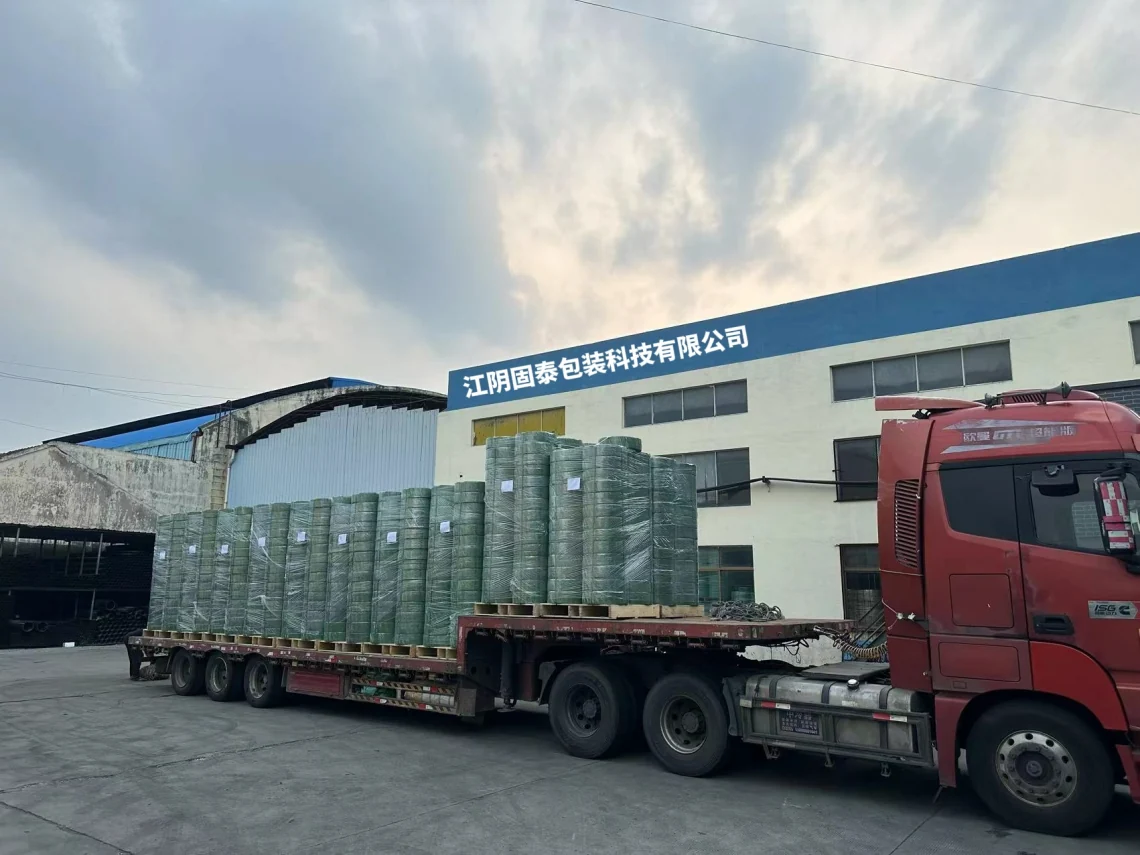
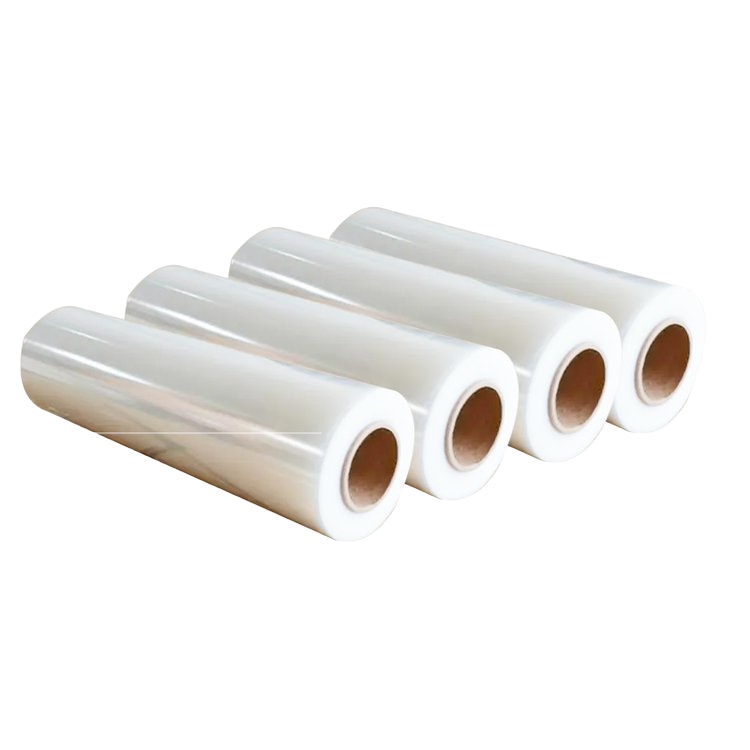
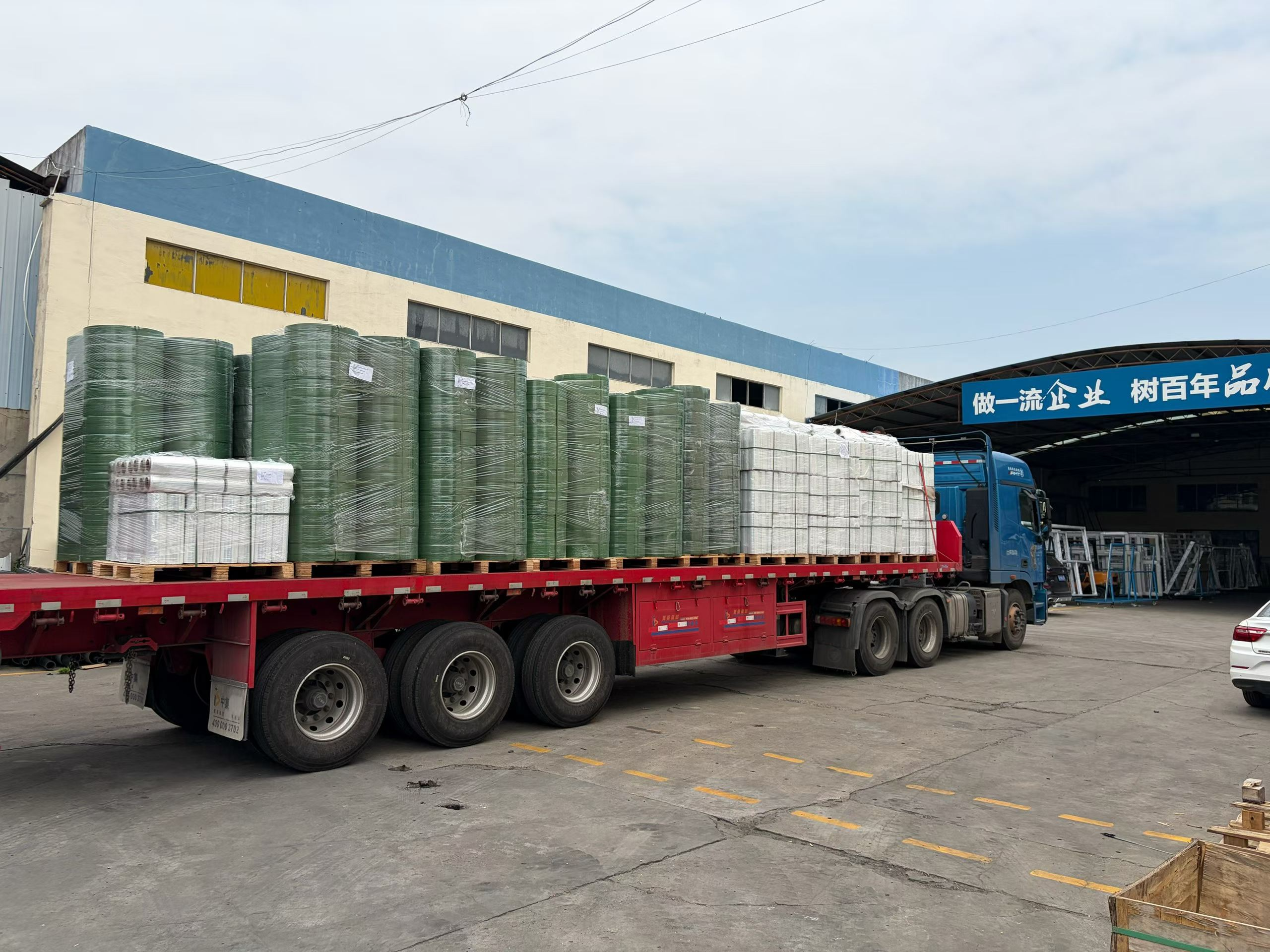
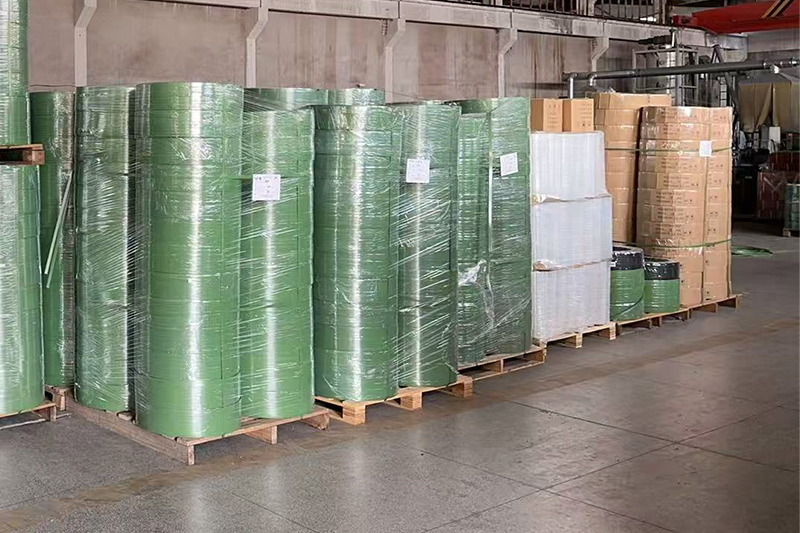
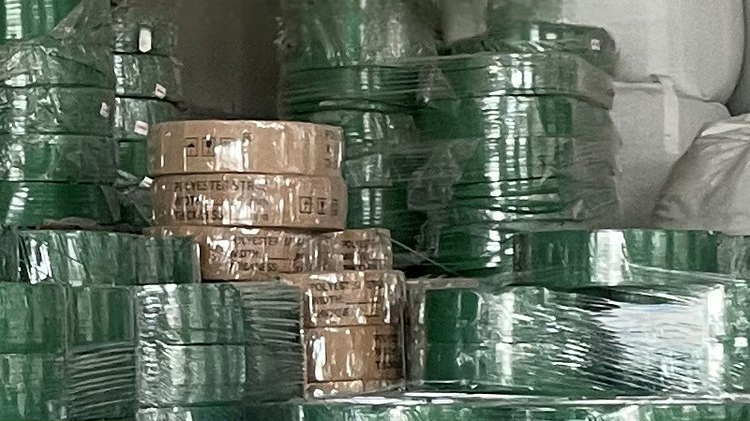
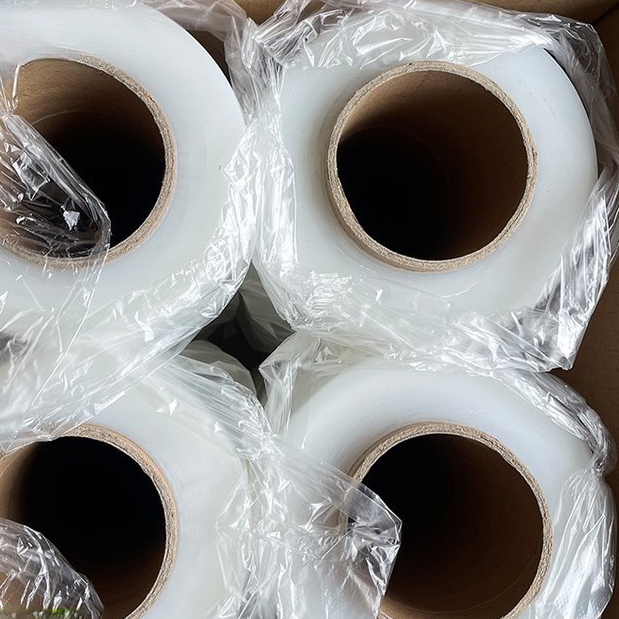
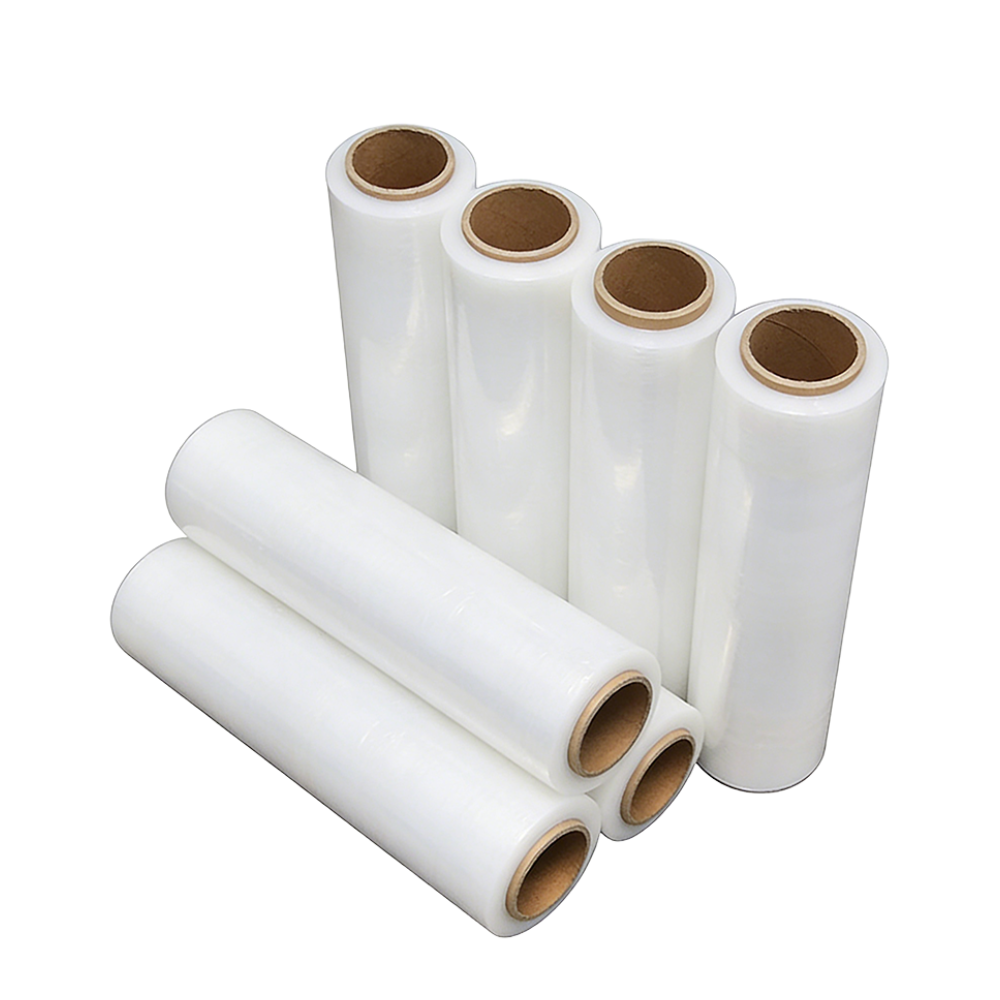
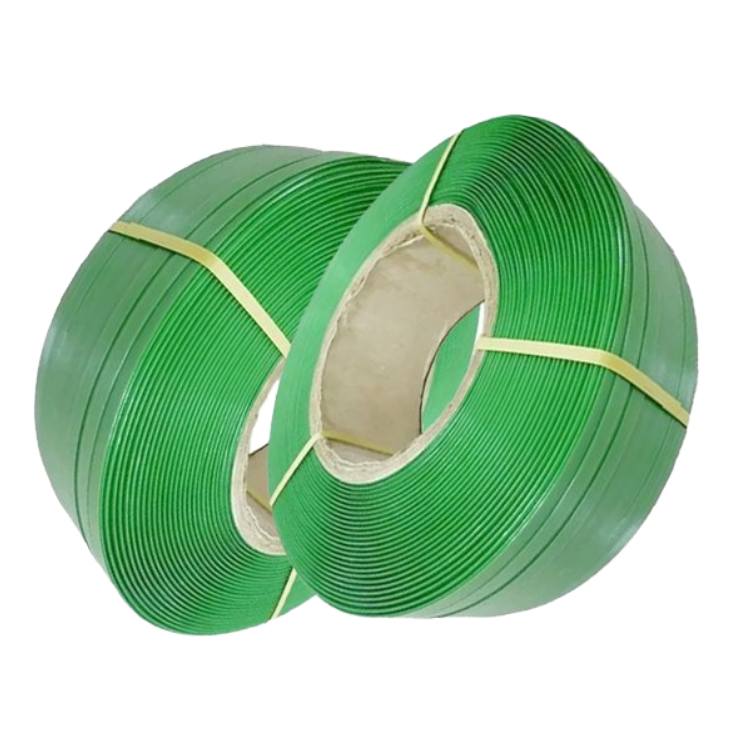
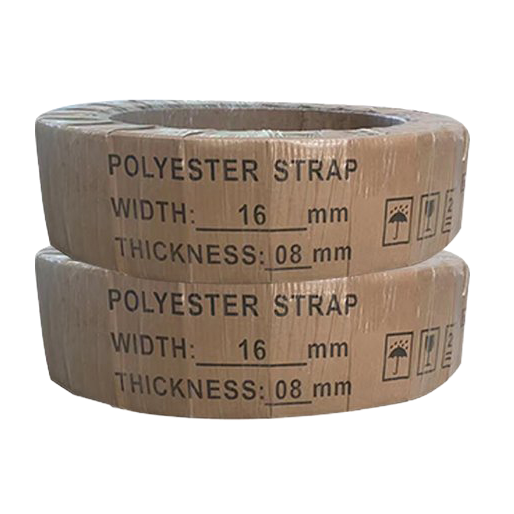
We deeply understand that safety and stability are the lifelines of heavy-duty packaging.
Test Methods
Tensile testing for our PET strapping references GB/T 1040.1 and GB/T 1040.3; the edition applied to an order is stated in that order's test report. GB/T 1040.1 sets the general principles, and GB/T 1040.3 sets the tensile test conditions for films and sheets under 1 mm. GB/T 1040.3-2006 is an identical adoption of ISO 527-3:1995 and GB/T 1040.3-2026 takes effect on 1 December 2026, so the edition line tells you which text a result was produced under.
FAQ: Plastics Knowledge, Standards and Supply
Is PVC a thermoplastic or a thermoset?
PVC is a thermoplastic: it becomes soft at high temperature and can be remelted and reshaped; it is extruded into pipe and profiles. Thermosets like cross-linked epoxy can not be reshaped.
Is it true that 91% of plastic is never recycled?
The figure comes from Geyer, Jambeck and Law (2017), who estimated that of about 6,300 million tonnes of plastic waste generated globally up to 2015, around 9% had been recycled, 12% incinerated and 79% had accumulated in landfills or the natural environment. It is a global, cumulative estimate to 2015 and should not be interpreted as the current annual rate of any country.
Which standards cover tensile testing of plastic film?
Film and thin sheeting under 1.0 mm fall under ASTM D882-26, and films and sheets under 1 mm under ISO 527-3:2018, while ASTM D638-22 takes over for material 1.0 mm and thicker. China's GB/T 1040.3-2006 is an identical adoption of ISO 527-3:1995, and its 2026 edition takes effect on 1 December 2026. The UD Standard Edition Tracker lists the current edition of each.
What is a technical data sheet?
A technical data sheet presents nominal single-point values for a resin grade, measured on standard test specimens under given test conditions. You may use this to help select a material, and a test report on your samples would illustrate how your film or sheeting performs.
Does UD Packaging run a testing laboratory?
Contract testing is outside our range: UD Packaging makes PET strapping and industrial stretch film, and we do not offer microplastics analysis. The guides on this site explain the methods so you can read a report from any laboratory, and tensile testing for our own PET strapping references GB/T 1040.1 and GB/T 1040.3.
Are evaluation samples free?
Evaluation samples are free of charge; freight is confirmed in the quotation. Tell us the product line (PET strapping or stretch film), the specification you are comparing against and the quantity you plan to order.
What quantity should a first PET strapping enquiry use?
For PET strapping, use 1,000 kg as the initial RFQ planning quantity; the written quotation confirms the final MOQ. Stretch film quantities are confirmed in the written quotation once the film construction is known.
How fast is a stretch film quotation?
For stretch film we return a written quotation within 24 hours on business days once the film construction and quantity are known. Stretch film production runs are scheduled at 20-25 days after deposit and specification confirmation.
Which trade terms can UD Packaging quote?
PET strapping is quoted on FOB, CIF, FCA or CIP; stretch film is quoted FOB as standard, with EXW or CIF on request; final terms are confirmed in the quotation. For stretch film, standard payment is a 30% T/T deposit with the balance before shipment or against the copy of the B/L.