
Karry
I write about how plastics behave, from the effects of moisture on nylon to the strength and clarity of films. My aim is to help readers compare materials, understand what test results actually measure, and recognize where a property rating may fall short of explaining performance under different conditions.
PVDF (Polyvinylidene Fluoride): Structure, Material Properties, Processing, and Application Limits
PVDF is a melt-processable, semi-crystalline thermoplastic fluoropolymer—formally named polyvinylidene fluoride or polyvinylidene difluoride (CAS 24937-79-9)—synthesized from repeating -(CH2-CF2)n- units with 59.4 wt% fluorine. For extrusion and injection molding, PVDF melt temperatures typically span 200 °C to 260 °C (with extrusion…
Shore Hardness Scale: How to Read Shore A and Shore D Values
Shore hardness scale tests the penetration of a calibrated spring-loaded indenter into a specimen of rubber, elastomer, or plastic with a dimensionless 0 to 100 gauge scale measured under ASTM D2240, ISO 868, and ISO 48-4. On the standard Type…
Polycarbonate Plastic: Properties, Grades and Common Failure Modes
Polycarbonate is an amorphous engineering thermoplastic chosen when a part needs a useful balance of impact tolerance, transparency, dimensional capability and heat resistance. Resin name alone isn’t a design specification. Things like grade, additives, color, thickness, processing history, test methods,…
Polyvinyl Chloride (PVC): Properties, Grades and Uses
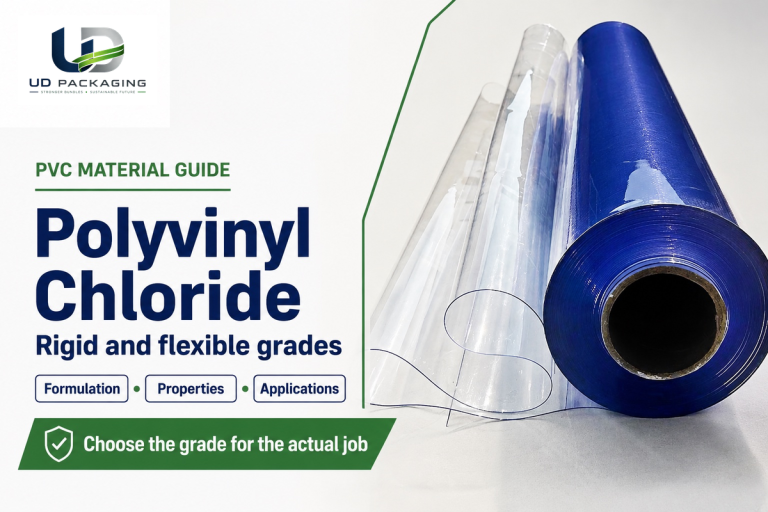
Polyvinyl chloride is a thermoplastic that becomes rigid pipe, pliable tubing or clear sheet, through changes in formulation and processing. The PVC polymer identifies the material family, and the individual PVC grades determine how a product bends and carries a…
Ductility Explained: Plastic Deformation, Elongation and Brittle Failure
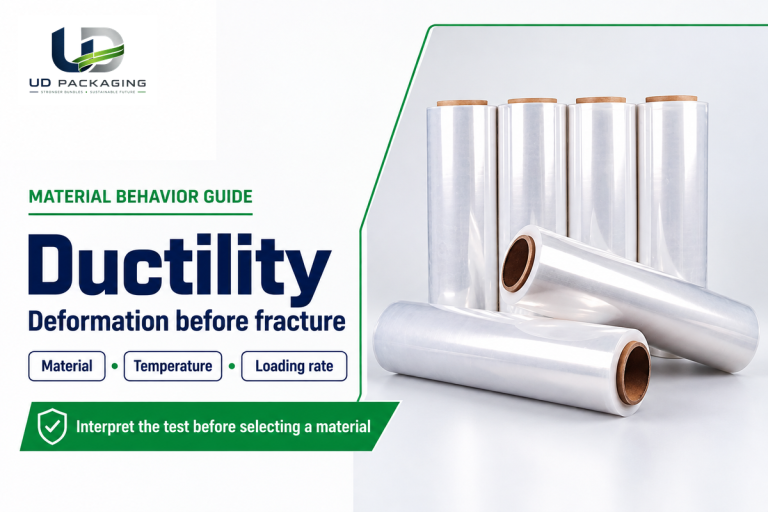
In conventional materials science, ductility is the ability of a material to sustain appreciable plastic deformation before fracture. Copper drawn into a wire is the familiar example. Plastics can also stretch, yield and form a neck, but the same polymer…
Nylon Plastic: Types, Properties and the Effect of Moisture
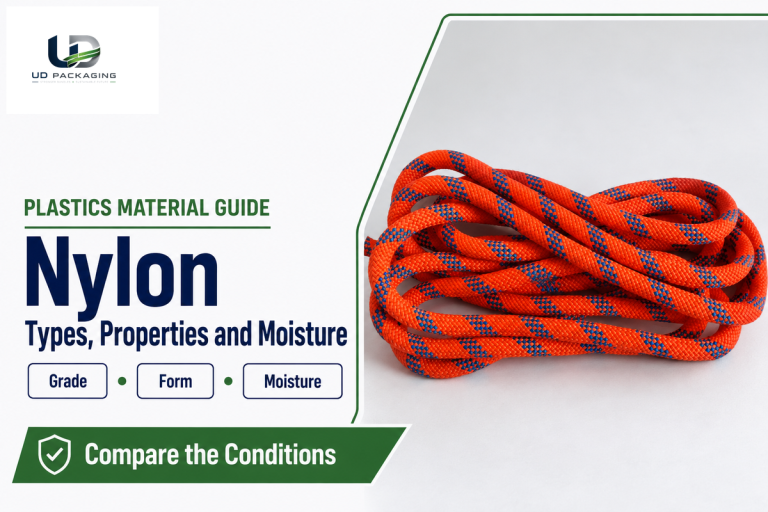
Nylon is a family of thermoplastic polyamides used in molded parts, film and synthetic fiber. The same polymer family can become a gear, a stocking or a packaging layer. The right choice of nylon depends on its grade and degree…
Tackiness in Polymers: What Tack Tests Measure and What They Miss
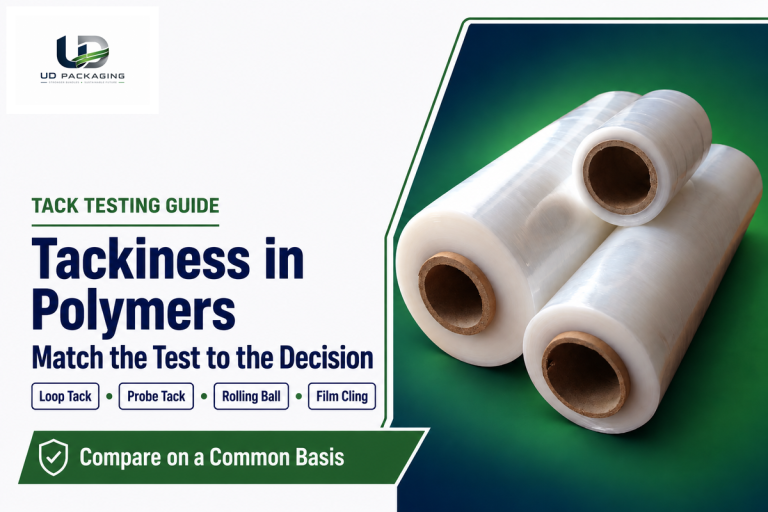
At a glance Tack: brief-contact adhesion. Main comparison: loop, probe, rolling ball and film peel cling. Report: the method, specimen, contact conditions, measured quantity and failure location. Tackiness is the ability of a material to form an initial adhesive bond…
Transparent Plastic Materials: Compare Clarity, Haze and Impact
Transparent plastic materials include acrylic, polycarbonate and PETG. When selecting a polymer for a display, consider the view the customer needs. For a protective cover, account for the expected impact. Then evaluate the exact grade, finished thickness and the surface…
High vs Low Density Polyethylene: Compare HDPE and LDPE Film
Comparing high vs. low density polyethylene starts with chain structure: generally, HDPE provides a stiffer film while LDPE offers a softer and more flexible film. The right purchasing question is which converted film meets the bag’s handling, puncture, barrier and…
How to Calculate Tensile Strength of Plastic Film: Formula, Units, and Example
How to calculate tensile strength of plastic film is answered by dividing the force at the applicable method-defined strength point by the specimen’s original width multiplied by its original thickness. Then we take the film specimen’s original (or “initial”) width…