PVDF is a melt-processable, semi-crystalline thermoplastic fluoropolymer—formally named polyvinylidene fluoride or polyvinylidene difluoride (CAS 24937-79-9)—synthesized from repeating -(CH2-CF2)n- units with 59.4 wt% fluorine. For extrusion and injection molding, PVDF melt temperatures typically span 200 °C to 260 °C (with extrusion commonly running at 210 °C to 260 °C), allowing PVDF plastic to bridge the engineering gap between commodity thermoplastics like polypropylene and non-melt-processable perfluoropolymers like PTFE.
What Is PVDF (Polyvinylidene Fluoride) and How Does Its Semi-Crystalline Structure Work?
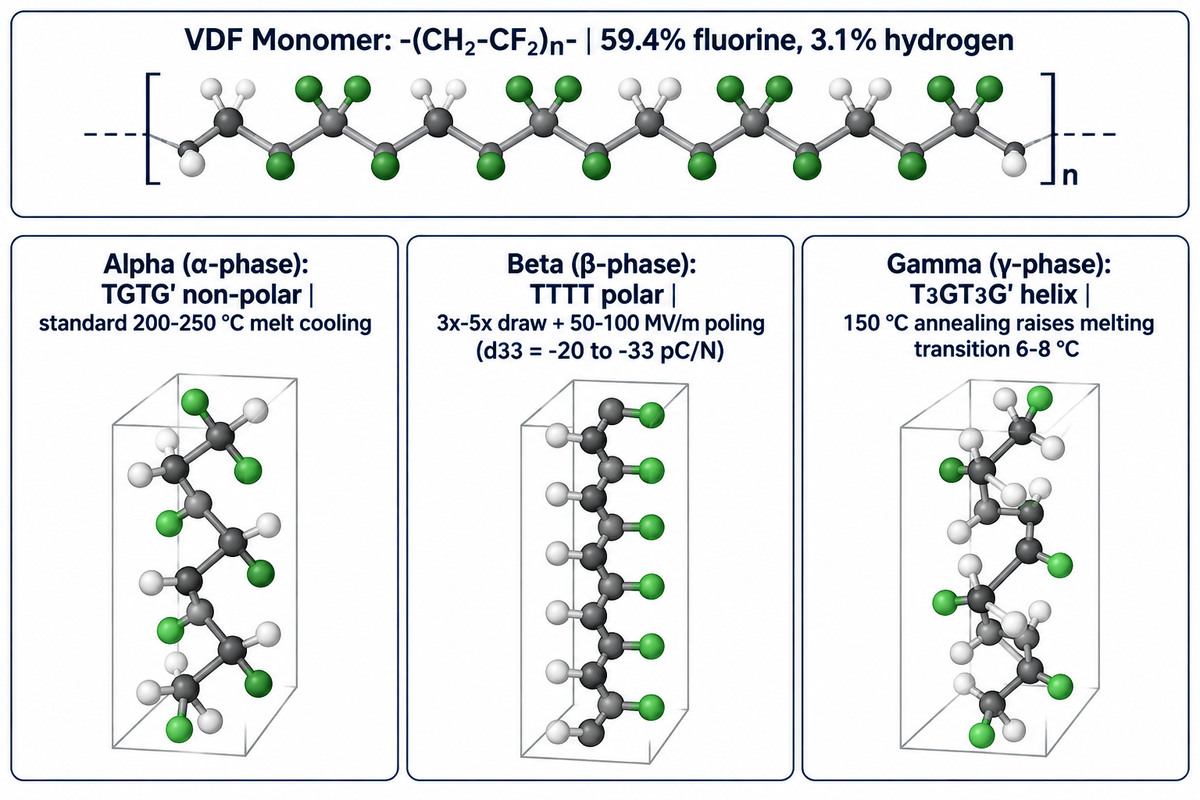
Polyvinylidene fluoride (PVDF, CAS 24937-79-9) is a specialty thermoplastic fluoropolymer produced by the free-radical suspension or emulsion polymerization of gaseous vinylidene fluoride (VDF, 1,1-difluoroethylene, CH2=CF2) into a linear -(CH2-CF2)n-polymer chain containing 59.4% fluorine and 3.1% hydrogen by weight.
During this chemical synthesis, monomer units link primarily head-to-tail, as documented in peer-reviewed PVDF solubility and stability research. Unlike fully fluorinated polytetrafluoroethylene (PTFE, 76.0 wt% fluorine), the alternating -CH2- and -CF2- groups create a strong permanent molecular dipole of roughly 2.1 Debye per repeat unit and a carbon-fluorine bond dissociation energy near 485 kJ/mol. In industrial practice, PVDF is a semi-crystalline engineering polymer whose amorphous regions and crystalline lamellae coexist in a coupled two-phase microstructure, linking its properties and structure directly to processing history. Depending on molecular weight, comonomer content, and thermal cooling rate, the crystallinity of PVDF spans 30% to 70% across copolymer and homopolymer grades: unmodified melt-cooled homopolymers typically stabilize between 50% and 60% (reaching up to 70% in highly crystalline grades), whereas VDF-HFP copolymers crystallize at 30% to 45%, as shown in published β-phase PVDF crystallography studies. Those tightly packed crystalline lamellae provide mechanical stiffness and thermal stability up to 150 °C (302 °F), while the amorphous phase remains rubbery above its sub-zero glass transition temperature in semi-crystalline polymers (Tg of -35 °C to -40 °C).
Engineers use the 3-Phase Crystal-to-Property Map to link part design and dimensional controls to polymorphs directly in crystal engineering. This map focuses on the industrial molding process, high-temperature annealing, and the electroactive film manufacturing process and how they influence the five known polymorphs (α, β, γ, δ, and ε).
Standard melt cooling from 200–250 °C in extrusion and injection molding
Thermodynamically stable baseline for structural PVDF pipes, valves, rods, and chemical tank linings
Beta (β-phase of PVDF)
All-trans planar zigzag (TTTT)
Highly polar (parallel alignment of the -CF2- dipoles)
Uniaxial or biaxial mechanical drawing (3x–5x at 70–100 °C) plus high-field poling (50–100 MV/m), or polar-solvent spin coating
Generates the highest ferroelectric and piezoelectric properties (d33 = -20 to -33 pC/N) for acoustic transducers, hydrophones, and piezoelectric energy harvesting
Gamma (γ-phase)
T3GT3G' intermediate helix
Moderately polar
High-temperature isothermal crystallization or prolonged annealing near 150 °C
Raises local melting transition by 6–8 °C and relieves internal residual stress in thick machined stock shapes, accompanied by measurable secondary post-shrinkage during annealing
Why Is PVDF Piezoelectric Only After Mechanical Stretching or High-Voltage Poling?
As-molded PVDF commonly contains predominantly non-polar alpha-phase crystallites (though specific processing histories can produce some beta or mixed-phase material) and therefore has little or no macroscopic piezoelectric response unless polar domains are both formed and electrically oriented by processing and poling. Unlocking the piezoelectric properties of PVDF requires converting α-phase into polar β-phase of PVDF (TTTT conformation) by drawing films of PVDF three to five times at 70–100 °C.
After the mechanical drawing process forces molecular chains to adopt an all-trans geometry, a 50 to 100 MV/m corona or contact electric field is applied to align crystalline domains along the thickness axis, resulting in a stable piezoelectric coefficient (d33) of -20 to -33 pC/N and a permanent piezoelectric and pyroelectric response.
Core PVDF Properties: Mechanical, Thermal, Electrical, and Flame-Retardant Benchmarks
When comparing engineering thermoplastic materials and polymer property data, unmodified PVDF homopolymer stands out as the strongest and stiffest of the common melt-processable fluoropolymers, though physical and mechanical values vary with molecular weight, comonomer architecture, and specimen conditioning.
In the following tables, verified values for standard homopolymer grades (such as Syensqo Solef 6010 and Kynar 740, reported in the Syensqo Solef 6010/1001 homopolymer datasheet) are listed, as well as typical ranges for a VDF-HFP copolymer.
Core PVDF Properties Benchmark Table (Unmodified Homopolymer vs. VDF-HFP Copolymer at 23 °C)
Property Parameter
Unmodified PVDF Homopolymer
VDF-HFP Copolymer
Unit
Test Standard & Condition
Specific Gravity / Density
1.77 – 1.79 (1.78 typical)
Grade-specific per copolymer datasheet
g/cm³
ASTM D792 / ISO 1183 (23 °C)
Tensile Strength at Yield
30 – 70 (45 – 55 typical molding grades)
24 – 38 (3,500 – 5,500)
MPa (psi)
ASTM D638 / ISO 527 (grade-specific speed)
Elongation at Break
20 – 100
200 – 400 (up to 500 in flexible tubing)
%
ASTM D638 / ISO 527 (specimen-dependent)
Flexural Modulus
1,700 – 2,300 (246 – 333)
550 – 1,250 (80 – 181)
MPa (kpsi)
ASTM D790 / ISO 178 (23 °C)
Notched Izod Impact Strength
80 – 160
300 – 800 where a measurable break occurs; some high-HFP specimens may report “no break”
J/m
ASTM D256 (23 °C, 3.2 mm specimen)
Durometer Surface Hardness
75 – 80
60 – 70
Shore D
ASTM D2240 (15 s dwell)
Melting Point (Tm)
168 – 178 (334 – 352)
135 – 160 (275 – 320)
°C (°F)
ASTM D3418 / ISO 11357-3 (10 K/min DSC)
Glass Transition Temperature (Tg)
-35 to -40
-38 to -42
°C
ASTM D3418 / DMA
Heat Deflection Temperature (HDT)
110 – 115 (at 1.82 MPa) / 140 – 148 (at 0.45 MPa)
60 – 85 (at 1.82 MPa)
°C
ASTM D648 (unannealed bar)
Continuous Service Temperature
-40 to +150 (-40 to +302)
-40 to +120 (-40 to +248)
°C (°F)
Unstressed thermal aging rating
Coefficient of Linear Thermal Expansion
120 – 140
140 – 170
10⁻⁶ /K
ASTM D696 (23–100 °C)
Water Absorption (24 hr Immersion)
< 0.04
< 0.05
%
ASTM D570 (23 °C, 24 hr)
Dielectric Constant (Relative Permittivity)
8.0 – 12.0 (at 1 kHz) / 6.0 – 7.5 (at 1 MHz)
8.5 – 11.0 (at 1 kHz)
Dimensionless
ASTM D150 (23 °C)
Dielectric Strength
20 – 25 (1 mm plaque) / 39 – 59 (thin film)
18 – 24 (1 mm plaque)
kV/mm
ASTM D149 (short-time oil)
Flammability & Limiting Oxygen Index (LOI)
Formulation- and thickness-specific (e.g., UL 94 V-0 at 0.8 mm and 44% LOI on tested homopolymer)
Formulation- and thickness-specific per tested grade and thickness
Rating / % O₂
UL 94 & ASTM D2863
Several physical and chemical properties in this table affect mechanical design.
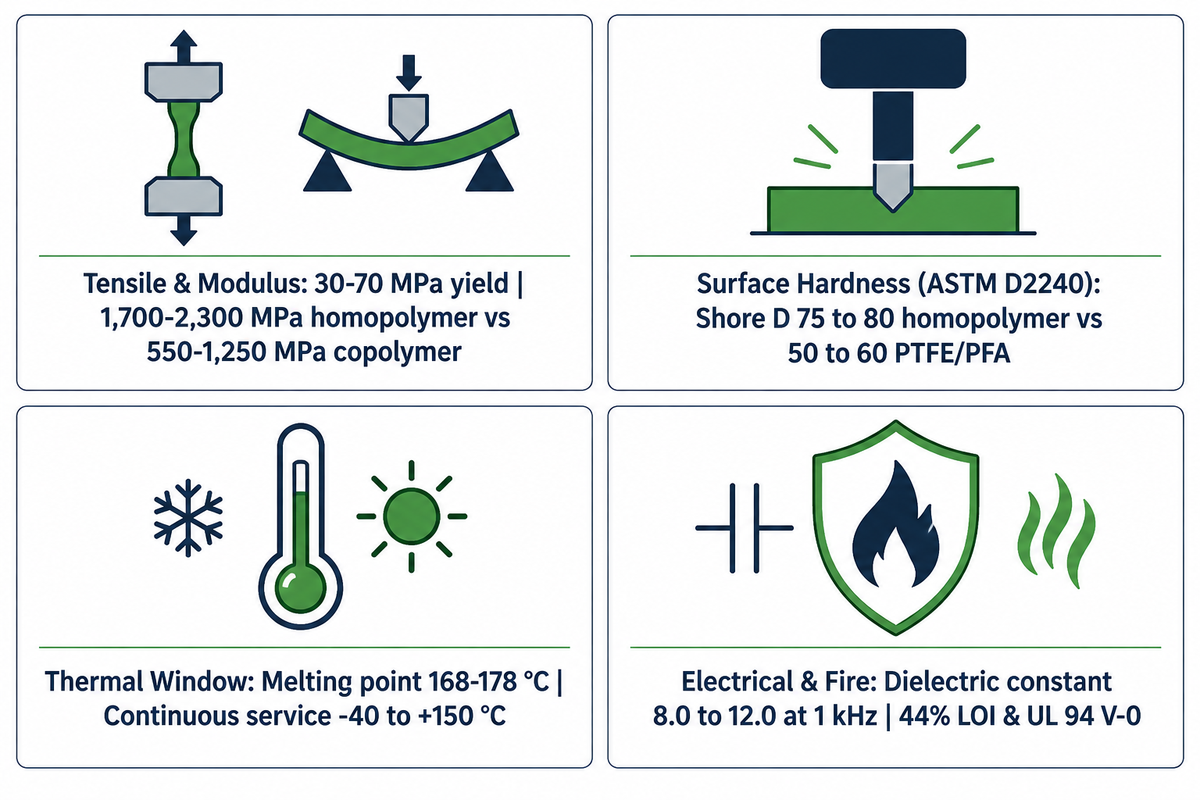
Surface hardness and wear stability: Homopolymer PVDF exhibits a Shore D hardness scale measurement of 75 to 80, compared with Shore D 50 to 60 for PTFE and PFA. That higher hardness helps to prevent abrasive slurry erosion in pump impellers and valve seats.
Hydrophobic moisture barrier: As measured by the ASTM D570 water absorption test method, 24-hour moisture pickup is 0.04% or less. As such, molded parts don’t swell in humid or aqueous environments, and virgin pellets rarely require pre-drying prior to melt extrusion.
High permittivity and flame resistance: Unlike non-polar PTFE (dielectric constant of 2.1), the polar -CF2- repeat unit gives PVDF a high dielectric constant of 8.0 to 12.0 at 1 kHz, making it valuable for capacitive energy storage and piezoelectric and pyroelectric properties. A PVDF formulation may provide favorable LOI (44% for unmodified homopolymer) and UL 94 V-0 results without added halogenated flame-retardant additive packages, but a finished plenum cable still must pass the separate NFPA 262 (UL 910) assembly-level fire and smoke test.
PVDF Grades Compared: Homopolymer vs. HFP Copolymer and Commercial Resin Families
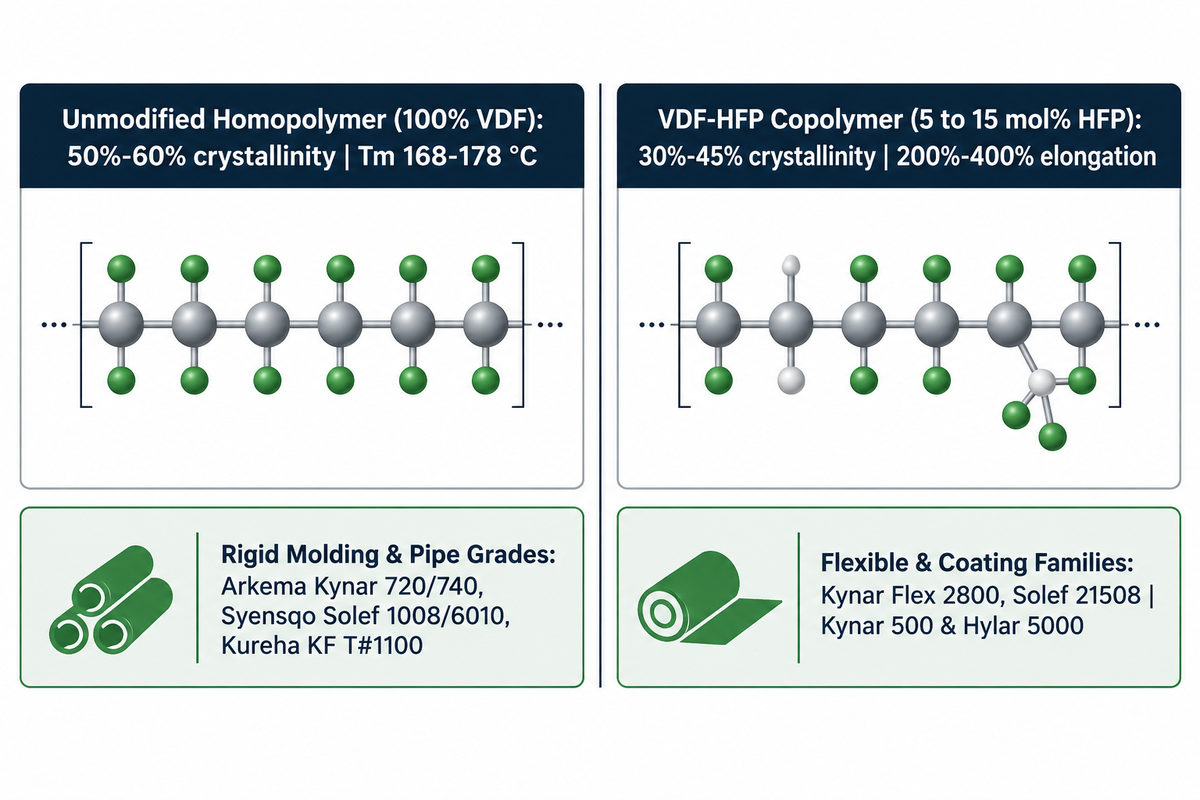
To match mechanical stiffness and chemical stability across industrial applications, commercial suppliers produce two distinct structural classes of PVDF and its copolymers: rigid homopolymers polymerized from 100% VDF monomer, and flexible copolymers of PVDF synthesized by copolymerizing VDF with 5 to 15 mol% hexafluoropropylene (HFP) or chlorotrifluoroethylene (CTFE).
As explained in Royal Society of Chemistry fluoropolymer synthesis literature, adding bulky pendant -CF3 groups from HFP into the backbone disrupts regular lamellar folding, lowering crystallinity from 50%–60% down to 30%–45%. This shift in structure and properties changes how the material behaves in the field:
Unmodified homopolymer grades (Arkema Kynar 720/740, Syensqo Solef 1008/6010, Kureha KF Polymer T#1100/W#1300): Deliver maximum tensile yield strength (45–55 MPa in standard molding grades, up to 70 MPa in high-strength forms), high flexural modulus (1,700–2,300 MPa), highest melting point (168–178 °C), and lowest permeation to gases and organic solvents. They are commonly selected for rigid pressure piping, CNC-machined semiconductor blocks, and high-temperature acid scrubbers, though ISO 10931 does not make homopolymer the mandatory resin class for every application; the selected grade must meet the system’s design, temperature, pressure, and chemical requirements.
VDF-HFP copolymer grades (Arkema Kynar Flex 2800/2850, Syensqo Solef 21508/11008, Kureha KF Polymer #2300): Drop flexural modulus to 550–1,250 MPa and melting point to 135–160 °C while boosting elongation at break to 200%–400% (reaching up to 500% in specialized flexible tubing grades) and improving low-temperature impact toughness. Because lower modulus reduces internal assembly stress and improves resistance to alkaline stress cracking compared with rigid homopolymers, PVDF copolymers are preferred for flexible chemical tubing, peristaltic pump liners, wire and cable plenum jacketing, and lithium-ion battery separator coatings; however, this creates a direct trade-off because lower crystallinity increases free volume, causing HFP copolymers to swell faster than homopolymers when exposed to ketones, esters, and polar organic solvents.
What Is the Difference Between PVDF and Kynar or Solef?
PVDF is the generic chemical name for polyvinylidene fluoride fluoropolymer, whereas the major global PVDF resin manufacturers—Arkema, Syensqo (formerly Solvay), and Kureha—market proprietary commercial families under the brand names Kynar (Arkema), Solef and Hylar (Syensqo), and KF Polymer (Kureha). Specifying a generic polymer name on a drawing does not lock in molecular weight or comonomer ratio.
Within the manufacturers’ portfolios, Kynar 740 and Solef 6010 are rigid homopolymers, Kynar Flex 2800 and Solef 21508 are flexible VDF-HFP copolymers, and Kynar 500 and Hylar 5000 are specialized dispersion homopolymers formulated exclusively for architectural metal coatings.
Chemical Resistance and Application Limits: Where PVDF Excels and Where It Fails
Engineers often assume all fluoropolymers share PTFE’s broad chemical inertness, yet the chemical resistance of PVDF is strictly bounded by the acidic hydrogen atoms on its alternating -CH2- carbon centers. Because each -CH2- unit sits between two strongly electron-withdrawing -CF2- groups, the hydrogen atoms are susceptible to nucleophilic and basic attack at elevated pH.
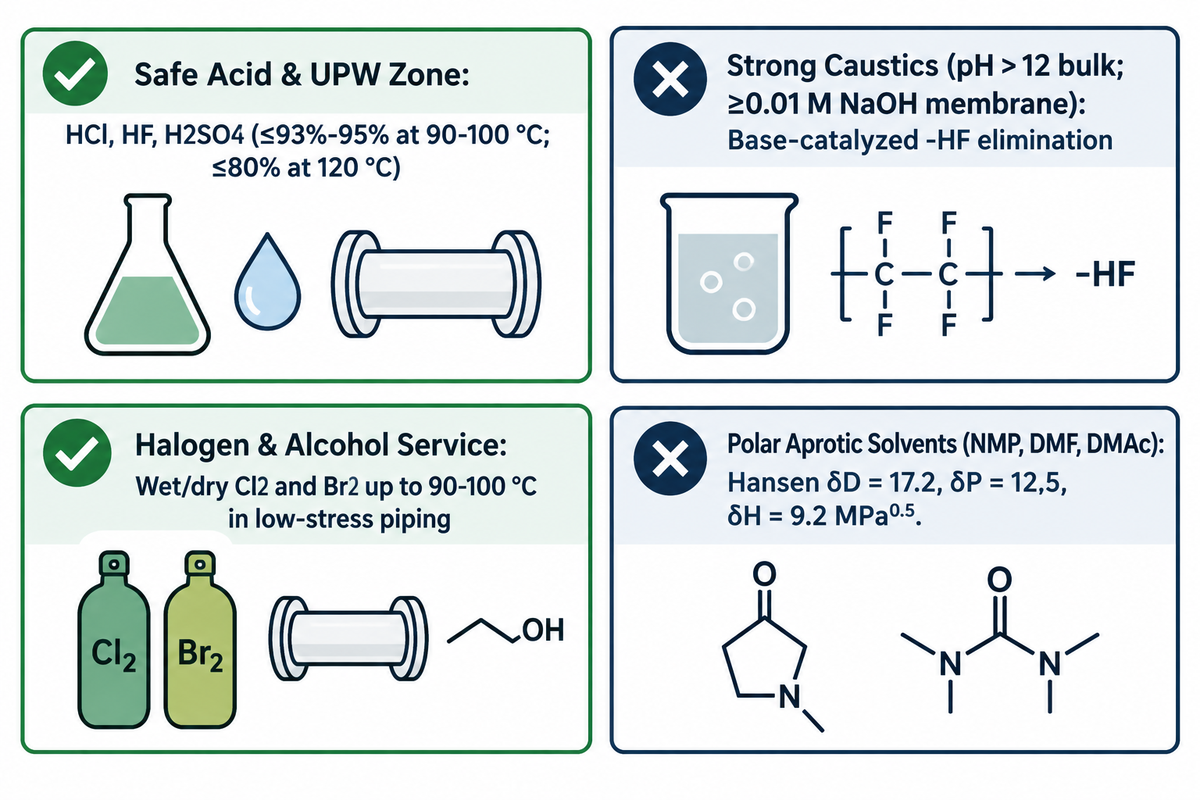
In acidic and oxidizing environments, PVDF provides excellent chemical resistance and long-term resistance to chemical corrosion. PVDF resists many acids, halogens, hydrocarbons, alcohols, and 18.2 MΩ·cm high-purity water, including hydrochloric acid, sulfuric acid (up to 93%–95% at 90–100 °C or up to 80% at 120 °C), nitric acid (up to 50%), hydrofluoric acid, and phosphoric acid, but a 90–140 °C limit cannot be applied uniformly across media, concentrations, stresses, or resin grades.
By contrast, when exposed to strong alkaline media (typically above pH 12 for bulk piping and stock shapes, or even in 0.01 M NaOH solutions on high-surface-area porous membranes), hydroxide ions abstract a proton from -CH2- and expel a fluoride ion from the adjacent -CF2- group, as demonstrated in NIH PMC8122610 alkaline degradation experiments. This base-catalyzed dehydrofluorination (-HF elimination) generates conjugated carbon-carbon double bonds (-CH=CF- polyenes) along the backbone:
-(CH2-CF2)n- + OH- → -(CH=CF)n- + H2O + F-
Dehydrofluorination can discolor PVDF from translucent white toward yellow, brown, or black and reduce ductility; under sustained chemical and mechanical stress, the damaged material may become susceptible to environmental stress cracking (ESC) at pipe welds, threads, or other stress concentrators. In PVDF/NMP lithium-ion battery slurries, alkaline contamination (such as residual LiOH on high-nickel cathodes raising pH ≥ 11, or basic salts like NiCO3 at pH 8–9 in 8 wt% PVDF/NMP model solutions) can promote dehydrofluorination and, under some formulation and hold-time conditions, cause viscosity rise or gelation that makes coating difficult.
8-Medium Chemical Boundary Matrix: Safe Operating Windows, Failure Thresholds, and Molecular Mechanisms
Chemical Medium / Class
Safe Operating Window (Homopolymer)
Failure Threshold
Failure Mechanism & Visual Symptom
1. Non-Oxidizing Mineral Acids (HCl, HF, H₃PO₄)
PVDF generally resists many aqueous non-oxidizing mineral acids, but a 120–140 °C limit is not valid for all concentrations or resin grades
> 150 °C (structural thermal softening limit)
No chemical bond attack; limited by mechanical creep and flange stress relaxation at elevated temperature
2. Sulfuric Acid (H₂SO₄)
≤ 93%–95% concentration up to 90–100 °C; ≤ 80% up to 120 °C
> 98% concentrated H₂SO₄ above 100 °C, or fuming sulfuric acid (oleum / SO₃) at 23 °C
Sulfonation and oxidative chain scission; surface blistering and loss of tensile ductility
3. Halogens (Wet/Dry Cl₂, Br₂, NaOCl)
Up to 90 – 100 °C in compatible low-stress piping
Liquid bromine + high mechanical hoop stress above 100 °C
Ambient or elevated-temperature contact (grade- and condition-specific swelling or partial dissolution)
Dipole-dipole solvation of amorphous and low-molar-mass fractions; softening and dimensional warping
8. Polar Aprotic Solvents (NMP, DMF, DMAc)
Zero structural compatibility (NMP, DMF, and DMAc are used intentionally as solution-processing solvents under grade- and temperature-specific conditions)
Grade- and temperature-specific solution processing (e.g., heated to 60 °C; DMSO or room-temperature exposure is condition-dependent)
Coordinate with polar backbone segments in compatible grades within the Hansen Solubility Parameter region (δD = 17.2, δP = 12.5, δH = 9.2 MPa0.5)
Why Do Ketones and Polar Aprotic Solvents Like NMP Dissolve PVDF?
Ketones and polar aprotic solvents like NMP dissolve or swell PVDF because, unlike non-polar PTFE, its alternating -CH2-CF2- backbone has a strong permanent dipole reflected in Hansen Solubility Parameters of δD = 17.2 MPa0.5 (dispersion), δP = 12.5 MPa0.5 (polar), and δH = 9.2 MPa0.5 (hydrogen bonding). This molecular polarity allows strongly polar organic solvents to coordinate with the polymer chain.
N-methyl-2-pyrrolidone (NMP), dimethylformamide (DMF), and dimethylacetamide (DMAc) can dissolve suitable PVDF grades under controlled solution-processing conditions, whereas dimethyl sulfoxide (DMSO) and lower-temperature exposure should not be assumed to produce a homogeneous solution. Acetone and methyl ethyl ketone are near the boundary of the solubility region, causing swelling and loss of structural stiffness.
PVDF vs. PTFE, ECTFE, PP, and PEEK: Engineering Trade-Offs and Cost-Per-Volume Math
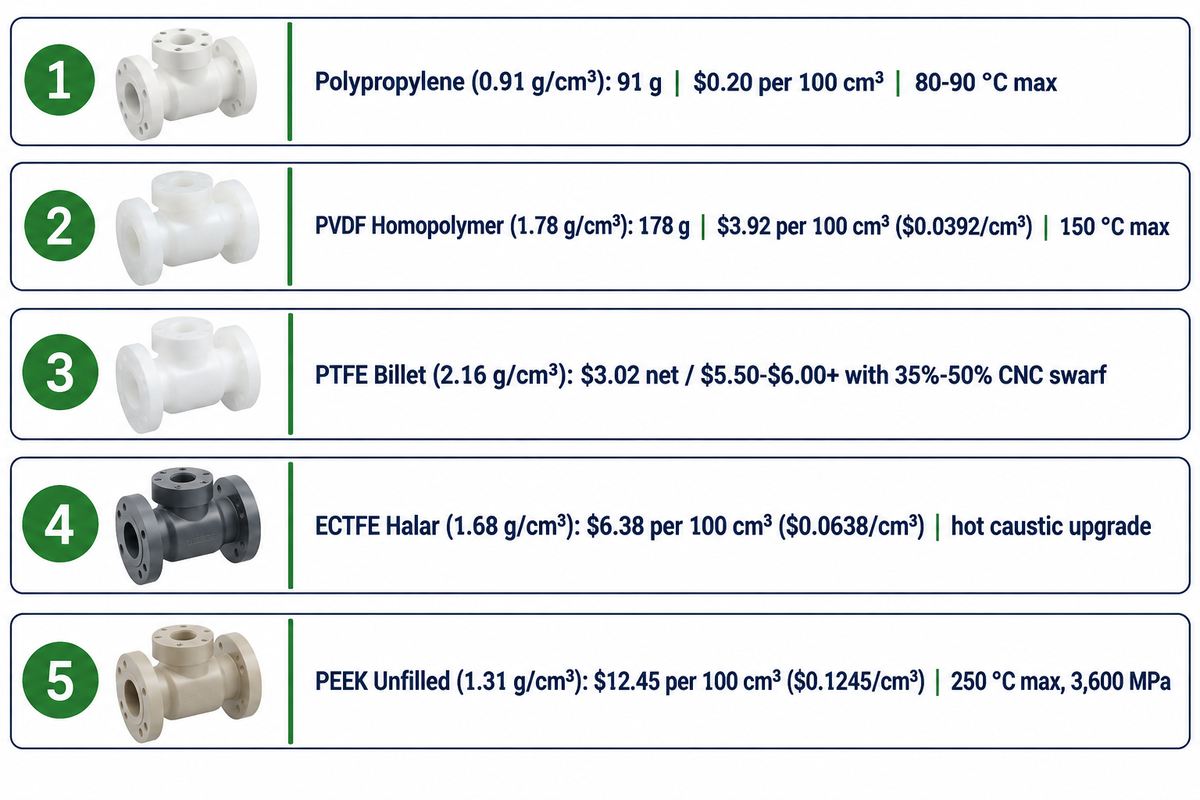
In corrosive-fluid service, PVDF homopolymer ($0.0392/cm³, 150 °C max, 1,700–2,300 MPa modulus) outperforms polypropylene above 80–90 °C and beats machined PTFE ($0.055–$0.060+/cm³ with CNC scrap) on creep resistance and molded part cost, whereas ECTFE ($0.0638/cm³) or PTFE is required when pH exceeds 12 or temperatures exceed 150 °C. Engineers also compare PVDF against polybutylene terephthalate (PBT) engineering plastic for non-corrosive electrical housings.
Because fluoropolymers have densities between 1.68 g/cm³ and 2.16 g/cm³ compared with 0.91 g/cm³ for polypropylene material properties and density, comparing raw resin price per kilogram ($/kg) distorts the true cost of a molded component. A mold cavity fills a fixed geometric volume (cm³), not a fixed weight. In addition, PTFE cannot be melt-injected at all; producing a complex PTFE valve body requires compression-molding a sintered billet and CNC machining away 35% to 50% of the material as chip swarf.
To illustrate the procurement math, consider a standardized 100 cm³ industrial diaphragm valve body evaluated across all five polymers:
Worked 100 cm³ Valve Body Comparison: PVDF vs. PTFE, ECTFE, Polypropylene, and PEEK
Material
Density (g/cm³, ASTM D792)
100 cm³ Part Mass (g)
Typical Resin / Billet Price ($/kg)
Raw Material Cost per 100 cm³ ($ / Part)
Primary Manufacturing Route
Max Continuous Temp & Key Chemical Trade-Off
Polypropylene (PP Homopolymer)
0.91
91 g
$2.20 / kg
$0.20 ($0.0020/cm³)
Injection molding
80–90 °C max; resists aqueous caustics, but fails rapidly in strong oxidizers, halogens, and >80% H₂SO₄
PVDF Homopolymer
1.78
178 g
$22.00 / kg
$3.92 ($0.0392/cm³)
Injection molding / extrusion
150 °C max; high stiffness (1,700–2,300 MPa) and acid/halogen resistance; vulnerable to hot concentrated caustics and NMP
PTFE (Virgin Billet)
2.16
216 g (net) / 360 g (billet)
$14.00 / kg
$3.02 net / $5.50–$6.00+ with 35%–50% CNC swarf
Paste sintering + CNC machining only
Virgin PTFE has very broad resistance to aqueous acids, bases, and many solvents and supports higher service temperatures than PVDF, but its creep and cold-flow behavior remain significant under sustained load
ECTFE (Halar)
1.68
168 g
$38.00 / kg
$6.38 ($0.0638/cm³)
Injection molding / rotational lining
150 °C max; bridges the hot caustic gap (concentrated NaOH and amines) where PVDF dehydrofluorinates
PEEK (Unfilled)
1.31
131 g
$95.00 / kg
$12.45 ($0.1245/cm³)
High-temp injection molding (380 °C)
250 °C max; high tensile modulus (3,600 MPa), but dissolves in concentrated H₂SO₄ and halogens where PVDF thrives
PVDF beats PTFE on molded complex parts and flange creep: Although virgin PTFE powder/billet costs less per kilogram ($14/kg vs. $22/kg), PTFE’s higher density (2.16 vs. 1.78 g/cm³) and 35% to 50% CNC machining swarf waste push the effective material cost of a machined 100 cm³ PTFE valve body to $5.50–$6.00+, before counting spindle time. More importantly, PTFE suffers from pronounced plastic creep and cold flow under sustained load, whereas PVDF’s 1,700–2,300 MPa modulus provides substantially higher resistance to flange bolt-torque relaxation within its rated temperature and stress envelope.
Step up to ECTFE when the process exceeds PVDF’s caustic limit: For acid, halogen, and ultrapure water lines below 140 °C, PVDF saves 38% in material cost per cubic centimeter compared with ECTFE ($0.0392/cm³ vs. $0.0638/cm³). Upgrading to ECTFE is justified when process streams exceed PVDF’s caustic boundary, whereas ketones, amines, and other aggressive solvents require a separate material selection.
Processing PVDF: Injection Molding, Extrusion, CNC Machining, and Welding Parameters
Unlike PTFE, which cannot be processed on conventional screw extruders because its melt viscosity exceeds 10¹⁰ Pa·s, PVDF resin flows cleanly in standard thermoplastic equipment. PVDF processing requires controlling 2.0% to 3.0% crystalline shrinkage, post-machining stress-relief requirements, and melt residence below the thermal decomposition range. Extruded and compression-molded PVDF shapes are classified under ASTM D6713.
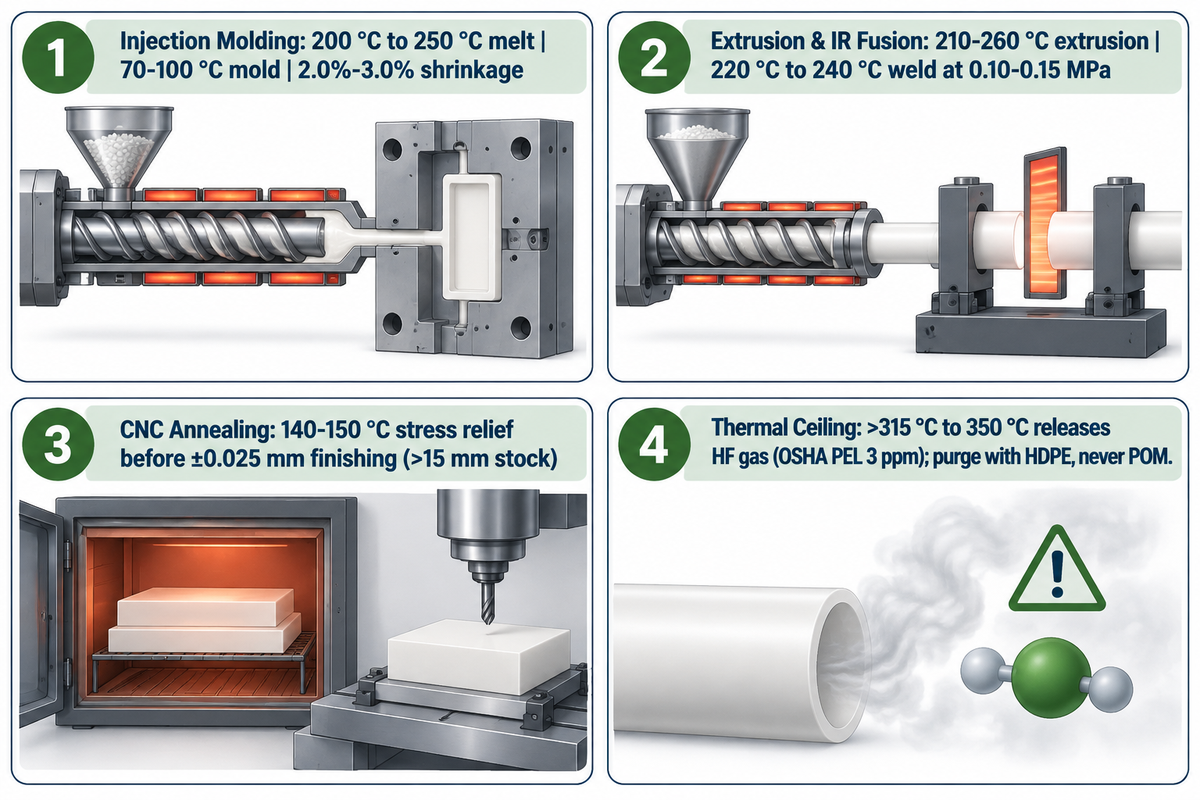
Injection molding window: Barrel melt temperatures range from 200 °C to 250 °C (392 °F to 482 °F), with rear-to-nozzle zones ramped from 190 °C to 235 °C. Mold surface temperature is commonly held between 70 °C and 100 °C (158 °F to 212 °F), as mold temperature influences PVDF crystallization and dimensional stability, though the resulting α/β phase content depends on the resin grade and the full thermal and mechanical history. Because semi-crystalline lamellar folding contracts the melt volume, toolmakers design cavities for 2.0% to 3.0% linear mold shrinkage (0.020–0.030 in/in) in unfilled grades.
Extrusion and film casting: Pipe, sheet, and PVDF film extrusion runs at 210 °C to 260 °C using a gradual-transition barrier screw (L/D ratio of 20:1 to 24:1, compression ratio of 2.5:1 to 3.0:1). Thin electroactive films and porous separator layers are also cast from 10–18 wt% DMF or NMP solutions via slot-die coating or laboratory spin coating.
Thermal decomposition and HF gas hazard: Keep PVDF within the grade’s validated melt-processing range (commonly 200 °C to 290 °C) and avoid stagnant residence in dead spots, because overheating (rapid decomposition typically initiates above 315 °C to 350 °C depending on grade, shear, and residence time) can generate toxic, corrosive hydrogen fluoride (HF) gas (OSHA PEL 3 ppm) and other decomposition products that pit tool steel. If overheated dark streaks or pungent acidic fumes appear, immediately purge the barrel with high-density polyethylene (HDPE) or cast acrylic, never with polyoxymethylene (acetal / POM), which violently accelerates PVDF decomposition.
CNC machining and stress-relief annealing: Extruded or compression-molded PVDF rods and plates (> 15 mm thick) retain internal cooling stresses that can cause warping during heavy milling. PVDF blanks intended for tight-tolerance machining (±0.025 mm) are commonly stress-relieved before finishing, with the annealing temperature (typically near 140–150 °C), ramp rate, hold time, and cooling rate selected for the specific resin grade and section thickness.
Can You Glue PVDF Pipe, or Must It Be Fusion Welded?
Standard solvent cements do not reliably bond untreated PVDF pipes, fittings, or valves because PVDF has a low critical surface energy of roughly 25 to 30 dynes/cm, so industrial systems normally use thermal fusion welding or a validated surface-treated adhesive system. Heated-tool socket/butt fusion or non-contact infrared (IR) fusion runs at 220 °C to 240 °C.
During thermal fusion at 428 °F to 464 °F, pipe ends are joined under a controlled pressure of 0.10 to 0.15 MPa to form a monolithic weld seam. Where adhesive bonding to the surface of PVDF is specified, the part must first be chemically etched with a sodium-naphthalene complex or treated with high-energy atmospheric plasma to raise surface tension above 45 dynes/cm before applying a structural epoxy or polyurethane adhesive.
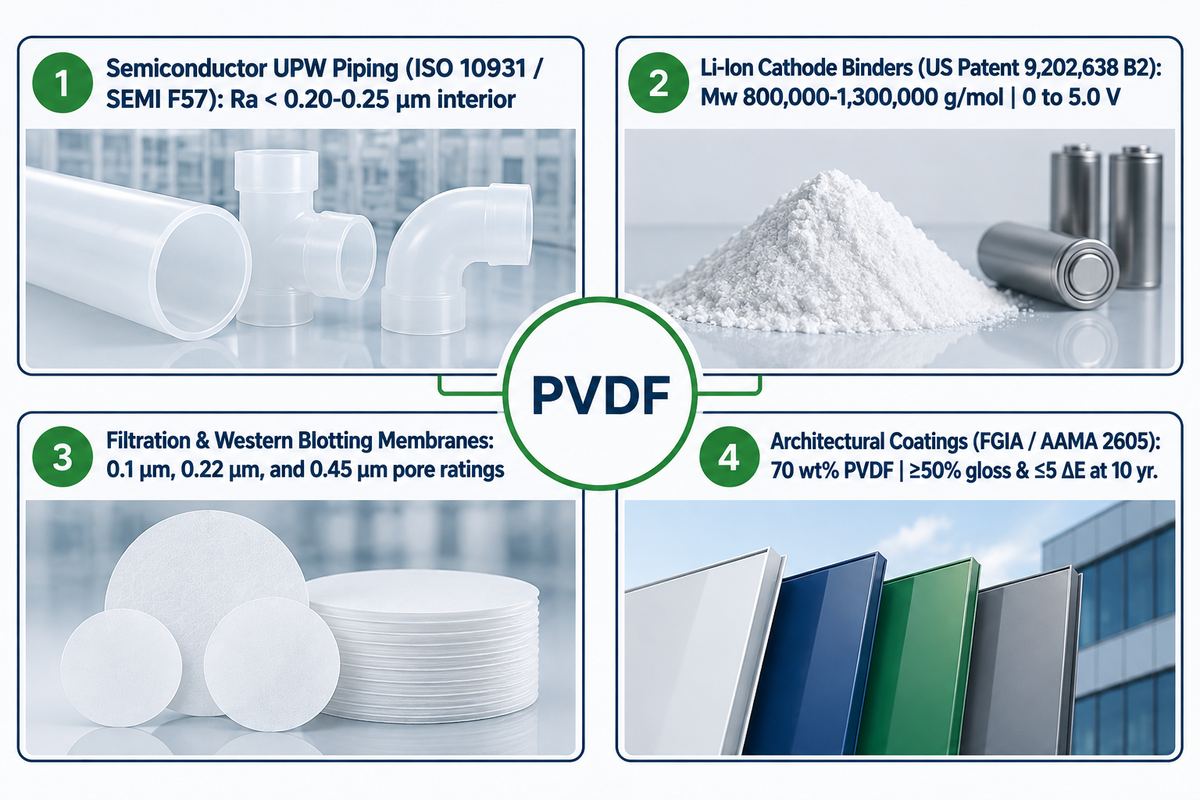
Because different end uses exploit completely different characteristics of PVDF, industrial applications for PVDF are split across four primary sectors. In each sector, the use of PVDF requires a specific molecular weight, outdoor durability or purity profile, and processing form:
High-purity semiconductor and chemical piping (ISO 10931 / SEMI F57):
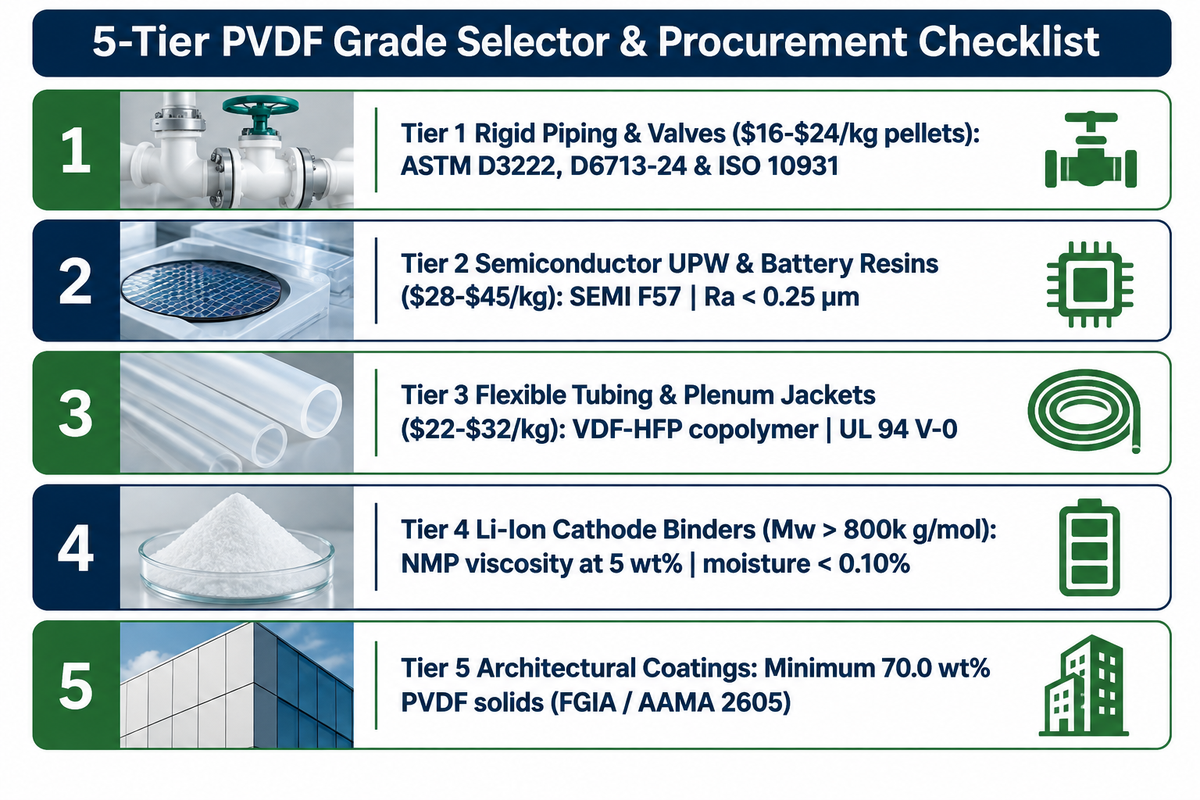
PVDF piping systems for semiconductor UPW and high-purity chemical service are commonly specified to ISO 10931, with semiconductor installations adding applicable SEMI F57 material and extractables requirements. Because virgin homopolymer contains no plasticizers, stabilizers, or metallic lubricants, infrared-welded loops of PVDF products (pipes, elbows, diaphragm valve bodies, and flare fitting assemblies) must be verified against the applicable SEMI F57 leachable limits for the specified product and extraction protocol while maintaining a smooth interior surface roughness (Ra < 0.20–0.25 µm).
Lithium-ion battery cathode binders and separator coatings:
In EV batteries and large-scale grid storage using lithium-ion cells, ultra-high-Mw-homopolymers and modified copolymers (Mw = 800,000 – 1,300,000 g/mol, e.g. Solef 5130, Kynar HSV 900, KF Polymer #7200) function as the primary cathode electrode binder as described in US Patent 9,202,638 B2 on non-aqueous battery binders. Dissolved in NMP at 1.5 to 3.0 wt% solids, the PVDF binder adheres active cathode particles (LFP, NMC, LCO) and conductive carbon black to the aluminum current collector while remaining electrochemically stable across 0 to 5.0 V vs. Li/Li + . Concurrently, VDF-HFP copolymer dispersions serve to coat polyolefin battery separators for the improved wetting of carbonate electrolytes and thermal shutdown.
Microfiltration, ultrafiltration, and Western blotting membranes:
Phase-inversion casting produces microporous PVDF membrane sheets and hollow fibers with controlled pore size ratings of 0.1 µm, 0.22 µm, and 0.45 µm. Native hydrophobic membranes exhibit high protein-binding capacity (> 125–150 µg/cm²) and mechanical tear resistance for Western blotting amino-acid sequencing, whereas surface-modified hydrophilic PVDF membranes provide low protein adsorption for sterile pharmaceutical filtration and municipal wastewater MBR modules.
Architectural fluoropolymer coil coatings (FGIA / AAMA 2605):
Exterior aluminum curtain walls, metal roofing panels, and stadium facades rely on liquid and powder PVDF coatings formulated with a minimum of 70 wt% dispersion homopolymer resin (such as Arkema Kynar 500 or Syensqo Hylar 5000) blended with 30 wt% acrylic resin for substrate adhesion, in accordance with Arkema Kynar 500 architectural coating specifications. Because solar UV-A and UV-B photons (290–400 nm) lack the energy needed to cleave the 485 kJ/mol C-F bond, 70% PVDF finishes achieve ≥ 50% gloss retention and ≤ 5 ΔE color change after 10 years of South Florida weathering under FGIA/AAMA 2605, outperforming SMP or standard polyester paints.
Beyond these four volume markets, PVDF is also deployed in nuclear waste piping (resisting gamma radiation doses up to 100–400 kGy without chain scission, whereas PTFE embrittles at lower gamma doses above 5–10 kGy), monofilament surgical sutures, and poled β-phase acoustic sensors that use its unique piezoelectric properties.
PVDF Pricing, Standards (ASTM D3222 / D6713 / ISO 10931), and Procurement Specification Checklist
The industrial price of PVDF depends on method of polymerization (suspension versus non-fluorosurfactant emulsion), certification of purity, and type of product, with bulk homopolymer pellets typically trading between $16 and $24/kg and specialty grades reaching $28 to $65/kg. Engineering teams need to balance costs with the governing resin, stock-shape or piping standards prior to authorizing purchases.
Standard injection and extrusion homopolymer pellets: $16 – $24 / kg (metric-ton resin lots).
Battery-binder (ultra-high-MW) and semiconductor UHP (SEMI F57) resins: $28 – $45 / kg.
Extruded / compression-molded natural PVDF rod and sheet stock shapes: $35 – $65 / kg (depending on cross-sectional thickness and ultrasonic void inspection).
ASTM D3222 covers virgin unmodified PVDF homopolymer molding and extrusion resins (explicitly excluding VDF-HFP copolymers and semi-finished stock shapes), ASTM D6713-24 for PVDF stock shapes covers extruded and compression-molded PVDF rod and plate (Grade 1 requires 100% virgin PVDF material; Grade 2 allows up to 20% internal processing regrind), and ISO 10931 covers industrial PVDF piping components; strength, design stress, virgin content, and inspection requirements are product-, geometry-, class-, and temperature-specific.
5-Tier PVDF Grade Selector: Application Tier, Resin Architecture, Commercial Equivalents, and Governing Standard
FGIA / AAMA 2605 (10-year South Florida weathering)
Minimum 70.0 wt% PVDF in total resin solids verified by FTIR spectroscopy
Prior to accepting any supplier Certificate of Analysis (COA) across these five tiers, apply the following verification protocol (4 points) aligned to plastic test data comparability guidelines:
Verify crosshead strain rate on tensile data: Results from ASTM D638 and ISO 527-2 are not directly interchangeable because specimen geometry, conditioning, strain measurement, and crosshead speed differ; supplier comparisons should always use matched test methods and 23 °C / 50% RH conditioning.
Confirm second-heat DSC melting behavior (ASTM D3418): First-heat DSC is influenced by the pellet’s prior thermal history rather than the intrinsic phase of the polymer, so second-heat data at 10 K/min provide a more controlled comparison of melting behavior between homopolymer (168–178 °C) and VDF-HFP copolymer (135–160 °C) grades.
Demand regrind-free certification for high-purity and structural stock: Specify Grade 1 (100% virgin resin) under ASTM D3222 and ASTM D6713-24, with ultrasonic inspection certificates confirming zero centerline porosity in extruded rods thicker than 25 mm.
Request non-fluorosurfactant (NFS) polymerization declarations: Following global PFAS regulatory updates and 3M Dyneon’s 2025 fluoropolymer exit, NFS grades reduce reliance on fluorinated polymerization aids, while EU REACH and US EPA TSCA Section 8(a)(7) obligations are determined by the substances and reporting scope involved.
Frequently Asked Questions About PVDF Plastic
Is PVDF the same as Teflon (PTFE)?
No, PVDF (polyvinylidene fluoride) and PTFE (polytetrafluoroethylene, commonly sold under the Teflon brand) are distinct fluoropolymers with different chemical formulas and processing behaviors. PTFE is fully fluorinated (-(CF2-CF2)n-, 76.0 wt% fluorine), generally offers broad chemical resistance whose allowable temperature and chemical service limits are condition-specific, and cannot be melt-processed by injection molding or screw extrusion. PVDF is partially fluorinated (-(CH2-CF2)n-, 59.4 wt% fluorine), melts at 168–178 °C for conventional injection molding and fusion welding, and delivers higher tensile strength (30–70 MPa vs. 20–30 MPa for PTFE) and creep resistance up to 150 °C.
Is PVDF hazardous or toxic during normal use and processing?
Solid, fully polymerized PVDF is chemically stable, non-toxic, and safe to handle at ambient and rated service temperatures up to 150 °C (302 °F). Food-contact (FDA 21 CFR 177.2510), USP Class VI, and NSF/ANSI 61 potable-water statuses are grade- and application-specific; USP Class VI is a material test classification rather than a blanket medical-device certification. The primary safety hazard occurs during thermal overheating above the grade’s validated melt range (rapid decomposition typically initiates above 315 °C to 350 °C depending on grade and residence time), releasing toxic, corrosive hydrogen fluoride (HF) gas that requires local exhaust ventilation and barrel temperature interlocks.
What are the main downsides and limitations of PVDF plastic?
First, hot, concentrated alkalis (typically above pH 12) and primary amines dehydrofluorinate PVDF and promote brittle stress cracking, with resistance falling as concentration and temperature rise. Second, NMP is a common PVDF solvent, while DMF, DMAc, DMSO, and ketones (acetone, MEK) can swell or dissolve particular grades under suitable conditions. Third, its 150 °C continuous thermal ceiling sits well below PTFE and PEEK (250 °C). Fourth, 2.0%–3.0% crystalline mold shrinkage and $16–$24/kg resin cost require dedicated mold tooling and volume-based budgeting.
Can PVDF be autoclaved or gamma sterilized?
Yes, compatible homopolymer PVDF grades withstand steam autoclaving at 121 °C to 134 °C and gamma sterilization up to 100–400 kGy, whereas PTFE radiation embrittlement is condition-specific and typically occurs at lower doses above 5–10 kGy.
Why do you have to pre-wet hydrophobic PVDF membranes in methanol before aqueous filtration or Western blotting?
PVDF membranes must be pre-wet because native unmodified PVDF is strongly hydrophobic, with a low critical surface energy of 25 to 30 dynes/cm and a water contact angle of 85° to 120°. Because liquid water has a high surface tension of 72.8 mN/m at 20 °C, capillary back-pressure prevents aqueous buffers from entering the 0.22 µm or 0.45 µm micropores, blocking liquid flow and preventing uniform protein transfer during Western blotting. Pre-wetting the dry membrane for 15 to 60 seconds in a low-surface-tension alcohol such as 100% methanol (22.5 mN/m), ethanol (22.1 mN/m), or isopropanol (21.7 mN/m) immediately wets the internal pore walls without dissolving the fluoropolymer matrix. After the pores are saturated with alcohol, the membrane would be transferred to water or transfer buffer and the alcohol would be miscibly displaced, leaving the pore network saturated and open to aqueous solutions.
Is PVDF considered a PFAS under EU REACH and US EPA regulations?
Under the broad OECD structural definition (any substance containing at least one fully fluorinated -CF2- or -CF3 carbon atom), PVDF is classified as a polymeric PFAS, although it meets OECD Polymer of Low Concern (PLC) criteria. Buyers may specify non-fluorosurfactant (NFS) PVDF to reduce reliance on fluorinated polymerization aids, while TSCA Section 8(a)(7) and REACH duties are determined by the substances and applicable reporting scope.
References & Sources
Marshall, J. Marshall, J.E., Zhenova, A., Roberts, S., et al. (2021). On the Solubility and Stability of Polyvinylidene Fluoride. Polymers, 13(9), 1354 (NIH PubMed Central PMC8122610; tensile strength 30–70 MPa vs. PTFE 20–30 MPa, crystallinity 50–60%, Hansen Solubility Parameters D=17.2, P=12.5, H=9.2, alkaline dehydrofluorination at pH ≥ 11).
UD Packaging is an integrated industry and trade enterprise focused on sustainable industrial packaging materials. Based in Jiangyin, Wuxi, Jiangsu Province, we develop and supply packaging solutions for customers who need dependable performance, practical sourcing, and clear technical guidance.
Our core range includes PET strapping, industrial stretch film, strapping seals, and manual, semi-automatic, and fully automatic strapping equipment. We use this blog to explain material properties, test logic, and packaging decisions in terms that procurement, operations, and quality teams can use.
OUR EXPERIENCE
More than a decade in plastic packaging materials, with PET strapping production and customer support across industrial applications.
OUR EXPERTISE
Material selection, tensile-property interpretation, packaging protection, and coordinated supply for medium and heavy-duty goods.