

TPU is thermoplastic polyurethane, a plastic that combines the elasticity of rubber with melt processing. It can create a flexible film, a tough molded part or printable filament. Decide on the necessary chemistry for the environment, then specify hardness and the mechanical requirements of the final part.
Updated October 2026
Generally speaking, hardness isn’t enough to give a full answer. Consider an outdoor clear cover, a warm water exposed seal and a printed grip. The drawings say TPU, but the properties for each part would be different. A good starting point is the chemistry of the part, how it will be manufactured and the history of processing.
What Is TPU Plastic?
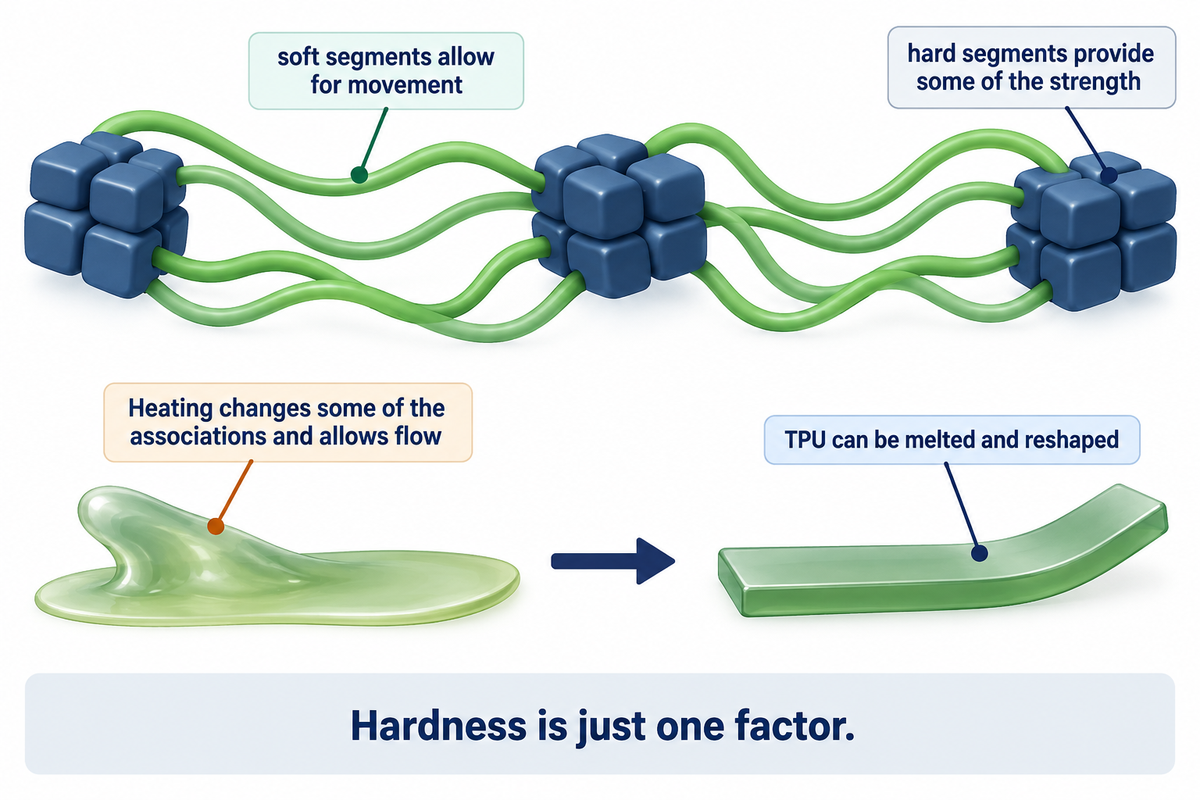
Thermoplastic polyurethane is a member of the thermoplastic elastomer family. In the flexible part, the soft segments allow for movement, and hard segments provide some of the strength of the polymer. Heating changes some of the associations and allows flow, and upon cooling, it can stretch and reform like a rubber. Unlike thermoset polyurethane, which needs a permanent curing step, TPU can be melted and reshaped.
The Yilgör review of segmented polyurethane structure explains that the balance of soft and hard segments influences TPU properties. Chemistry, segment arrangement and processing history affect the resulting morphology. Hardness is just one factor of many that influences the response of a part; the same family name doesn’t dictate stiffness, tear behavior or recovery after loading.
We first need to verify if the specified material is a melt-processable grade. “Polyurethane” on an older drawing may refer to a cast, cured material, with a different manufacturing route. Conversion from casting to injection molding requires a new grade specification, not just a change of name in the purchase order.
In computing, the same acronym refers to a tensor processing unit used for AI. The polyurethane plastic is discussed here. For the relationship of polymers in the broader sense, the plastic materials guide provides the surrounding material families.
TPU Properties: Hardness, Strength and Flexibility
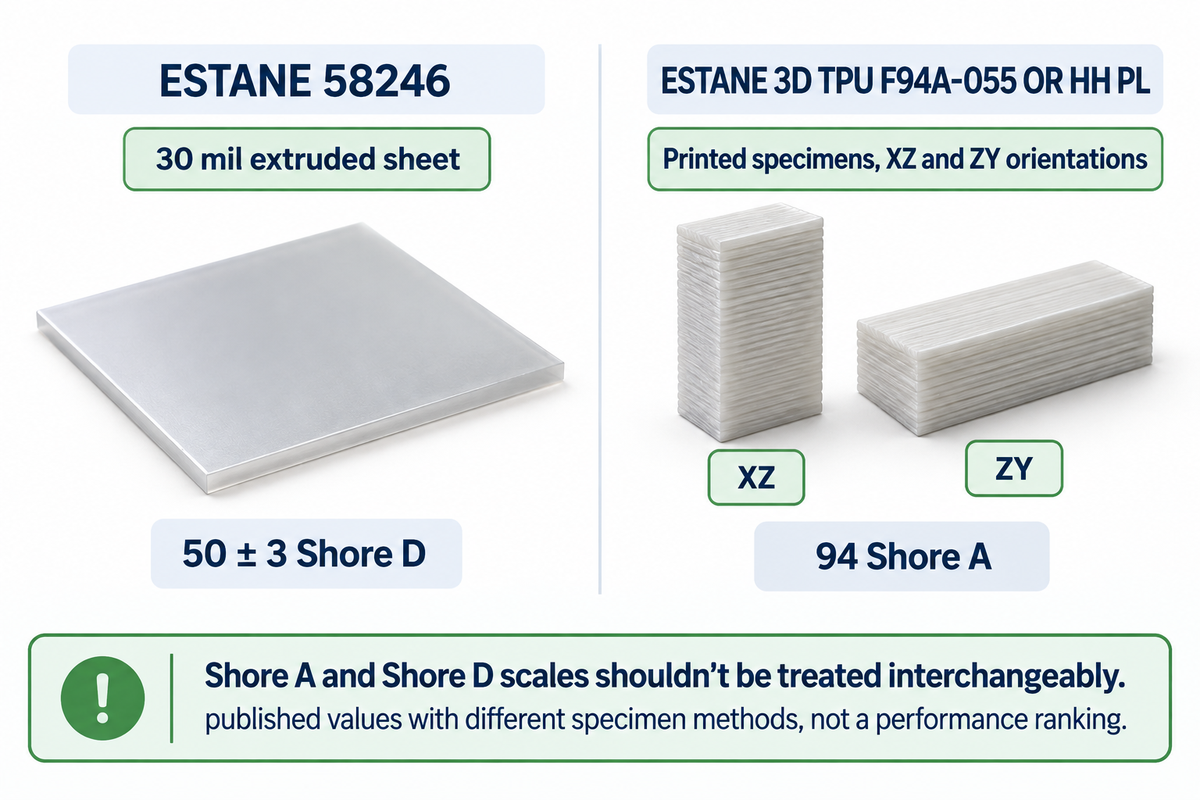
Hardness is resistance to indentation. Tensile strength is a measure of stress at failure under tension. Either measurement alone doesn’t show how a part bends or recovers. A useful specification of TPU defines the hardness scale, reading time and stress at a stated elongation. This specification should also describe how the specimen was prepared and the direction of the test.
“This test method is an empirical test intended primarily for control purposes.”
A softer grade can be easier to indent, and still resist stretching to a great extent, as strain is increased. Thickness of the part also affects its bending rigidity. Compare these separately when the design needs grip, impact cushioning or a flexible hinge. To understand how to read test conditions and analyze differences, see our guide on Reading plastic material property data sheets.
| Property or condition | ESTANE 58246 | ESTANE 3D TPU F94A-055 OR HH PL |
|---|---|---|
| Chemistry | Aromatic polyester | Aromatic polycarbonate |
| Specimen route | 30 mil extruded sheet | Printed specimens, XZ and ZY orientations |
| Hardness | 50 ± 3 Shore D | 94 Shore A |
| Hardness method | ASTM D2240, 5 s | ISO 868, 5 s |
| Tensile strength | 64.1 MPa | 43 MPa XZ; 19 MPa ZY |
| Elongation at break | 420% | 315% XZ; 190% ZY |
| Stress at 100% elongation | 12.4 MPa | 13 MPa XZ |
| Tensile method | ASTM D412 | ISO 527 |
| Specimen conditioning | 23 °C for 48 h | 23 °C for 48 h |
| Specific gravity | 1.23, ASTM D792 | No value stated in this data sheet |
Source: Lubrizol’s ESTANE 58246 data sheet and F94A-055 OR HH PL data sheet. The values are typical data published by the suppliers, and the scales and specimen routes differ.
The printed grade orientation is of special use when comparing strength across layers. A 3D printed bracket can load across layers even if the published strength value comes from a different test direction. Preserve direction labels when transferring values to a design worksheet. Shore A and Shore D scales shouldn’t be treated interchangeably.
TPU Chemistry: Polyester vs Polyether and Aliphatic vs Aromatic
The soft segment is generally made from polyester or polyether and the hard segment is made up of the aromatic or aliphatic segments of the polyurethane structure. These define different selection axes. Start with the exposure that can shorten the part life, e.g. wet heat or UV exposure, and work towards tightening the grade based on fluid compatibility, color and mechanical requirements.
Asensio and colleagues’ chemistry study varied diisocyanates, while keeping a polycarbonate soft segment. This shows the distinction. An “aliphatic” label, by itself, doesn’t define if a grade is polyester or polyether. Polycarbonate-based materials provide an additional soft segment option.
3-Exposure TPU Selector
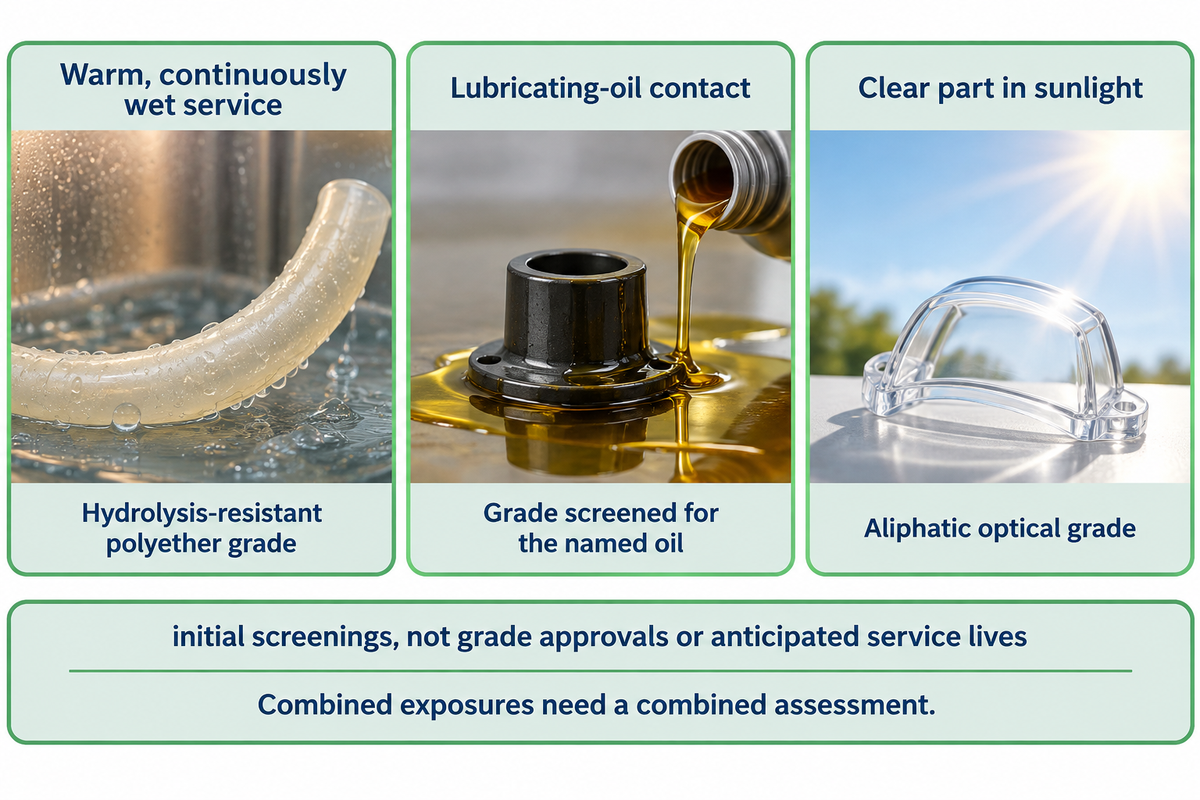
Use the following selection directions to prioritize a short-list. Covestro’s “chemical-resistance guidance” distinguishes hydrolysis, oils and weathering; “optical guidance” explains yellowing. Combined exposures need a combined assessment.
| Service condition | Starting direction | Decision to resolve |
|---|---|---|
| Warm, continuously wet service | Hydrolysis-resistant polyether grade | Retention after wet-heat exposure |
| Existing polyester part in damp service | Hydrolysis-stabilized formulation | Whether stabilization meets the service duration |
| Lubricating-oil contact | Grade screened for the named oil | Swelling and retained properties with its additives |
| Oil plus water | Hydrolysis-resistant shortlist, then oil screening | Performance in the actual mixture |
| Clear part in sunlight | Aliphatic optical grade | Color change and mechanical retention |
| Colored outdoor cover | Weathering-stabilized grade | Surface damage beneath acceptable color |
| Humid outdoor service | Hydrolysis and weathering resistance together | Combined ultraviolet, moisture and heat exposure |
| Intermittent cleaning | Grade compatible with the cleaning fluid | Concentration, temperature and contact time |
| Indoor, dry mechanical use | Mechanical grade matched to loading | Stress-strain response, wear and recovery |
Selection synthesis from Covestro’s technical guidance. These are initial screenings, not grade approvals or anticipated service lives.
Is TPU UV resistant?
An aliphatic TPU is a good starting point if the resistance to yellowing from exposure to sunlight is of concern. Aromatic TPU grades can also yellow, and an ultraviolet stabilizer can slow down the process. Optical stability and mechanical property retention are separate requirements. A part that still looks clear hasn’t automatically passed a strength or a weathering requirement.
Imagine a clear protective cover mounted outdoors, near a warm wash station. The buyer first selected a soft grade because the cover has to flex around its clips. This decision left both yellowing and wet-heat aging unresolved. A better specification identifies the appearance requirement and the history of the wash fluid and temperature before selecting the final hardness. The short-list can then combine an aliphatic option for color with suitable hydrolysis resistance. For final approval, the assembled cover and clips must be tested together; even swelling that seems small in a loose coupon can change the fit. This is a design scenario, not a claim that one chemistry ensures the lifetime of the cover.
TPU vs TPE, Silicone and Rubber
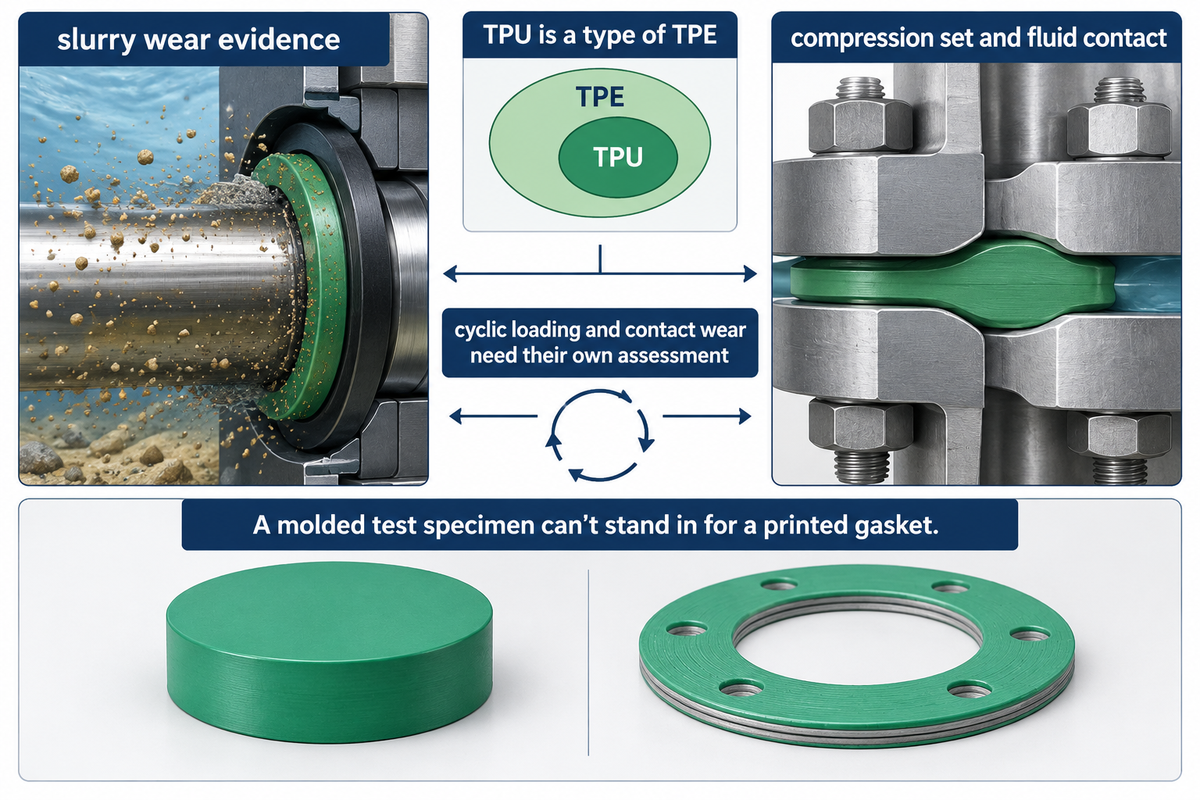
TPU is a type of TPE, so comparisons between the two compare a family member with its larger category. Comparisons with silicone and other rubber compounds can name a service: sliding wear, fatigue from repeated flexing, and static sealing or melt processing, for example. “Most durable” gives no hints.
The public contents of ISO 18064:2022’s thermoplastic elastomer nomenclature list TPU within the TPE classification. For material selection, look at the failure mechanisms rather than TPU’s relation to the other categories. Abrasion resistance under one contact condition doesn’t always mean resistance to all types of wear and tear.
In a 2023 study by Jensen and Aghababaei, TPU, nitrile rubber and liquid silicone rubber pads ran against stainless steel in water containing sand. The tested TPU had the greatest wear, while the silicone showed little wear. That result applies to the study’s three-body contact conditions; it overturns a blanket TPU wear advantage without establishing a universal silicone advantage.
Can TPU be used as a gasket?
TPU may be used for a gasket when its recovery under compression and compatibility with the sealed fluid meet the requirements. When considering TPU’s performance for the gasket, factors such as swelling, temperature and compression set deserve attention along with hardness. A wear-resistant grade chosen for a sliding component may not provide the same performance when held under continuous compression.
ASTM D395-18(2025) describes compression-set testing primarily for static service. Covestro’s mechanical guidance gives a general test example of 24 h at 70 °C followed by a recovery measurement. This is a method example, not a result for a named grade. Keep that time-temperature pair with the result. For a dynamic seal, cyclic loading and contact wear need their own assessment.
A molded test specimen can’t stand in for a printed gasket. Printed parts also have differences due to the deposition of successive layers, so the sealing assessment should be based on the finished geometry of the part. The directional tensile values reported in the grade table describe printed specimens; they aren’t leakage results.
If pump seals carry gritty water, look at the slurry wear evidence to shortlist materials before considering ease of molding. If the same assembly instead requires a static flange gasket, the main concern is compression set and fluid contact. The word “rubber-like” addresses neither concern.
Where TPU Is Used: Parts, Films and Coated Fabrics
TPUs are used for footwear components, hoses, molded parts, films and coated textiles. In the case of parts that require flexibility, the grade and construction control cushioning, barrier and movement behavior as well as wear resistance. For a given film, thickness and the surrounding laminate also play a role, not just the resin.
Lubrizol’s ESTANE 58246 sheet identifies cast-film extrusion as a processing route, whereas F94A-055 OR HH PL targets printed parts. HEXPOL’s TPU application overview includes castors, hoses, tools and footwear. These examples show that film shouldn’t be made from a grade just because it has a hardness number similar to the other grade.
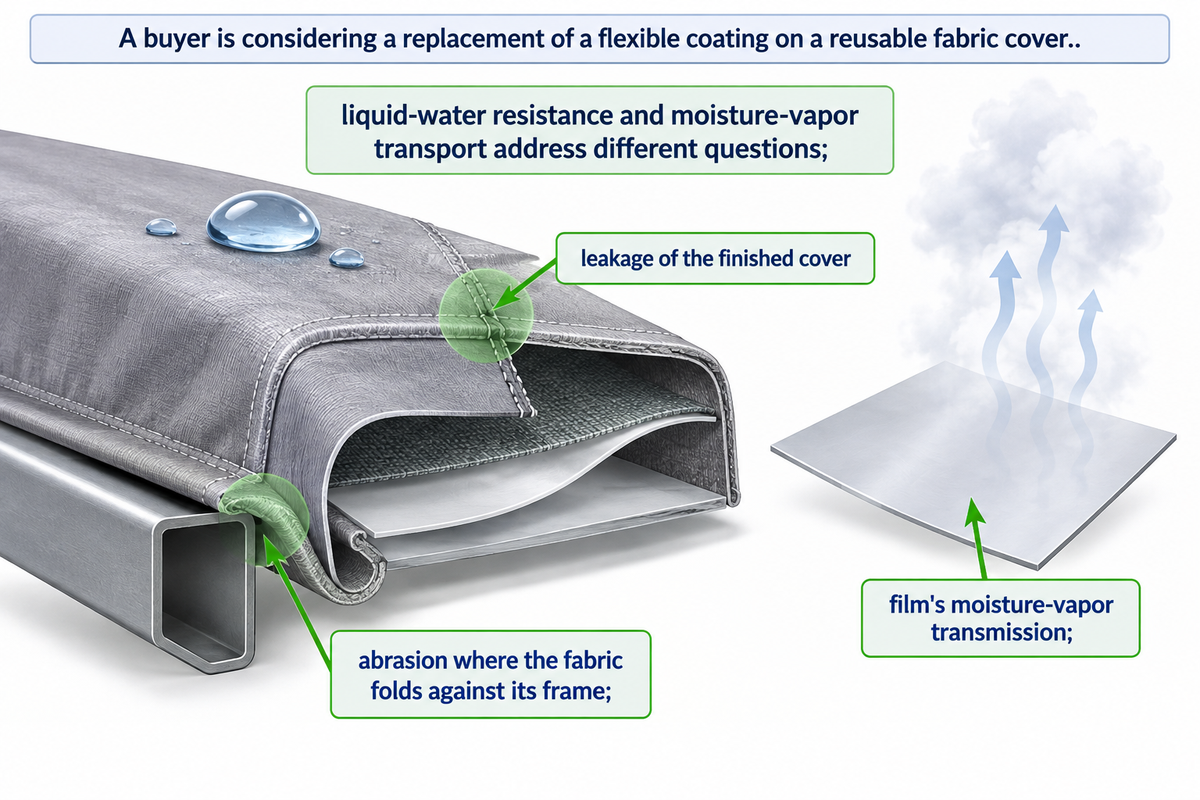
A buyer is considering a replacement of a flexible coating on a reusable fabric cover. The sample feels durable and resists a quick splash, so it’s tempting to approve it immediately. However, liquid-water resistance and moisture-vapor transport address different questions. A coating can keep out droplets and still let water vapor through, and seams can dominate leakage even if the flat film performs well. Therefore, the buyer separates the target for leakage of the finished cover from the film’s moisture-vapor transmission, and checks abrasion where the fabric folds against its frame. This links the material choice to the product, instead of considering “waterproof TPU” to be the complete specification.
To make this distinction, refer to the guide for water vapor transmission rate (WVTR). For strength measurements on thin film, use the suggested plastic film testing setup. For phone cases and wearable housings, scratch appearance, grip and repeated removal may be more important than the film’s permeability. Examining TPU durability includes checking how the surface looks after handling and whether the housing retains its shape. Examine the fit along the interior and the exposed surface.
Medical devices and prosthetics add application-specific biological and regulatory requirements. FDA biocompatibility guidance groups body contact as limited (24 hours or less), prolonged (more than 24 hours to 30 days) or long-term (more than 30 days), so evaluate a grade taken from a consumer grip against the device’s contact duration, sterilization and any implantation.
Processing TPU: Drying, Molding and 3D Printing
Moisture control and temperature windows are critical to the reproducibility of TPU processing. Injection molding, film extrusion and fused deposition modeling (FDM) put the material through various thermal and mechanical histories. Pellet-drying instructions shouldn’t be applied directly to a finished spool of filament, and printer settings should remain with their tested grade.
Does TPU need to be dried?
TPU needs controlled drying prior to melt processing due to the fact that moisture can damage the polymer during processing and contribute to surface defects. Use the material supplier’s instructions on temperature, duration, and the level of moisture. A dried appearance of the material isn’t sufficient. Moisture must be reduced to the grade’s specified target, and the material must remain dry while it reaches the processing equipment.
Lubrizol specifies 104 °C for 2–4 h for ESTANE 58246, using a desiccant dryer with a −40 °C dew point and a maximum moisture content of 0.02%. Its F94A printed-specimen preparation instead used filament dried at 70 °C for 2 h. The same F94A sheet gives separate pellet-drying instructions before strand extrusion.
Stringing can occur during the print job even after completion of the drying process. One Prusa user’s account of drying TPU filament illustrates this problem. However, it doesn’t create a standard drying procedure. After checking moisture control, check the feed path, retraction behavior and temperature. A soft, stretchy filament can buckle or compress where rigid filaments feed cleanly.
3D printing with TPU: direction and feed control
For the F94A specimens in the table, Lubrizol used an Ultimaker S5 with a 230 °C extruder, 60 °C bed, 25 mm/s speed and 0.2 mm layers. These are the published test settings for this grade, not a default profile for every 3D printer. Layer adhesion and orientation remain part of the final mechanical result.
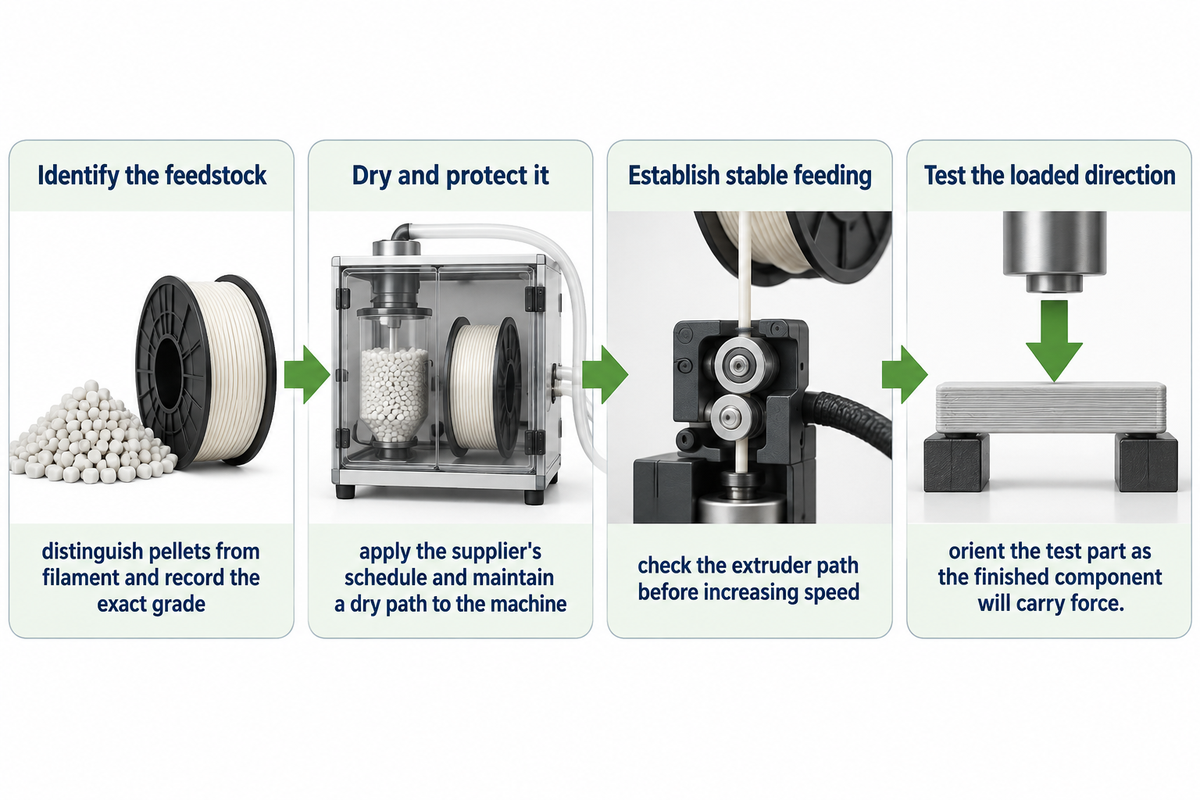
- Identify the feedstock: distinguish pellets from filament and record the exact grade.
- Dry and protect it: apply the supplier’s schedule and maintain a dry path to the machine.
- Establish stable feeding: check the extruder path before increasing speed.
- Test the loaded direction: orient the test part as the finished component will carry force.
For rapid prototyping, keep drying, printing and specimen handling in one recorded workflow. Print a functional coupon that includes the intended wall and loading direction. This 3D printing technology builds the wall layer by layer, so keep sample orientation in the test record. Support structures and post-processing also affect a soft part: trimming a support scar can remove load-bearing material. Approve the finished geometry, not just a visually clean sample of the resin.
Heat, Water, Oil and Sunlight: TPU Practical Limits
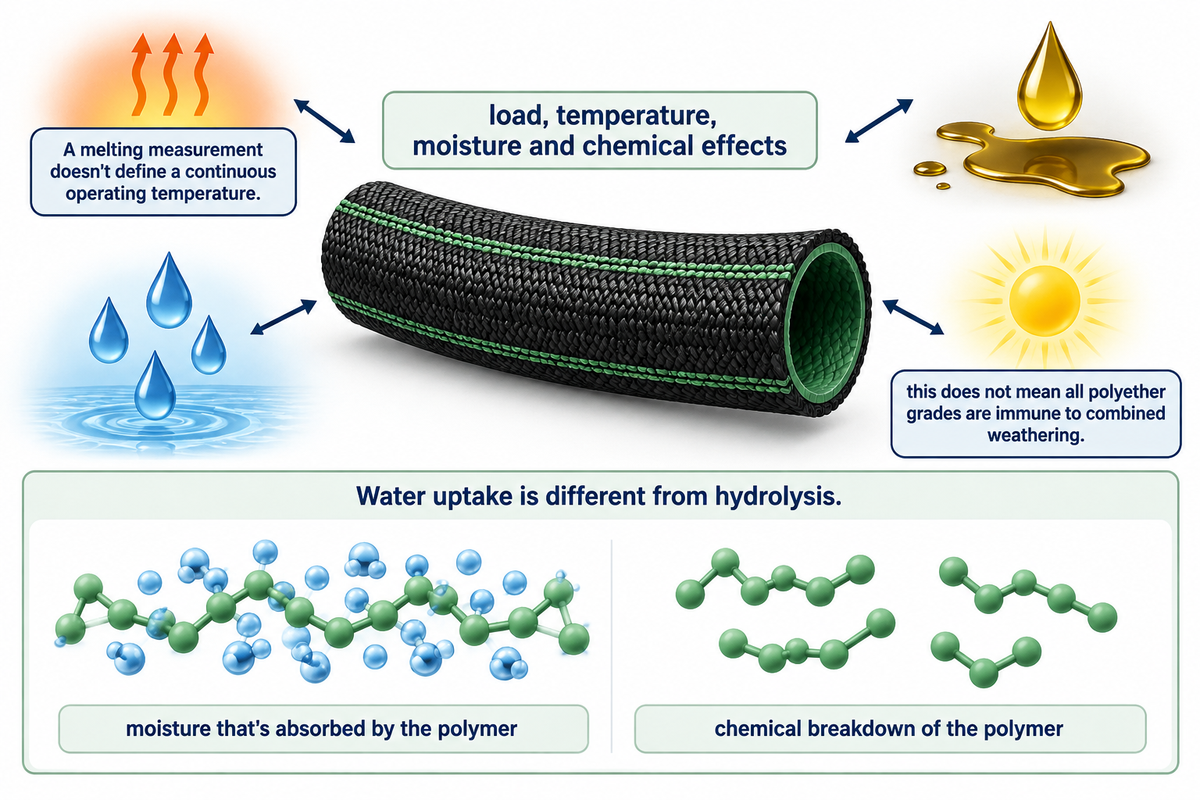
The practical limits of TPU result from the combination of load, temperature, moisture and chemical effects. A melting measurement doesn’t define a continuous operating temperature. Water uptake is different from hydrolysis. The first describes moisture that’s absorbed by the polymer, while the latter refers to the chemical breakdown of the polymer and the reduction of its molecular weight and performance.
ESTANE 58246 lists a DSC melting value of 170 °C and a glass transition value of −20 °C. Neither is considered a finished part service rating. Near transitions, stiffness and recovery can change well before a part visibly melts. This distinction is covered in the glass transition temperature guide.
In measurements of absorption, the ASTM D570 water-absorption guide helps distinguish specimen conditioning from an aging claim. The use of polyether chemistry in a formulation can improve hydrolysis resistance. However, this does not mean all polyether grades are immune to combined weathering.
A NIST-led study by Goodwin and colleagues tested aromatic polyether Elastollan 1185A10 under accelerated ultraviolet exposure at 55 °C, with approximately 140 W/m² over the 295–400 nm band. After 60 days, neat specimens lost 251 ± 9 µm of thickness at 75% relative humidity versus 79 ± 7 µm under approximately dry conditions. The formulation lacked an ultraviolet absorber. These results demonstrate combined exposure damage, and not years of service outdoors.
Consider a flexible sleeve next to an automotive oil line that’s serviced periodically. Initially, the selection may be for oil resistance at ambient conditions. During service, however, the sleeve is exposed to hot oil and a cleaner of a different composition. For these cases, consider the exposure records separately and assess the sequence on the part. For the oil, record the identity of the oil and additives if any, instead of using a substitute laboratory oil. Record the cleaning agent and the time and concentration of the cleaner. If swelling changes the fit of the sleeve, a high unaged tensile strength won’t serve the purpose. Useful acceptance limits cover dimensions and recovery of the material after exposure, along with the mechanical property relevant to the load.
Is TPU Safe? Match the Grade to the Use
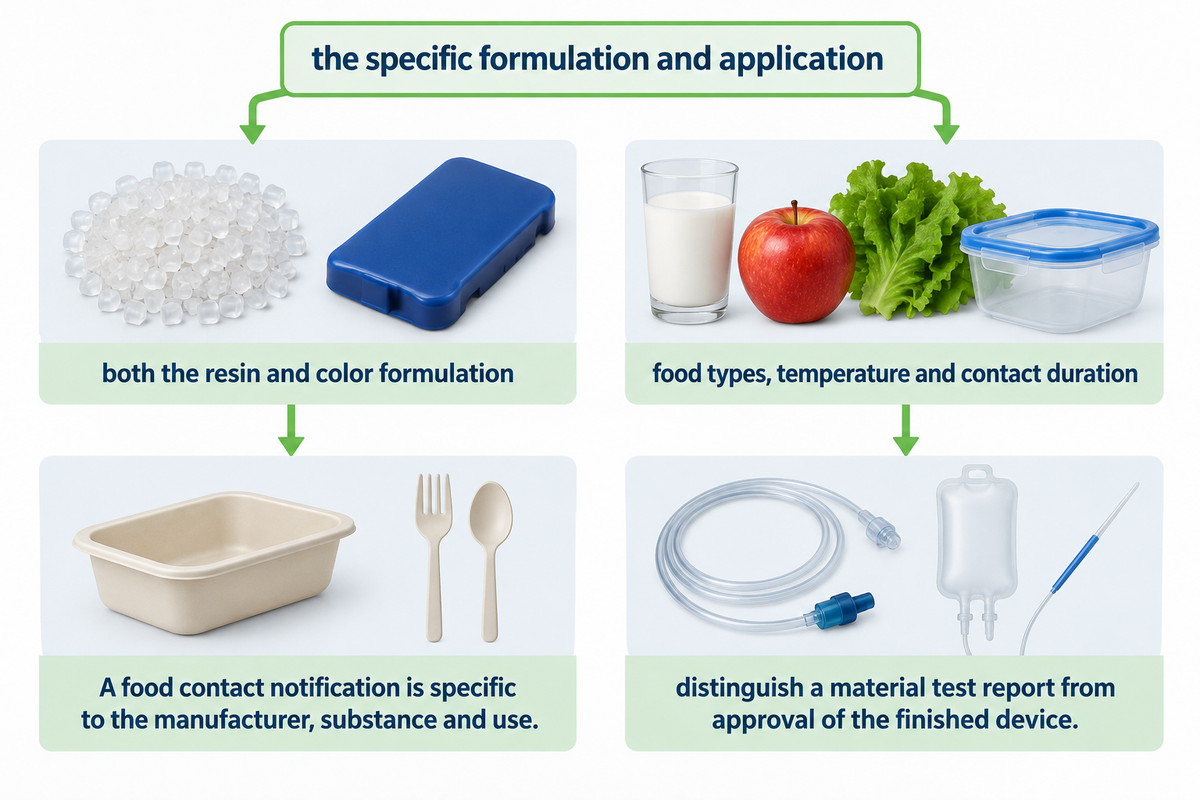
TPU suitability for food contact, prolonged skin contact or medical use belongs to the specific formulation and application. The base polymer name doesn’t represent the additives, colorants, processing contamination or the final product. For the intended contact conditions, obtain documentation that identifies the supplied grade and those conditions.
As per the FDA’s food contact guidance, all components must be justified by an appropriate legal basis. A food contact notification is specific to the manufacturer, substance and use. A statement for a different supplier’s resin therefore does not authorize the use of the resin in your order.
For colored parts in contact with food, match the declaration to both the resin and color formulation. Compare the food types, temperature and contact duration with the application. For medical devices, distinguish a material test report from approval of the finished device. Sterilization and repeated cleaning can change a component’s properties, so the finished design needs its own evaluation.
Safety data sheets for the grade in question and the machine’s ventilation instructions govern printing or molding. Avoid choosing a nozzle temperature from a melting-point value: a processing window also addresses residence time and material stability.
How to Buy a TPU Grade
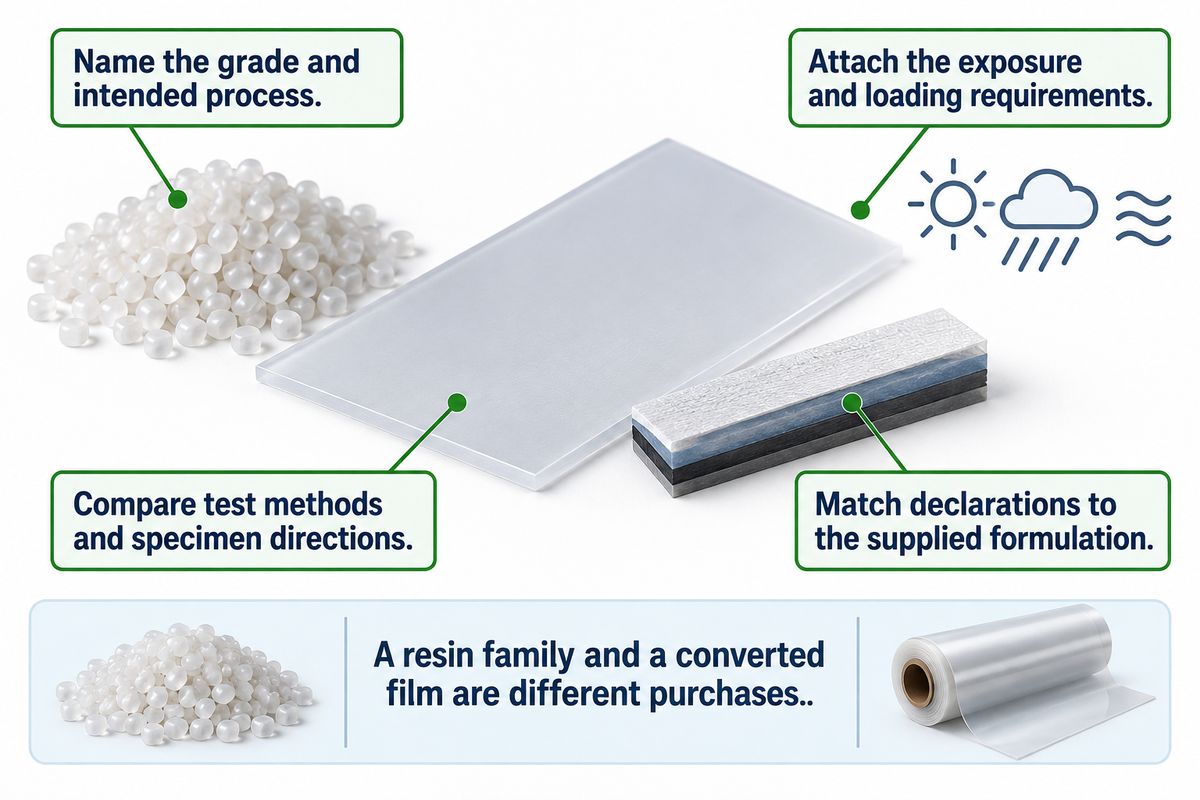
Before price requests, a useful TPU material specification names the grade and processing route and lists service exposure. This specification can list hardness with its scale and test time, mechanical properties with specimen conditions, and documentation for any contact use. This provides suppliers the same job to quote and makes substitutions visible before production trials.
Retail pellets illustrate why price needs a purchasing basis. On October 20, 2026, Eolas Prints’ United States storefront listed a 500 g TPU pellet pack, SKU TPU-PLT-500G, at US$12. Shipping is calculated separately; the listing is a small-pack retail example, not an industrial resin price or a delivered quotation. The SKU identifies the pack, not a disclosed resin manufacturer’s technical grade. The store’s stated DAP terms exclude applicable import duties and taxes outside the European Union.
Keep pack size, quantity, color, delivery terms and grade, together in the quote comparison. A cheaper quote that changes polyester to polyether, or provides a different additive package, is a material substitution. Compare drying requirements, expected processing losses and the purchase price.
These supplier families provide a starting point for a grade inquiry. Verify the specific offered grade and supply form. A resin family and a converted film are different purchases.
| Supplier | Published family | Inquiry starting point |
|---|---|---|
| Lubrizol | ESTANE | Resin grades for molding, extrusion and filament production; match the exact grade to the process. |
| Covestro | Desmopan; Dureflex and Platilon films | Distinguish TPU resin from supplied film products. |
| HEXPOL TPE | Dryflex TPU | Ask for a compound grade matched to the molding or extrusion application. |
Sources: Lubrizol grade sheets above, Covestro’s 2026 product family announcement, and HEXPOL TPU overview.
The aging method, temperature, relative humidity and duration must be included for weathering acceptance. State separate acceptance criteria for color and retained mechanical performance. Identify whether a coupon or a finished part was tested. The record defines what the part must withstand and makes optical and structural longevity distinguishable.
Do
- Name the grade and intended process.
- Attach the exposure and loading requirements.
- Compare test methods and specimen directions.
- Match declarations to the supplied formulation.
Don’t
- Approve a substitute by hardness alone.
- Treat melting temperature as a service rating.
- Rank printed and extruded tensile data directly.
- Transfer another grade’s contact-use statement.
Recycled and Bio-Based TPU: What Is Changing?
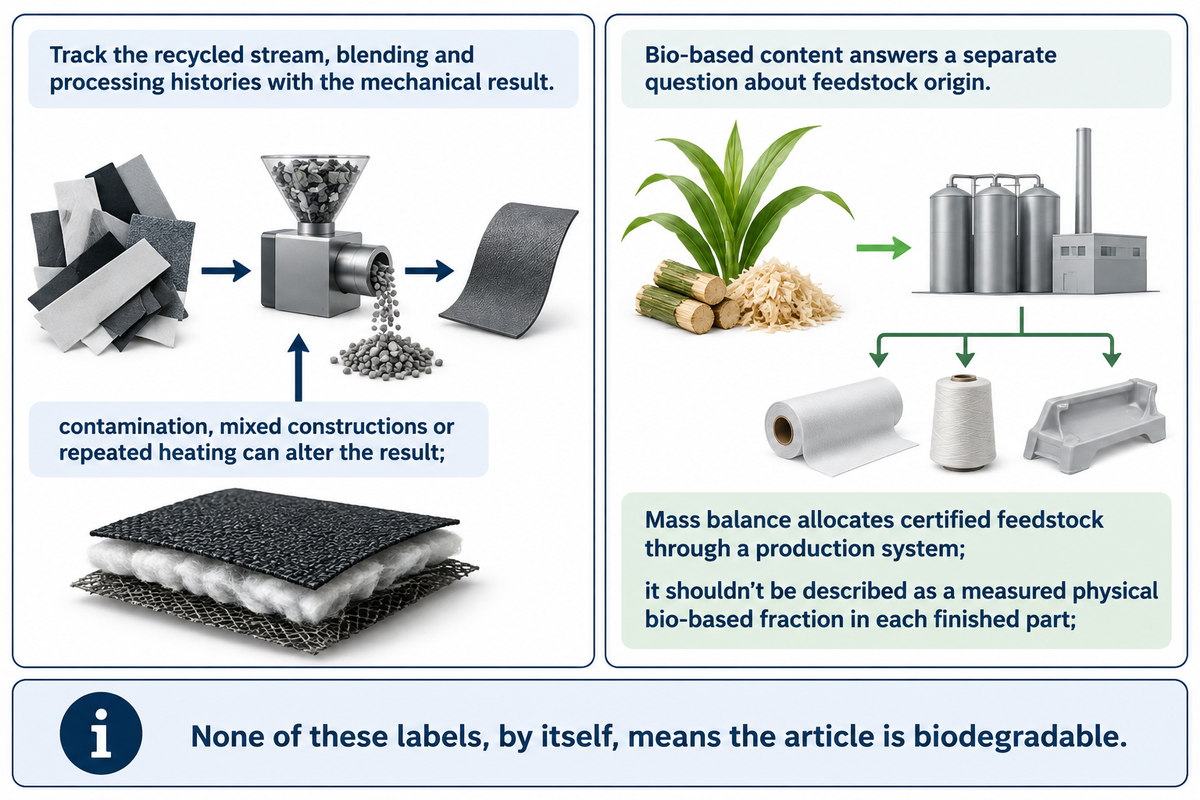
Recycled TPU can be effectively incorporated in applications where the material can be tracked and processed in a controlled manner. While melt processability can support its recovery, contamination, mixed constructions or repeated heating can alter the result. It’s better for buyers to relate a recycled content claim to defined feedstocks and end-use performance rather than assume that virgin-like characteristics are retained.
Covestro’s March 31, 2026 Techtextil announcement describes thermomechanical recycling of Desmopan AIR cushioning structures and their combination with TPU nonwovens in monomaterial designs. The direction is toward easier material separation in product design. Before calling a textile made with it recyclable, name the operating collection and recycling route and where the recovered material goes.
A 2020 reprocessing study by Wölfel and colleagues tested an 80 Shore A polyether TPU through repeated extrusion at 205 °C. Up to eight cycles reduced molecular weight and stress at break, while elongation increased. Deformation behavior below 100% strain remained comparatively stable within the reported uncertainty. The changes were property-specific and more complex than “recycled becomes brittle”.
For a flexible component, that distinction alters acceptance testing. During low-strain loading, a fit check may seem satisfactory even though the material’s failure-load performance has changed. Track the recycled stream, blending and processing histories with the mechanical result; then choose acceptance properties that reflect the component’s function.
Bio-based content answers a separate question about feedstock origin. Covestro’s circular-materials discussion distinguishes biomass-derived content, recycled feedstock and mass-balance routes. Mass balance allocates certified feedstock through a production system; it shouldn’t be described as a measured physical bio-based fraction in each finished part. None of these labels, by itself, means the article is biodegradable.
For a newly purchased component, separate the feedstock claim from the longevity. For a clean single-material offcut stream, the recovery challenge may not be the same as for a multi-material stream that’s textile-bonded with adhesives and coatings. State the collection route and the destination for the recovered material when circularity is part of the product requirement.
Key takeaway
Choose TPU chemistry for exposure, match the grade to the process, and compare properties under the same test conditions. Hardness is one specification field, not the complete material decision.
FAQ
Which TPU is more flexible?
Lower hardness usually indicates easier indentation within a comparable TPU grade family, but part flexibility also depends on geometry and the stress-strain response.
Keep the hardness scale and reading time the same when comparing candidates. Shore A and Shore D values are not interchangeable numbers. For a bending part, compare samples with the intended wall thickness; for a stretched strap, examine stress at its working elongation. A printed component also needs the relevant layer orientation, because a resin’s nominal hardness does not describe the strength across printed layers.
Is TPU food safe?
Some TPU grades are food safe for a specified use, meaning named food types, temperatures and contact durations; the polymer name alone does not make a grade food safe.
Check the regulatory basis for the supplied formulation, including additives and colorants, against the intended food, temperature and contact duration. The FDA explains that a food contact notification can be manufacturer-specific. Keep the declaration linked to the exact grade on the order. A statement covering another manufacturer’s material or a different use does not automatically cover the finished article you are purchasing.
Does TPU absorb moisture?
TPU can absorb moisture, which is why drying and dry handling matter before melt processing.
The amount and its consequences vary with the formulation and exposure. Absorption is distinct from hydrolysis, the chemical breakdown that can damage susceptible polymer segments. Do not infer a drying schedule from a water-absorption number alone. Follow the grade’s processing instructions, including temperature, duration and the specified moisture target, and prevent the dried material from picking up moisture again before it enters the machine.
Is TPU recyclable?
TPU can be mechanically reprocessed, but a particular product also needs a suitable collection stream and recycling route.
Clean, identified production scrap is easier to control than mixed post-consumer assemblies. Repeated heating can alter properties, so recycled material needs an acceptance specification matched to its next use.
Do TPU and PLA stick together?
They can bond in a dual-material print, but TPU-to-PLA adhesion is often weak because the two plastics differ in thermal and mechanical properties; a bonded printed assembly needs a joint-specific check.
For a functional prototype, test the intended interface and load direction. Where separation would cause failure, evaluate mechanical interlocking in the joint design rather than relying only on apparent adhesion after printing.
What is TPU used for?
TPU is used for flexible molded parts, footwear components, hoses, protective cases, films, coated fabrics and printable feedstock.
Each application emphasizes different behavior. A grip needs a suitable feel and recovery; a protective cover needs fit and resistance to its environment; a thin film needs controlled thickness and the relevant tensile or barrier properties. Printed parts add feed control and layer direction to the material decision. That is why choosing a “durable TPU” is only the beginning of a specification. Name the required function, identify the exposure and loading, and choose the grade and process together. If the application involves food contact or a medical device, add the corresponding formulation and finished-use requirements before approving the material.
References & Sources
- Segmented polyurethane structure and properties, Yilgör, 2023.
- ASTM D2240-15(2021), public scope and significance of durometer hardness.
- Polyurethane chemistry study varying diisocyanate structure, Asensio and colleagues, 2023.
- DIN EN ISO 18064:2022, public thermoplastic elastomer nomenclature contents.
- ASTM D395-18(2025), public compression-set test scope.
- Accelerated ultraviolet and humidity exposure of TPU, Goodwin and colleagues, 2020.
- Three-body wear of rubber seals in abrasive slurry, Jensen and Aghababaei, 2023.
- Repeated processing and TPU morphology and properties, Wölfel and colleagues, 2020.
- Determining regulatory status of food-contact components, United States FDA.
About This TPU Guide
UD Packaging publishes this material guide to help readers connect polyurethane chemistry, processing conditions and test results. The named-grade values belong to their manufacturers; the aging and wear findings belong to the cited researchers. The selection examples are hypothetical design situations. This article doesn’t claim TPU manufacturing, proprietary material testing or product certification by UD Packaging.
Compare the test conditions behind your material data before treating two supplier values as equivalent.