

Jasonxue
I write about what plastics are made of, how polymers respond to heat and moisture, and how film properties are tested. My aim is to help readers understand material differences, make sense of test conditions, and recognise when results for friction, water absorption or moisture transmission can reasonably be compared.
PBT Plastic: Polybutylene Terephthalate Properties and Uses
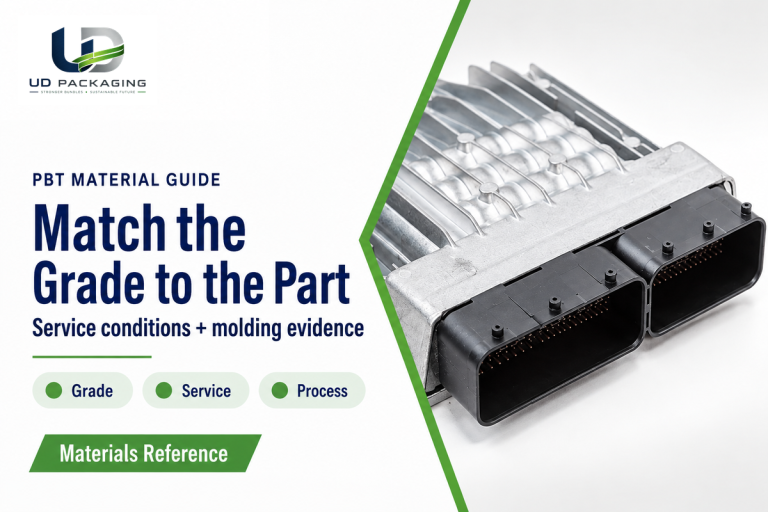
Updated November 2026 PBT is a polyester for molded parts that require dimensional stability, electrical insulation and resistance to many common chemicals. It’s a good choice for connectors, appliance parts and keycaps for computer keyboards. But finding a grade of…
What Is Plastic Made Of? From Feedstocks to Polymers and Additives
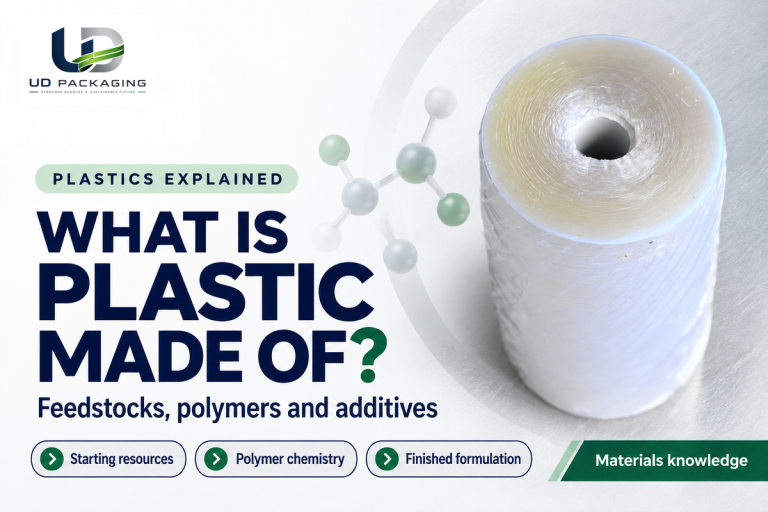
Updated October 2026 Plastic is made mainly of polymers: larger molecules built of smaller units. Source materials of oil, natural gas, and biological resources can provide starting chemicals. A useful answer to “what is plastic made of?” also explains the…
TPU Plastic: Thermoplastic Polyurethane Properties, Grades and Uses
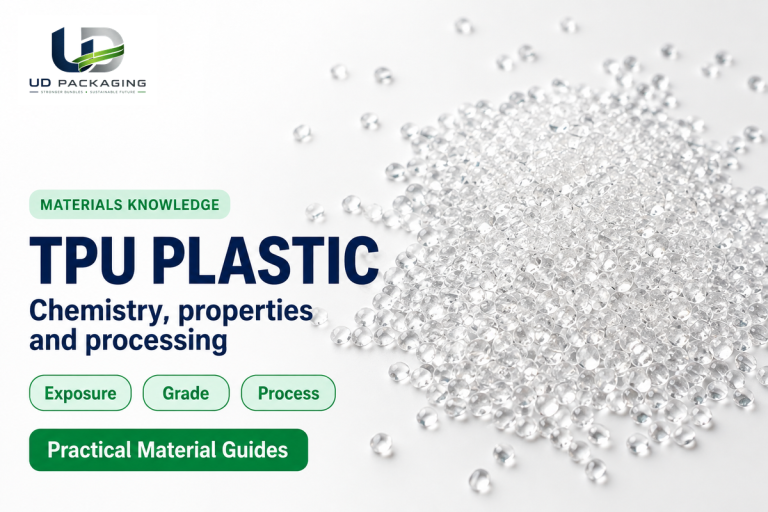
TPU is thermoplastic polyurethane, a plastic that combines the elasticity of rubber with melt processing. It can create a flexible film, a tough molded part or printable filament. Decide on the necessary chemistry for the environment, then specify hardness and…
Water Vapor Transmission Rate: Comparing Film Moisture Barriers
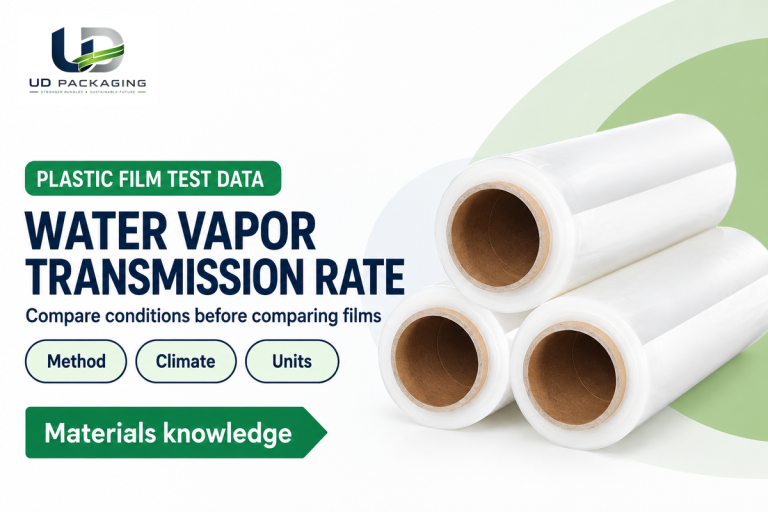
Water vapor transmission rate measures water vapor through a material per specified area and time, under stated temperature and humidity conditions. A lower value means less vapor passage under those conditions. To compare packaging films, read the units, method, climate…
ASTM D570: Water Absorption of Plastics and Comparison Limits
ASTM D570 quantifies water uptake by plastic specimens during immersion. The key distinction for packaging buyers is between water held up in a material and moisture transmitted through a film. Confusing those quantities can lead a material comparison to the…
Polyethylene Melting Point: Grades, Ranges and Test Context
The polyethylene melting point describes a measured melting transition, rather than one absolute temperature for each PE product. Resin grade, crystalline structure and the test program affect the outcome. A supplier’s single number is helpful only if you know whether…
ASTM D1894: Static and Kinetic Friction of Plastic Film
ASTM D1894 measures resistance as plastic film begins to move and continues to slide against another surface. A supplier’s coefficient means little until you know which film faces touched, how they moved, and how the laboratory extracted the result. Updated…
Biaxially Oriented Polypropylene (BOPP): What Biaxial Orientation Changes

Biaxially oriented polypropylene is PP film stretched in two directions. Orientation impacts stiffness, strength and heat response. Surface layers and coatings influence sealing, printing and barrier properties. The film name isn’t a specification. Updated October 2026 A heat-sealable BOPP grade…
Glass Transition Temperature: Molecular Motion and Measurement Definitions
Glass transition temperature describes when segmental motion in amorphous material becomes apparent on a test’s time scale. The reported Tg depends on the signal, curve criterion, and history of the specimen. It’s neither a melting point nor a stand-alone service…